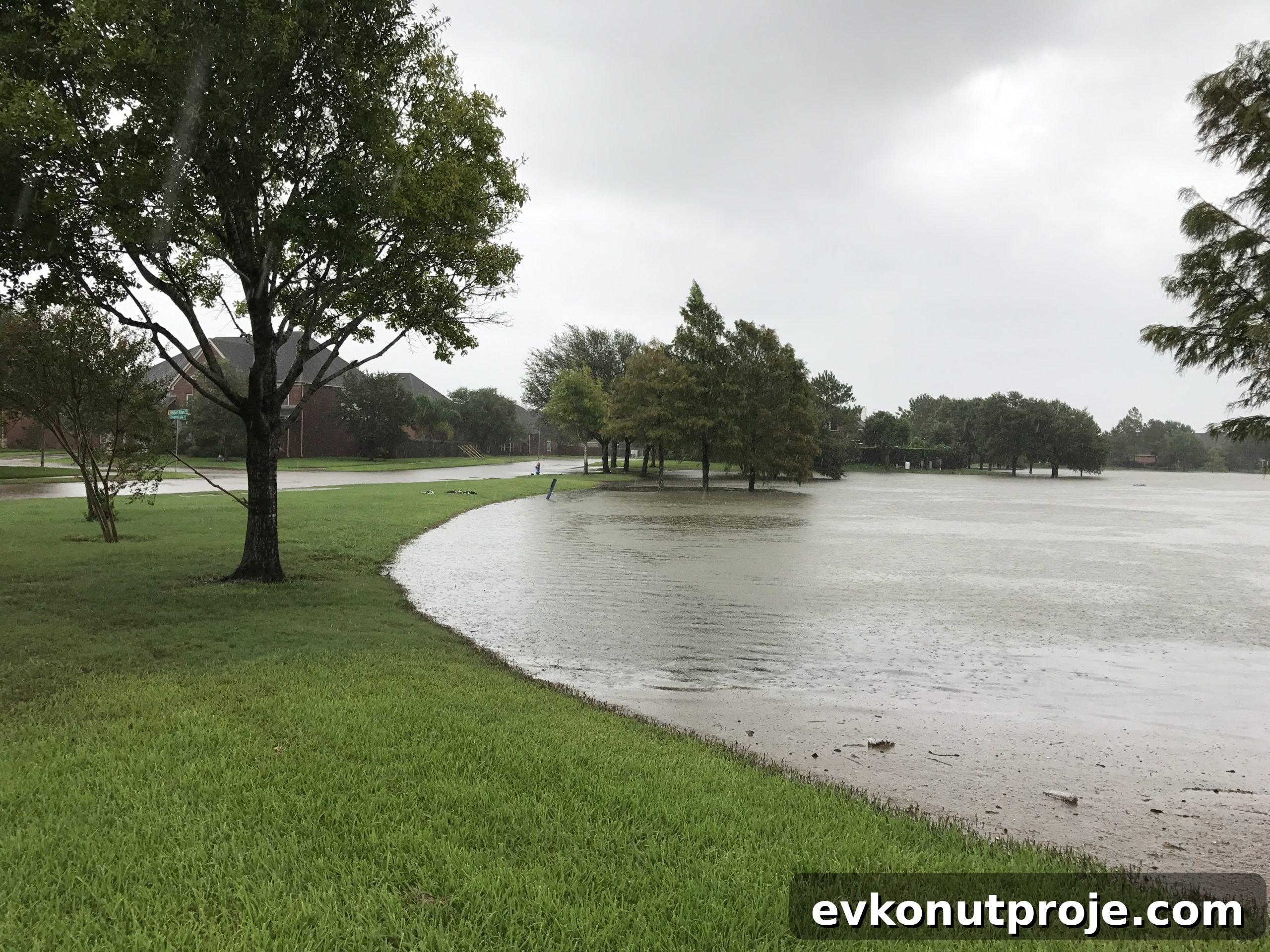
HOUSTON – (By Michelle Leigh Smith for Realty News Report) – In the wake of Hurricane Harvey, which flooded roughly 100,000 homes in Houston, government-funded buyout programs that purchase flood-prone properties are expanding nationwide. These buyouts, traditionally focused on residential properties, are being reconsidered for broader applications—including commercial parcels—and how the reclaimed land should be used to maximize community and environmental benefits.
ULI report: “On Safer Ground: Floodplain Buyouts and Community Resilience”
The Urban Land Institute (ULI) released a new report, “On Safer Ground: Floodplain Buyouts and Community Resilience,” which finds that floodplain buyouts can be cost-effective tools for reducing future flood damage while delivering broader public benefits. The report frames buyouts not only as a hazard-mitigation strategy but also as an approach that can support long-term community resilience, environmental restoration, and improved land-use planning.
Katharine Burgess, Vice President of Urban Resilience at ULI and a contributing author, emphasizes that buyouts illustrate household-level migration away from repeatedly flooded areas and foreshadow potential larger migration trends as climate impacts increase.
Harris County and Inundation Pathways
Harris County, at the heart of the Houston region, has long faced catastrophic flooding. In response, the Harris County Flood Control District (HCFCD) launched a Voluntary Acquisition Program to identify properties in inundation pathways and work with homeowners on voluntary buyouts. The program aims to reduce flood risk while converting acquired land into public open space that absorbs excess water.
The county’s Community Flood Resilience Task Force helps guide equitable distribution of a $2.5 billion bond for flood mitigation and buyouts for properties affected by Hurricane Harvey. Grassroots organizations like the Westbury Civic Club support community outreach and education, reinforcing a communal approach: “Divided We Fall, Together We Rise.”
HCFCD officials, including Chief Planning Officer Craig Maske and Property Acquisition Manager James Wade, oversee a territory that includes about 2,500 managed waterways and 1,500 bayous. Wade is coordinating buyouts in roughly 70 extreme-flood areas where rebuilding is not economically sensible. With more than $500 million in FEMA, HUD, and local funds, HCFCD has been able to move forward on many acquisitions.
Outreach is central to success. FEMA-funded buyouts require voluntary seller participation, so the county invests in education and canvassing. HUD funds have different requirements but can help address affordability concerns. Wade notes that while grant cycles are slow—often 8–18 months—the county has secured significant funding and completed hundreds of purchases.
After Being Flooded 12 Times, House Meets Bulldozer
In Westbury and other neighborhoods, repeated flooding has led to voluntary sales and demolition of repeatedly damaged homes. One house sold to HCFCD after flooding a dozen times was demolished and the land repurposed for flood mitigation improvements along the Willow Waterhole Bayou. Elsewhere, like Meyerland, many homeowners prefer home elevation and property improvements over buyouts, illustrating that buyouts are one of several viable strategies depending on neighborhood priorities and conditions.
Life, Death and The San Jacinto River
Buyouts are concentrated in high-risk areas such as the San Jacinto River floodplain, where extreme flooding has posed mortal danger. In some neighborhoods, entire structures were washed from their foundations—underscoring that buyouts can be a lifesaving intervention.
But buyouts also carry social and emotional consequences. Homeowners often weigh the loss of community ties, schools, doctors, and nearby jobs against the safety benefits of relocation. The post-disaster context intensifies stress: families with the fewest resources face the longest waits, and some may sell to investors rather than remain in limbo.
ULI Definition of Buyouts
“A floodplain buyout is a property acquisition in which a government agency purchases private property, demolishes any structures on it, and preserves the land as open space, as an area that absorbs excess water, or for both purposes. Although buyouts are currently almost entirely used for residential properties in the United States, the increased use of the approach in urban areas has important implications for all real estate types and for future land use regulation and climate resilience strategy.”
Since Hurricane Harvey, Harris County has completed more than 230 buyouts in Commissioner Adrian Garcia’s Precinct 2 and has over 200 additional acquisitions in progress. Countywide, the Community Services CDBG program has completed several volunteer buyouts, with many more nearing completion. Once purchased, properties are typically placed under covenants to prevent future development, protecting communities from predatory buyers who might otherwise purchase and rebuild in high-risk areas.
‘The County Helped Us Find a New Home’
Personal accounts illustrate the program’s impact. Homeowner Bedina Houston relocated from a repeatedly flooded property near White Oak Bayou to a home in Woodland Trails North with county assistance. She described a supported process that included storage assistance, moving help, and access to comparables to find an appropriate replacement home. For her, the 18-month process led to improved safety without disrupting access to services.
Another participant, Al Spencer, found peace of mind after accepting a buyout for his Spring neighborhood home. Although he had flood insurance, the stress of constant flood anxiety led him to choose relocation to higher ground less than 15 minutes away.
Strategies to Improve and Accelerate Buyouts
The ULI report recommends new tools and partnerships to speed funding and implementation, including better disclosure rules to prevent speculative sales during buyout processes. Some states, like New Jersey with its Blue Acres program, combine funding sources to purchase properties more quickly and create larger, contiguous parcels for flood reduction. Houston’s resilience planning has explored buy-in, buy-out swaps that would allow low- or moderate-income homeowners to relocate within their communities to safer homes while converting acquired lots into flood-reduction open space and amenities.
Buyouts typically pay pre-flood market value and remain voluntary, but long timelines can push homeowners to accept investor offers. Shorter funding cycles could prevent this cycle and increase program effectiveness.
43,000 Buyouts Since the 1990s
Federally funded buyouts have totaled roughly 43,000 properties since the early 1990s, primarily single-family homes. While most buyouts have been residential, some multifamily, commercial, and industrial properties have also been acquired. In Harris County, most residents choose to relocate nearby—keeping jobs, schools, and social networks intact—moving to higher ground in the same region.
Experts stress that water is a critical element of regional planning. Gabriel Collins of Rice University’s Baker Institute urges proactive water policy that anticipates both flood and drought risk, recommending sustained planning and infrastructure investment over reactive measures.
Affordability remains a central concern. Studies show many households lack emergency savings, making immediate recovery difficult. Low-income families are less likely to afford temporary lodging or rebuilding and are often the most vulnerable during flood events.
For county officials, the greatest challenge is timing. Grant writing and approval timelines can stretch 18 months or more, a difficult wait for families facing immediate displacement. Faster funding mechanisms and programs designed for rapid mitigation—rather than only future-event mitigation—would expand the reach and effectiveness of buyouts.
Long-term land use outcomes remain a focus. Former parks official Karen Culler Smith notes buyouts can create parkland in under-served neighborhoods and provide opportunities to restore ecological function and public amenities. However, some homeowners associations oppose buyouts because they remove properties from the tax rolls and homeowner-fee structures, which can create political friction.
Hurricane Harvey: 50 Inches of Rain = 100,000 Flooded Homes
Harvey damaged more than 100,000 housing units. Speakers at a Kinder Institute panel highlighted the frequency of extreme events and the need for community-level preparedness, especially for the most vulnerable. Investments in both gray and green infrastructure, stronger building practices, and targeted support for medically vulnerable residents are essential components of resilient city planning.
What are the possibilities for reclaimed flood-prone land?
ULI recommends using bought-out land to expand open space and ecological function, create natural flood buffers, and provide recreation and education—benefits that improve flood resilience and community quality of life. Moving forward, ULI and partners plan to promote these findings, tailor engagement to community goals, and connect buyouts to broader topics such as climate migration and equity.
July 14, 2021 Realty News Report. Copyright 2021
Photo: Houston in Hurricane Harvey Aug. 2017. Photo credit: Ralph Bivins, Realty News Report. Copyright 2021
File: Buyouts Transform Flood-Prone Neighborhoods