HOUSTON – (Realty News Report) – Despite rising lumber costs, Hines is expanding its mass timber office program rather than retreating from it.
The global developer currently has two T3 (Timber, Transit and Technology) buildings under construction, two completed projects, and roughly 20 additional wood-built developments in the pipeline across North America and internationally.
Hines’ modern timber offices draw inspiration from early 20th-century brick-and-timber warehouses that have been converted into lofts and creative office space. Those original warehouses are known for exposed wooden columns and an industrial aesthetic, but many lack modern functionality and building systems.

Hines has developed a new generation of mid-rise office buildings that use engineered wood components—like mass timber columns and beams—combined with contemporary amenities, energy systems and safety standards. Tenants are responding favorably to that blend of aesthetic warmth and modern performance.
“Tenants appreciate the old‑school feel that evokes creativity and spatial richness, but they get it with modern technology, building systems and amenities,” says Laura Hines‑Pierce, Senior Managing Director – Office of the CEO at Hines and granddaughter of the company’s founder, Gerald D. Hines. “That intersection appeals to both tenants and investors.”
Construction Costs and Affordability

On CBRE’s Weekly Take podcast, Hines’ Steve Luthman, Senior Managing Director based in Chicago, addressed construction cost questions related to mass timber versus conventional concrete or steel construction.
“If you compare construction costs alone, mass timber can be roughly 10 percent higher than a comparable concrete or steel structure,” Luthman said. “But when you factor in the full project economics—schedule benefits, reduced foundation requirements, lighter superstructure, potential tenant premiums and lifecycle efficiencies—the net cost is effectively equivalent.”
Luthman noted that while lumber commodity prices spiked since the pandemic, that’s not the same as the engineered mass timber market. “Log prices have remained relatively stable over the last decade, and with recent increases in steel prices, mass timber can be more competitive than steel in some markets,” he said.
Environmental Benefits and Sustainability
Reducing carbon emissions is a central driver for developers and owners today. Mass timber construction offers measurable environmental advantages when compared with concrete and steel.
During construction, engineered wood typically produces significantly lower CO2 emissions—commonly cited as around 50 percent less than concrete for comparable structural elements—and mass timber also provides strong thermal performance and insulation benefits.
“North America grows enough timber to build a seven‑story mass timber building approximately every 20 minutes,” Luthman said. “These are managed, renewable resources—young trees that can be replenished—so mass timber doesn’t deplete regional forest volumes and, in many cases, yields a lower overall environmental footprint than other building types.”
Major real estate firms are also setting targets to lower operational emissions. Emma Buckland, CBRE’s global president of Property Management, highlighted the company’s science‑based carbon reduction commitment and plans to cut emissions significantly by 2035, including a shift toward electric vehicles in facilities management.
Upcoming Projects: T3 FAT Village
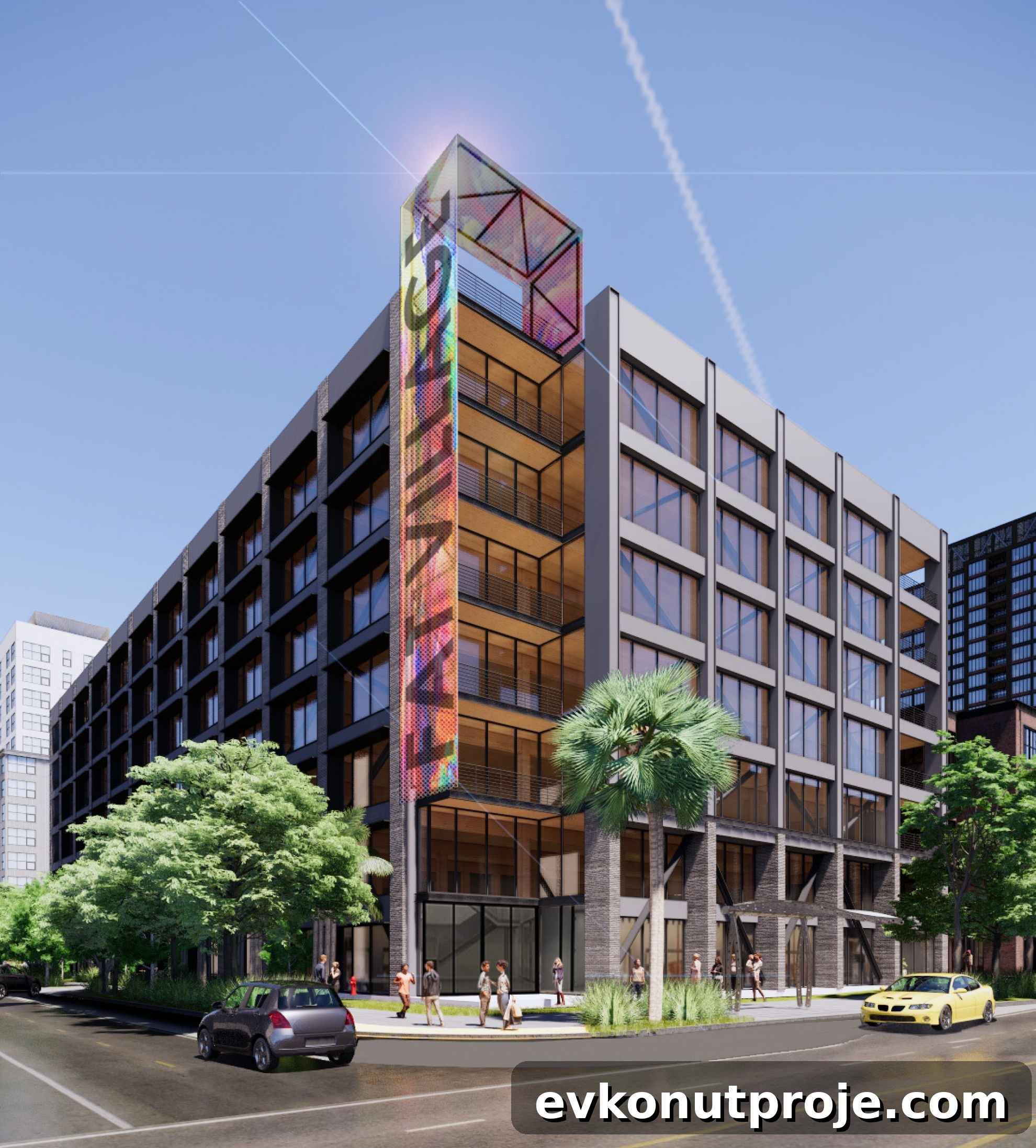
Hines recently announced a new mass timber office in Florida in a joint venture with Fort Lauderdale–based Urban Street Development. The project will be part of FAT (Food Art Technology) Village, a 5.6‑acre, mixed‑use urban village in Flagler Village that combines office, retail and residential uses and aims to be a creative neighborhood hub.
The 180,000‑square‑foot T3 FAT Village office is planned along North Andrews Avenue and is scheduled for completion in 2024.
June 1, 2021 Realty News Report. Copyright 2021.
Images: Courtesy Hines, CBRE (Timber Buildings Grow Amid Carbon Concerns)
File: Hines — Timber Buildings Grow Amid Carbon Concerns.
File: CBRE — Timber Buildings Grow Amid Carbon Concerns. Weekly Take. Spencer Levy. T3. Laura Hines‑Pierce.