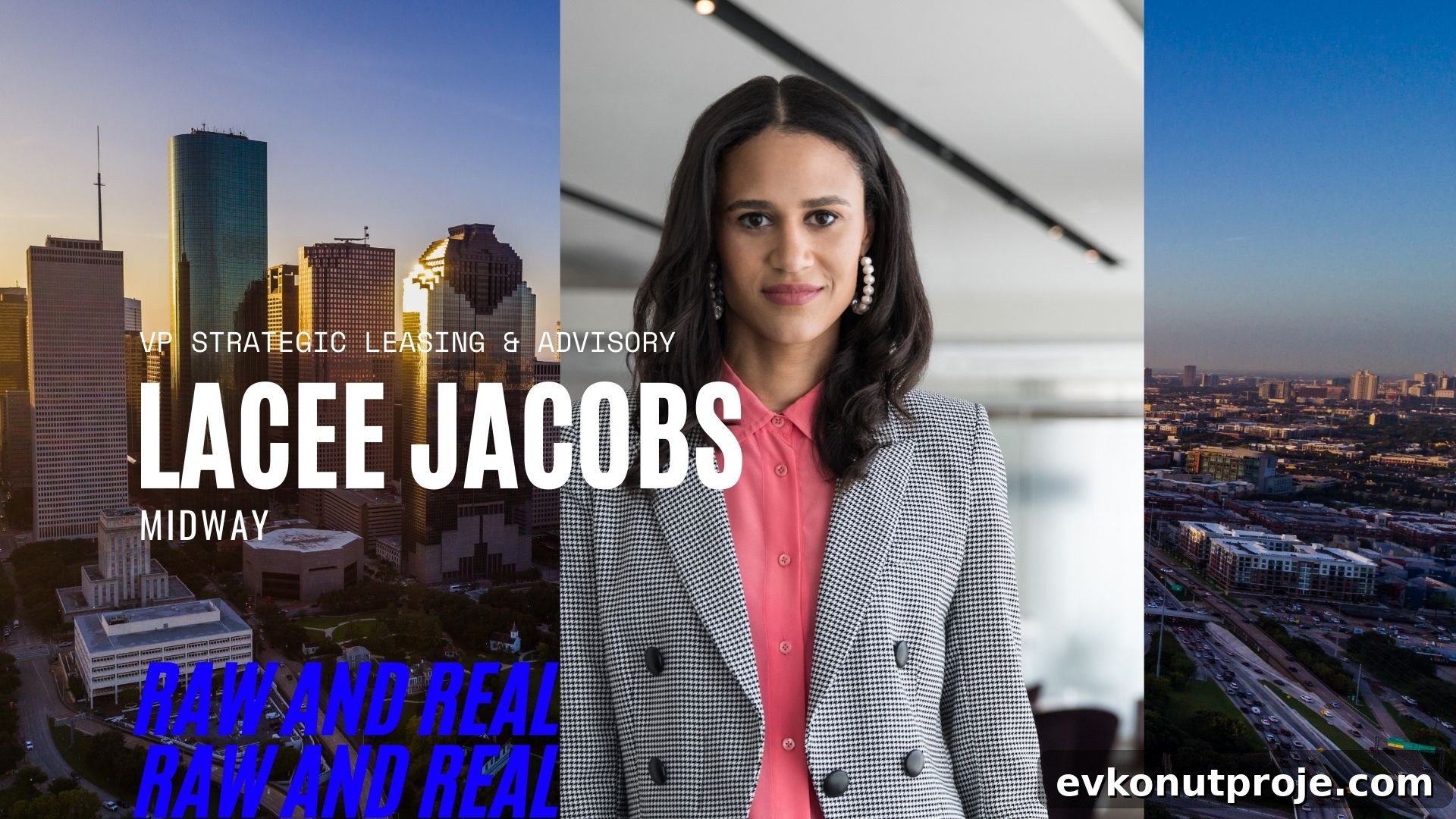
HOUSTON – (RNR) – Lacee Jacobs is vice president of strategic leasing and advisory at Midway, the Houston-based real estate investment and development firm. With nearly a decade of industry experience, she specializes in merchandising and advising national, regional, first-to-market and experiential brands. Before joining Midway, Lacee strengthened CBRE’s leasing team in Houston’s Inner Loop by bringing both local insight and a global perspective to the market. Her earlier experience includes roles with Edge Realty and Waterman Steele. This Q&A is an excerpt from a video podcast, THE RALPH BIVINS PROJECT.
Ralph Bivins: Lacee, what restaurants have recently launched in Houston and the surrounding area, especially given the effects of the coronavirus pandemic?
Lacee Jacobs: One of the more disheartening realities for those of us in real estate and the restaurant industry is that momentum we saw late last year and into early 2020 had to be paused. Brands were actively pursuing Houston—regional and national concepts, relocations and new market entries—but the pandemic forced many plans onto hold. The central question now is whether operators coming from markets like Nashville, Chicago and Los Angeles will return to Houston as they resume expansion. We remain hopeful Houston will be an attractive recovery market.
Right now, fast-casual concepts seem to be recovering faster than full-service restaurants. Full-service operators face challenges adapting to new regulations, curbside pickup and to-go business models—services some never relied on before—so they are navigating a steep learning curve. Fast casual has generally pivoted more quickly to these formats. We’ve seen reports that brands such as Hattie B’s Hot Chicken are reactivating efforts, and Flower Child recently opened a new location in The Heights. Those moves suggest fast-casual concepts are leading the recovery, while full-service should follow, albeit more gradually.
Ralph Bivins: Downtown has felt like a ghost town with so many employees working remotely. That must be hard on downtown restaurants that rely on lunch trade. I’ve heard only 10, 15 or 20 percent of the workforce is actually commuting downtown and occupying buildings. Does that match your observation?
Lacee Jacobs: I’ve heard the 10 percent figure cited several times, but when I was downtown last Friday I found it a bit more encouraging—closer to 20 percent occupancy in pockets such as the Historic District. That’s still far from pre-pandemic levels. For downtown restaurants and retail to recover, major employers need to bring people back in a measured, safe way. We’re seeing more downtown residents stepping out for takeout or short errands, which helps, but we need a steadier influx of daytime workers and visitors to sustain growth. Only then will downtown truly regain its vibrancy.
GreenStreet
Ralph Bivins: Your company, Midway, owns GreenStreet, the three-block mixed-use complex along Dallas Street near Fannin in downtown. What’s happening there?
Lacee Jacobs: At GreenStreet our immediate focus has been supporting tenants through the pandemic—helping them navigate operational and financial challenges has been our top priority. At the same time we’re planning for a future phase of normalcy. We’re enhancing amenities for office tenants and continuing to curate dining and entertainment offerings. The House of Blues remains part of the mix, but like many live-venue operators, it has had to pause concerts and adjust operations; its restaurant component has more flexibility to reopen. We’re also adding casual lunch options to capture daytime traffic and are actively marketing office space in our tower. GreenStreet benefits from proximity to the convention center and Toyota Center, and we’re committed to expanding evening and weekend entertainment to support both tenants and the surrounding community.
East River
Ralph Bivins: I heard a drive-in movie concept has appeared at East River, Midway’s 150-acre mixed-use project along Buffalo Bayou on the east end of downtown. Outdoor movies seem to be a growing trend—what can you tell us?
Lacee Jacobs: Yes, the drive-in at East River is one of several in town, but it stands out because it’s showing first-run films rather than only classic titles. For families or households with larger vehicles, the model offers an affordable, socially distanced entertainment option—roughly a $25 ticket for the car. With sizable parcels of land available in early-stage development, pop-up and outdoor uses like this are practical ways to activate the site for community benefit while longer-term planning and construction continue.
Montrose
Ralph Bivins: People are talking about Skanska’s purchase at Main and Montrose, an important corner in the Montrose neighborhood. What’s your take?
Lacee Jacobs: Skanska’s involvement signals major mixed-use potential—office and multifamily are logical components, and ground-floor retail would fit the area well. One gap in Montrose is a hotel: the district’s restaurants, shops and nightlife draw visitors, but lodging options tend to concentrate in the Galleria or downtown. A boutique hotel at that intersection would complement the neighborhood’s character and capture visitors who want to spend time in Montrose.
Ralph Bivins: What about the Montrose Collective at Montrose and Westheimer? I noticed construction rising several stories—what’s happening there?
Lacee Jacobs: The Montrose Collective is advancing with a prominent office tenant committed, which is a positive sign. Construction is well underway, and there’s an aggressive retail leasing campaign targeting key restaurants and storefronts. The project includes attractive spaces facing the public library and should draw strong local and regional interest. We’ve reviewed several spaces with clients and believe the location is well positioned for lively retail and dining tenants.
To hear The Ralph Bivins Project session with Lacee Jacobs Click Here.
Oct. 6, 2020 Realty News Report Copyright 2020
File: The Ralph Bivins Project with Lacee Jacobs of Midway