HOUSTON – (By Dale King, Realty News Report) – Before the COVID-19 pandemic hit in March 2020, rents across Houston neighborhoods were generally climbing. Since then, however, rental prices for multifamily apartments have trended downward, according to the October 2020 Houston apartment market analysis by ApartmentData.com.
The report finds that overall rents in Greater Houston fell 1.7% between the end of March and October 31, 2020. That decline, however, masks notable variation across the region: many suburban markets have remained flat or even posted modest gains, while core urban neighborhoods saw the steepest decreases.
Bruce McClenny, president of ApartmentData, points out that the shift away from the urban core is driven largely by changes in work and lifestyle patterns. With more people working from home, commuters no longer need to prioritize living near downtown offices. At the same time, entertainment venues, bars and other attractions that historically drew residents to city centers have been curtailed by public health restrictions.
Downtown ranks near the bottom of Houston’s 42 apartment submarkets in the report, positioned as the 42nd worst performing area. Downtown rents declined 14.3% over the six-month period and 12.3% year-over-year. New supply is a factor: only 271 downtown apartments were delivered, while more than 1,200 units remained under construction, pressuring absorption and rents.
Other central neighborhoods also suffered notable declines. Highland Village, Upper Kirby and West University recorded a 9.7% drop in the past six months and a 10% decline over the past year. The Heights and Washington Avenue posted declines of 6.3% for six months and 5.2% year-over-year. McClenny describes the Inner Loop market as a “double whammy” when heavy construction coincides with weak demand: substantial new inventory but limited absorption.
By contrast, many suburban submarkets fared better. The report’s top 14 submarkets—from Highway 288 South and Pearland West to Jersey Village and Cypress—all showed positive rent growth, although some posted only marginal increases just above the break-even line. Among the middle-ranked submarkets, eight experienced gains, but many were modest: Westchase rose just 0.2% over six months and 0.3% year-over-year, while Alvin, Angleton and Lake Jackson registered a 0.1% six-month uptick and 4.0% for 12 months.
The I-69 North area recorded the strongest six-month increase at 4.5%. Sugar Land, Stafford and Sienna recovered from slight declines earlier in the year to post 3.7% growth over the six-month period. Overall, 22 neighborhoods managed to register growth, but most increases were modest rather than dramatic.
New construction did not consistently predict rent declines. Several high-performing suburban submarkets had no apartments under construction, while some areas that saw heavy building activity—like parts of Katy—did not experience meaningful rent erosion in 2020. The report highlights that supply dynamics and local demand vary significantly across Houston’s broad market landscape.
Across the region, the average monthly rent fell from $1,059 in March to $1,043 by October 31, a decline of $18 or 1.7%. Class A rents declined more sharply, from $1,535 in March to $1,447 in October, a drop of $88 or 5.7%. Class B, C and D segments held up better, with much smaller losses in the same period.
“As Texas and the nation continue the tug of war between health and economic outcomes, the apartment industry, like many others, remains vulnerable to COVID-constrained demand, especially as we enter the winter months, which are traditionally the slowest period in the leasing cycle,” McClenny said.
The single-family housing market presented a contrasting picture in 2020. Single-family homes in Houston enjoyed several months of robust sales and declining inventory even as the multifamily rental sector weakened. Apartment market stress stems not only from the pandemic but also from job market uncertainty and a wave of new construction adding supply with limited absorption.
Employment trends remain central to housing demand. Historical context in McClenny’s analysis shows Houston experienced difficult employment years in 2015 and 2016, then rebounded with job growth of 1.8% (54,000 jobs) in 2017, 2.7% (82,700 jobs) in 2018, and 62,200 new jobs in 2019. By September 30, 2020, the region had lost roughly 160,000 jobs due to the pandemic.
Looking ahead, McClenny offers a cautiously optimistic forecast for 2021. He projects job growth of about 2.7%—approximately 70,000 new jobs—and anticipates 14,000 new apartment units will be delivered, with roughly 13,000 of those units absorbed during the year. He expects apartment occupancy to remain steady at about 88.5%, consistent with levels seen since 2016 (compared with a 2015 high of 90.4%).
For rent growth, McClenny predicts a modest rebound: overall rents could increase by roughly 1.5% in 2021 as economic activity recovers and demand gradually strengthens.
Nov. 27, 2020 Realty News Report Copyright 2020
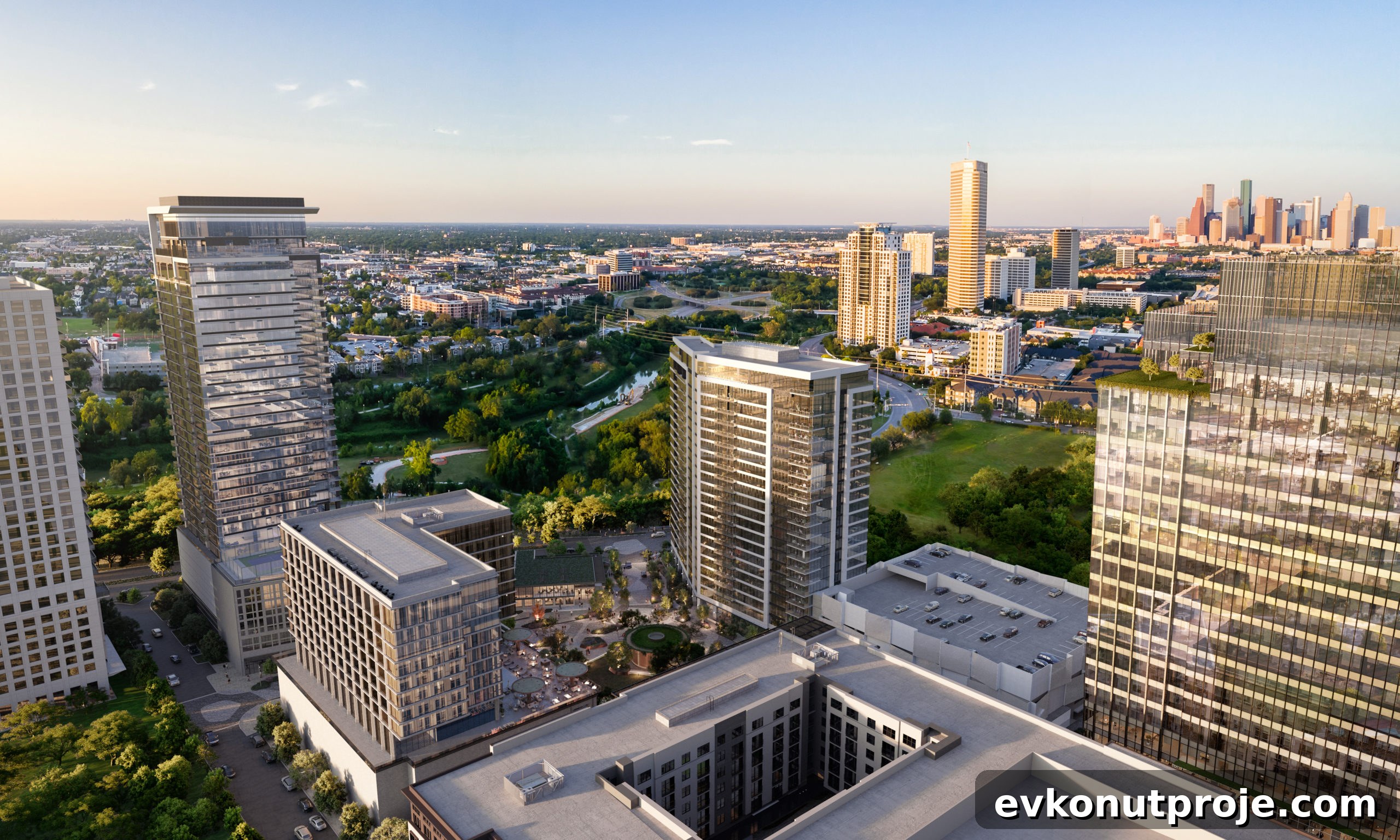
Caption: Rendering of new Autry Park development under development by Hanover and Lionstone near Buffalo Bayou Park.
File: Downtown Apartment Rents Down
File: (2). Houston multifamily. Bruce McClenny. Downtown Apartment Rents Down 14 percent.