Bayou Greenways 2020: Building Recreation, Conservation, and Resilience
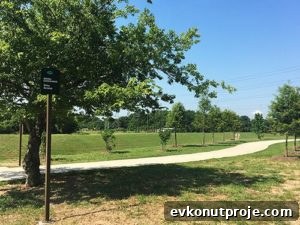
New Bayou Greenway trail. Photo Cynthia Lescalleet
HOUSTON – (By Cynthia Lescalleet for Realty News Report) – Over the weekend, two new hike-and-bike trails officially opened along Sims Bayou in Houston as part of the Bayou Greenways 2020 initiative.
Though modest in individual length, the newly completed 1.5-mile and 2.5-mile segments strengthen a growing network of parks, trails and public spaces that now span roughly 3,000 acres of underutilized waterfront along nine bayous and creeks across the city.
The project’s mission emphasizes equitable access to nature to promote healthier lifestyles, along with conservation, improved community connectivity and increased economic vitality, said Beth White, president and CEO of Houston Parks Board, at a recent media event. The Houston Parks Board is leading and stewarding the effort in partnership with the City of Houston and the Harris County Flood Control District.
Neighborhoods and public agencies throughout Houston have been actively involved in planning and rolling out the greenways, White said. Participants include civic groups, schools, TxDOT, the city’s parks and recreation department and the U.S. Army Corps of Engineers.
With its 2020 deadline in view, Bayou Greenways aims to complete 150 miles of connected, accessible and resilient greenways, bringing parkland within 1.5 miles of 60 percent of Houstonians. A mid-year progress report shows about 47 miles of trail work still pending.
Rethinking the Bayous in ‘The Bayou City’
While bayous continue to serve their primary drainage role, their frontages are being transformed for many shared uses and users across Houston neighborhoods, White said.
The program covers acquisition, design and construction of new green spaces as well as renovation of existing parks and trails along the bayous. New plantings support natural habitats and local wildlife, while plans include ongoing maintenance and repairs, including recovery after high-water events.
Funding combines public and private sources: voters approved $100 million in a 2012 bond referendum, and private philanthropy has been led by a $50 million catalyst gift from the Kinder Foundation. Officials say the fundraising campaign is nearing its $120 million goal.
White described Bayou Greenways 2020 as one of the largest investments in park equity in the nation.
The project is also part of the High Line Network, a collection of public-space initiatives that repurpose existing infrastructure—such as rail corridors and waterways—to create new public amenities. Comparable efforts include River L.A., the Eleventh Street Bridge Park in Washington, D.C., and Buffalo Bayou Park in Houston.
“It’s a robust network with creative teams reimagining built spaces in innovative ways,” White added.
Down by the Bayou
On Sims Bayou, the newly completed 2.5-mile stretch replaces the previous asphalt path with a 10-foot-wide concrete trail and adds landscaping, benches, a trailhead, educational signage and trash and recycling receptacles. The $5.1 million segment runs from South Post Oak Boulevard to Buffalo Speedway and connects to an earlier section to form a 24-mile corridor along the bayou.
In addition, a 1.5-mile hike-and-bike path installed within a utility easement ties into the greenway’s east-west improvements and extends north toward nearby neighborhoods. That under-the-power-lines connection was notable in two ways: CenterPoint Energy permitted recreational use of its easement for the first time and contributed $1.5 million toward the improvement.
The Sims Bayou additions are representative of roughly 250 greenway-related projects planned and executed as part of Bayou Greenways 2020.
A Broader Bayou View
Bayou winds through the Houston’s urban landscape.
Bayou Greenways 2020 is an expanded realization of a 1913 vision by landscape architect Arthur Comey, who proposed using the bayous as the backbone of Houston’s park system.
While the concept of a connected park network is historic, the scale and scope of the current project are significantly larger, said Tom Bacon, chair of the Houston Parks Board, at the same media event.
Expectations for Houston’s waterfront have evolved. Once overlooked, the city’s waterways are now a tool for economic development as Houston competes to attract employers and residents who value modern urban amenities, he said.
He noted that priorities shifted after Hurricane Harvey. “Before Harvey, discussions focused on green space and economic development. After Harvey, the conversation turned to how the city will reshape itself.”
“Houston is seeing itself differently, and parks and recreation are central to that transformation.”