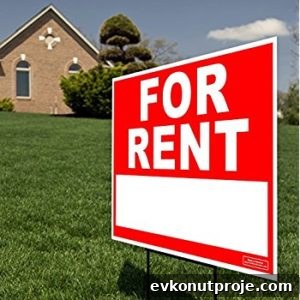
HOUSTON – (By Dale King, Realty News Report) – A team of three professors from two South Florida universities who publish a quarterly housing report have presented a challenge — and a new perspective — for people weighing the decision to buy or rent in their latest study.
Which yields better returns: buying a house or renting a residential unit?
The finding: “Renters who reinvest their savings stand an increasingly better chance of building wealth than those who purchase a home,” according to the recent Beracha, Hardin & Johnson Buy vs. Rent (BH&J) Index, created by two faculty members at Florida International University in Miami and one at Florida Atlantic University in Boca Raton.
The researchers say the index provides timely guidance for residents in 23 metropolitan areas covered by the BH&J Index, including Greater Houston and Greater Dallas. Those regions still show strong buyer interest, but their market momentum is easing.
“Slowing housing starts, rising mortgage rates, declining demand and unsustainable price increases indicate housing markets across the country are cooling, which leads many people to choose renting,” said Ken Johnson, Ph.D., a real estate economist at Florida Atlantic University’s College of Business and one of the index’s authors.
The report classifies the two Texas metros among cities “nearing the top of their current housing cycle,” meaning current prices sit above long-term trends. Other metros on that list include Atlanta, Denver, Honolulu, Kansas City, Los Angeles, Miami, Minneapolis, Pittsburgh, Portland, San Diego, San Francisco, Seattle and St. Louis.
The largest factor driving the rising cost of ownership is higher home prices, said Eli Beracha, Ph.D., co-creator of the index and associate professor in the Hollo School of Real Estate at Florida International University.
“Current scores pushing markets toward renting and reinvesting are largely the result of higher mortgage rates, stronger average returns in the stock market, and increasing ownership costs — including mortgage payments, taxes, insurance and maintenance,” Beracha explained.
“These ownership expenses are rising faster than the cost of renting a comparable property. Renters who save the monthly difference and reinvest it are likely to accumulate wealth faster, on average, than those who buy a home,” he added.
RealtyNewsReport.com contacted Johnson for details specific to Houston and Dallas. He said two factors stand out in those markets and in Denver: each has an economy tied to energy and the shale sector, and each market appears overheated compared with long-term trends.
“Houston, Dallas and Denver largely avoided the worst effects of the 2007–2008 recession. Dallas had very little impact, and now Dallas and Denver rank among the most overheated housing markets, with Houston following closely,” Johnson said.
He also noted that Houston is still coping with some consequences of Hurricane Harvey, which further distinguishes the city’s market dynamics.
What does this mean for prospective homebuyers? The professors advise negotiating firmly and being prepared to walk away from deals that feel overpriced.
“Don’t be afraid to walk away from a deal if the price doesn’t feel right,” Johnson said. “Never buy out of fear that you won’t be able to afford a home later. That mindset contributed to the collapse in 2007.”
The index also identifies many cities where prices remain below their long-term trends, indicating that buying and building equity may be the better option. Those metros include Boston, Chicago, Cincinnati, Cleveland, Detroit, Milwaukee, New York and Philadelphia.
To calculate an index value for each metro and date, professors Johnson, Beracha and William Hardin III, Ph.D., director of FIU’s Hollo School of Real Estate, run a “horse race” comparison between a buyer and a renter of a similar-quality dwelling. The renter is assumed to reinvest all funds saved by not owning.
The analysis accounts for a range of factors: rent-to-price ratios, mortgage rates, expected inflation, historical long-term stock market returns, long-term rent growth, housing price appreciation, maintenance and property tax costs, homeownership tax benefits, transaction costs, and the average duration homeowners remain in a residence before relocating.
The BH&J Index is published quarterly and is available from the authors’ institutional channels.
June 27, 2018 Realty News Report Copyright 2018