AUSTIN – (Realty News Report) – Austin’s shopping center and retail leasing activity fell sharply in the fourth quarter, dropping 63 percent as the retail sector felt the impact of the coronavirus pandemic.
Leasing activity—including both new leases and renewals—totaled 304,000 square feet of signed deals, a 63 percent decline from the fourth quarter of 2019, according to the NAI Partners commercial real estate firm.
NAI Partners reported softer asking rents and a decline in retail occupancy across Austin.
In its annual overview of Austin retail space, the Weitzman real estate firm said that despite the year-end downturn, Austin’s overall retail fundamentals remained solid.
The Weitzman report noted Austin finished 2020 with a retail occupancy rate of 95 percent—an overall healthy level, though the lowest year-end occupancy since 2013.
Even with vacancy increases driven largely by reduced retail traffic during the COVID-19 pandemic, Austin remained the strongest major metropolitan retail market in Texas by occupancy, Weitzman said.
“For nearly 20 years the market has maintained enviable occupancy above 90 percent, with the low point being 90.5 percent in 2006. The year-end 2020 rate reflects a decline from the 96 percent occupancy recorded at year-end 2019.”
The occupancy decline was influenced by a rise in small-concept vacancies and by closures among national chains such as Stein Mart, 24 Hour Fitness, Pier 1 and Tuesday Morning. However, the relatively limited number of closings, coupled with continued economic stability and few new space deliveries, left Austin in better occupancy shape at year-end 2020 than many had predicted at the onset of the pandemic in March.
Although some restaurants closed, many of those spaces were quickly backfilled by new operators with business models focused on takeout, delivery and limited-capacity in-person dining.
There was also demand for larger vacant spaces. For example, Skechers replaced a former Pier 1 near Lakeline Mall, and Cowboys Fit opened a 57,000-square-foot fitness facility in Pflugerville.
Several new restaurants and concepts leased second-generation spaces across the city, including Easy Tiger Bake Shop and Beer Garden, which took over the former Old Red’s Porch on South Lamar; Another Broken Egg, which moved into the former Mangia Pizza at 8012 Mesa Drive; Qi Austin, opening downtown at street-level retail on West Sixth Street; Buddy’s Burger, a fast-casual concept that opened at 9001 Cameron Road and is already pursuing a second location; and Bishop Cidercade, which opened in the former Joe’s Crab Shack on East Riverside.
The Weitzman report highlighted several major corporate moves benefiting Austin. Tesla is building a gigafactory just outside Austin in southeastern Travis County, with the first phase expected to open by mid-2021. Oracle announced in late 2020 it would relocate its headquarters from California to Austin, and Apple is constructing a new $1 billion, 3-million-square-foot campus expected to open in 2022.
“If vaccine distribution substantially reduces infections and restores confidence in shopping, dining and entertainment, we expect recovery in 2021 and a return to pre-pandemic retail occupancy rates and overall economic health by 2022,” Weitzman said.
Feb 15, 2021 Realty News Report Copyright 2021
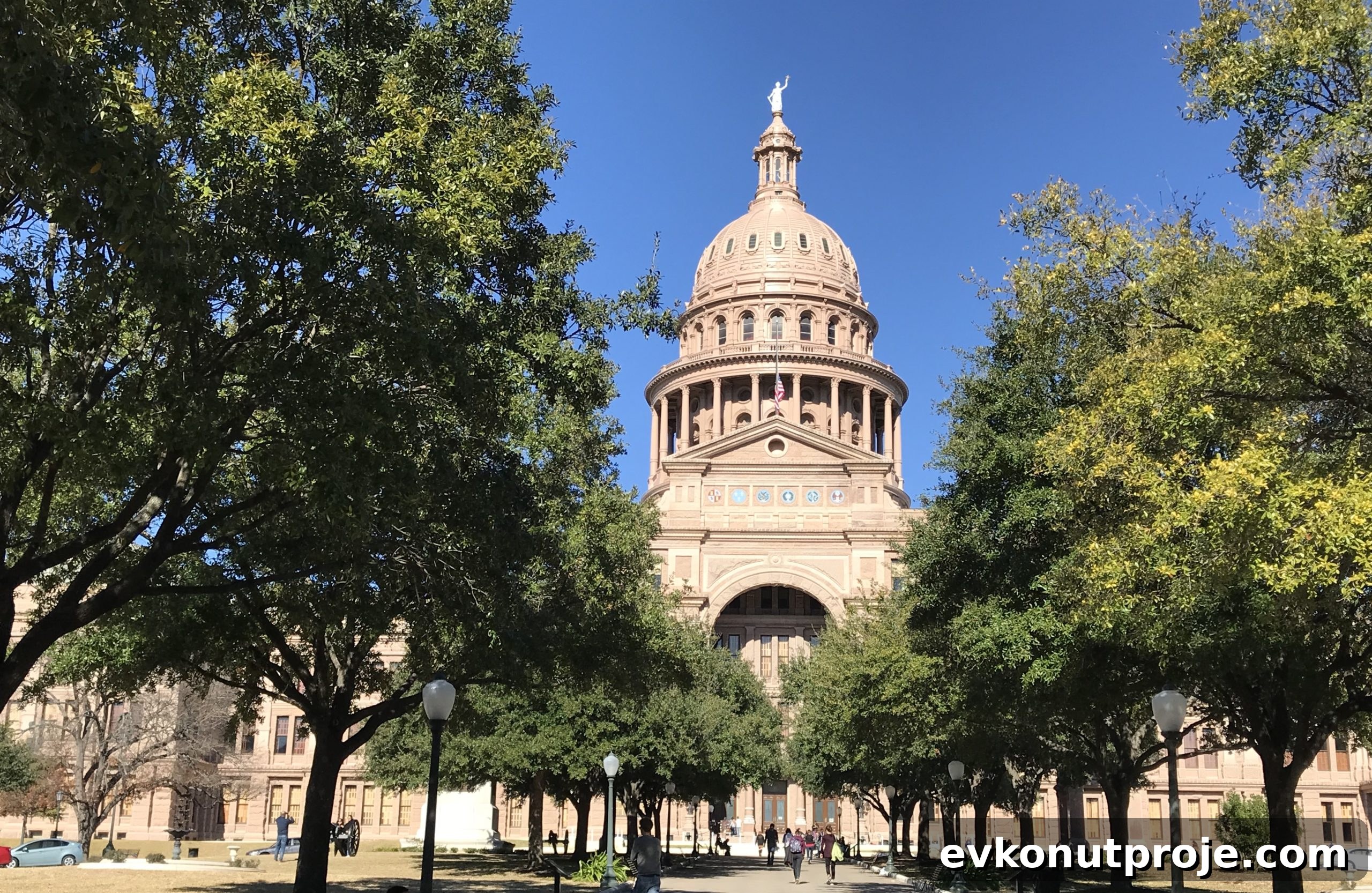
Photo: State capitol in Austin. Photo credit: Ralph Bivins, Realty News Report Copyright 2021
File: Retail Leasing Down 63 Percent