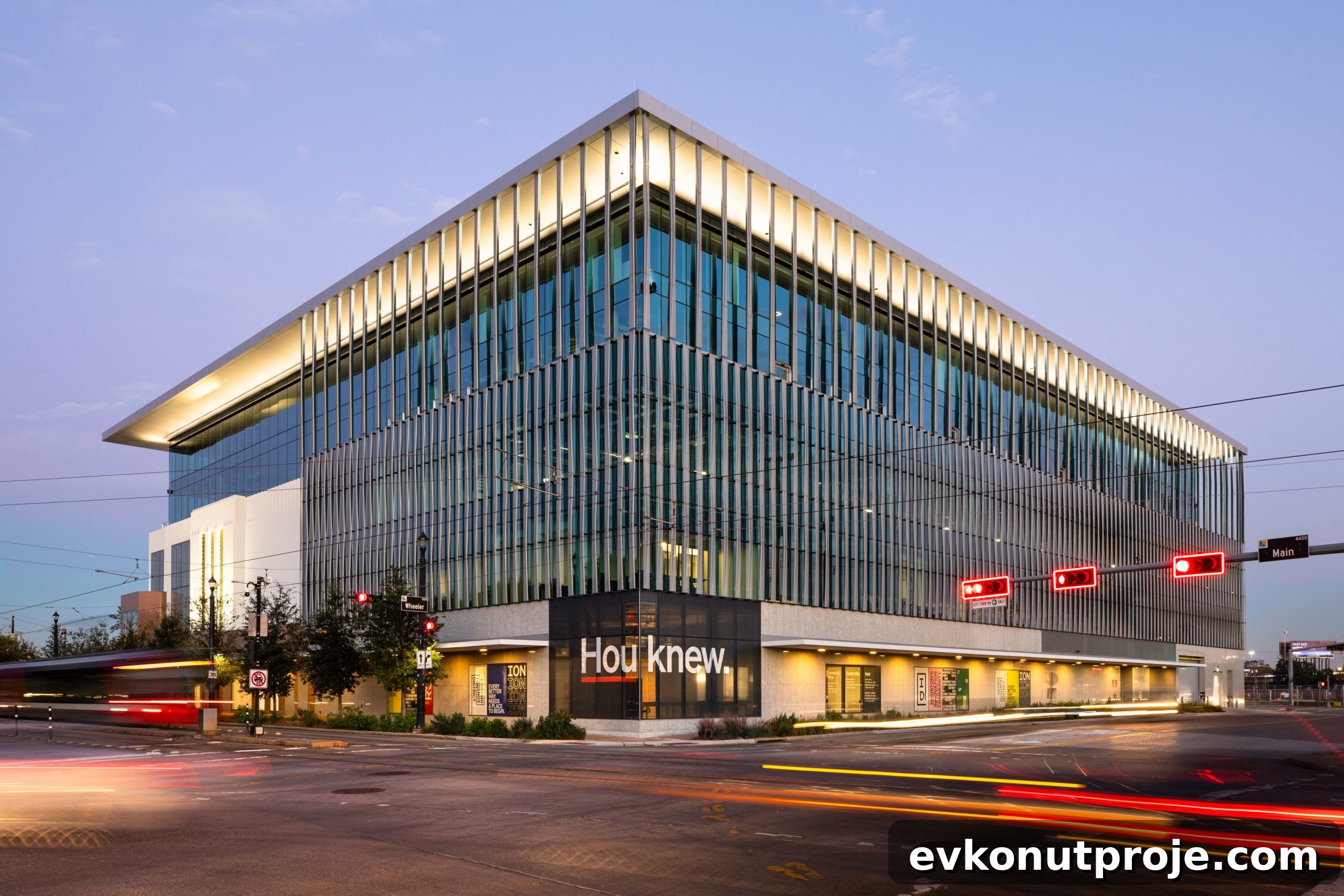
HOUSTON – By Cynthia Lescalleet, for Realty News Report – The Midtown building that now houses The Ion, an innovation hub, has maintained its original spirit as a multi-purpose resource center.
Once a bustling department store that served one-stop shoppers, the repurposed property now provides collaborative workspaces, classrooms, maker resources, services and programming that support entrepreneurs, startups and investors.
The Ion’s mission is to create connections among businesses, educational institutions, startups, incubators, venture capital and the broader community to strengthen Houston’s economic resilience while ensuring inclusivity.
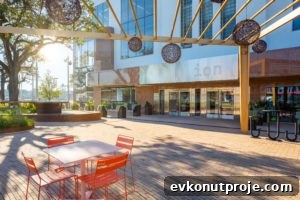
Originally a Sears store and reimagined and redeveloped by Rice Management Co., the 266,000-square-foot building anchors an emerging innovation district across 16 acres of RMC-managed property in Midtown. A new 1,585-space parking garage with street-level retail is under construction; it will serve The Ion and three future buildings that are planned to include office space and possibly multifamily units. Additional outdoor areas will complement The Ion’s half-acre plaza and open-air public spaces. RMC officials have not announced construction start dates.
This week, The Ion, located at 4201 Main St. at Wheeler, is hosting an Activation Festival — a public grand opening designed to highlight the hub’s purpose, amenities and potential.
Ion Panel Discussion: Three Innovation Districts
As part of the festival, a panel of leaders from other collaborative innovation centers shared their lessons and successes to inform Houston’s growing innovation ecosystem.
Brooklyn Navy Yard
The Brooklyn Navy Yard in New York has evolved into a 300-acre complex with 70 buildings and about 450 businesses. Its transformation has unfolded over two decades and continues to expand, according to Johanna Greenbaum, chief development officer for the Brooklyn innovation district. The mix of manufacturing and creative tenants generates collaboration and new opportunities. Along with academic and training partnerships, the Yard operates an employment center to help place workers whose skills have grown alongside employer demand.
Opportunity Hub – Atlanta
Atlanta’s Opportunity Hub, now a decade old, focuses not only on innovation but also on innovation equity, said Rodney Sampson, executive chairman and CEO. He highlighted persistent disparities: fewer than 1 percent of tech engineers and executives are Black, and less than 1 percent of venture capital goes to Black-founded advanced technology companies.
Sampson emphasized that physical spaces alone are insufficient. “Don’t just invest in a place but in programs and in people,” he said, urging investment in early exposure to the innovation economy, skills development and talent placement. These elements are vital to nurturing entrepreneurship, enabling access to capital, and ultimately driving job creation and wealth building.
The Ion
The Ion is “on to something” and open to adopting best practices, said Jan Odegard, the hub’s executive director. Since reopening the building to in-person activity in mid-February, The Ion has hosted about 90 events and programs attended by a broad and diverse cross-section of Houston’s workforce.
“It’s not what we have done but what we want to do” that motivates Ion leadership, Odegard said. The Ion is being developed by Rice Management, which oversees Rice University’s endowment.
Current tenants at The Ion include Microsoft, Chevron Technology Ventures, Schlumberger and Dow Chemical, alongside startups such as Liongard and early-stage companies like Koda Health and Clutch. The larger Ion District is also home to Greentown Labs Houston and the recently announced education facility for Theatre Under the Stars. An affiliation with Exxon Mobil has been announced as well.
The innovation district sits midway between downtown and the Texas Medical Center, helping define an innovation corridor along the MetroRail line on Main Street.
Panelists stressed that innovation centers and districts are not one-size-fits-all; each city brings its own economic DNA. Odegard pointed to Houston’s strengths in heavy industry and medicine as foundations that local innovators can build on and evolve into new opportunities.
In the meantime, The Ion’s Activation Festival invites the public to explore the space, view a startup showcase, attend events and perhaps remember trips to the old department store to buy school clothes, tools or household goods. As one Rice Management representative noted, few buildings can combine nostalgia with forward-looking innovation.
May 9, 2022 – Realty News Report. Copyright 2022.
Photos: Courtesy The Ion. Photo credit: Shannon O’Hara Photography
File: The Ion Innovation Hub