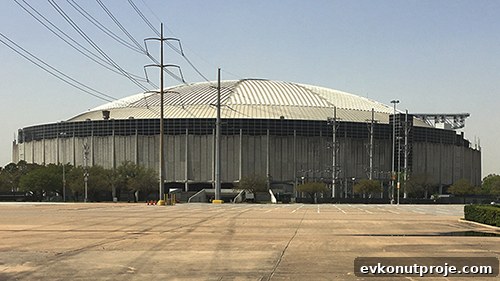
HOUSTON – The Astrodome, an iconic and often debated Houston landmark, is at the center of renewed efforts to define a sustainable, shared future. The Astrodome Conservancy is leading a campaign focused on preservation, stewardship and strategic redevelopment to ensure the structure remains a usable and accessible asset for the community.
As part of a refreshed public engagement effort, Astrodome Conservancy has launched the inaugural virtual Race for the Dome to encourage community involvement and raise awareness for long-term plans. The organization emphasizes both stewardship and partnerships as essential tools to move the landmark from an idle relic into a vibrant community resource. The shuttered facility, owned by Harris County, sits adjacent to NRG Stadium and continues to draw interest as a candidate for careful reuse.
The virtual Race for the Dome, held April 2–11, offers a safe, socially distanced format that lets participants take part from anywhere. Registrants can run, walk, bike, hike, scoot, skate or otherwise travel a 5K distance at their own pace and on their own route. Organizers note that 5K equals roughly eight laps around the Astrodome’s interior—an accessible way for supporters to connect physically and symbolically with the site. The event also includes onsite opportunities: the first 200 registrants receive special access to take laps at the Dome on April 10, and the first 500 registrants receive commemorative Dome sunglasses.
Founded in 2016, Astrodome Conservancy pursues a twin mission: to preserve the historic structure and to catalyze redevelopment that is financially and operationally sustainable. Executive Director Beth Wiedower Jackson says the group focuses on raising private funds and building partnerships that can move Harris County and local stakeholders toward viable reuses. To date, the conservancy has raised $1.5 million to support public awareness, planning and early-stage redevelopment efforts.
The Astrodome carries important historic designations. In 2017 it was declared a Texas State Antiquities Landmark by the Texas Historical Commission, and it is listed in the National Register of Historic Places. Structurally, the Dome remains sound and not at risk of demolition; the primary challenge is securing the funding and partnerships necessary to implement a next-generation use that respects the site’s history while activating it for contemporary community needs.
Thinking Outside the Dome
Public-private partnerships have proven successful in Houston for transforming civic and cultural spaces—Discovery Green is a local example—and the conservancy is advocating for a similar collaborative approach for a county-owned asset. Jackson and the conservancy point to other adaptive-reuse projects as models, including large-scale repurposing of underused infrastructure and civic campuses that have been reinvented as cultural and public spaces. These examples illustrate that underperforming assets can be reimagined through visionary planning combined with public and private investment.
Times Changed and Still Changing
Designed in the Space Age by architects Hermon Lloyd & W.B. Morgan and Wilson in collaboration with Morris, Crain & Anderson, the Astrodome opened on April 9, 1965, as the first fully enclosed, air-conditioned sports stadium. With nine acres under its roof and an interior ceiling rising the equivalent of 18 stories, the Dome was a mid-century engineering marvel and cultural symbol. It hosted Houston Astros games, the Houston Livestock Show and Rodeo, the Offshore Technology Conference, exhibition events, and even the 1992 Republican National Convention.
After the opening of Reliant Stadium in 2002, Dome use declined; the facility served notably as an emergency shelter for Hurricane Katrina evacuees before being closed to regular activity in 2009. Today the Astrodome presents a rare opportunity to pursue preservation-minded redevelopment at a time when private funding and creative programming can support planning and early implementation. Events like the Race for the Dome are part of the conservancy’s strategy to engage the public and build momentum for long-term investment.
March 28, 2021 Realty News Report Copyright 2021
Astrodome exterior photo 2021: Photo credit: CALpix
File: Racing to Save Astrodome: A Run at Redevelopment
For more about the Astrodome, see Chapter One of the book Houston 2020: America’s Boom Town – An Extreme Close Up by Ralph Bivins. Available on Amazon.
File: (2) Astrodome Conservancy. Racing to Save Astrodome April 2–11, 2021. Hermon Lloyd. Morris, Crain & Anderson.