HOUSTON – (By Larry Koestler) – Houston’s passion for craft beer has shown remarkable resilience. Despite a challenging period that included the closing of a few breweries, the Greater Houston area has continued to add new breweries at a notable pace.
The most recent review from NAI Partners shows that the region’s brewery count has grown since the firm’s last analysis in 2019. At the end of 2019—prior to the pandemic—Greater Houston had 61 craft breweries. Since then, another 10 breweries have opened, bringing the current total to 71.

The local scene has grown a great deal since its earliest days, when Saint Arnold was effectively the city’s lone craft brewery following its founding in 1994. Growth accelerated after Southern Star opened in Conroe in 2008. By the end of 2013, Houston had 16 breweries occupying roughly 234,301 square feet of mostly industrial space, with some locations classified as retail.
344 Percent Increase in Houston Breweries
The year 2013 became a pivotal turning point. A change in state law allowed producers holding a brewpub license to sell beer directly to consumers to go—removing the exclusive reliance on the three-tier distribution system. That policy shift helped unlock a new era of brewery expansion in Houston.
From that benchmark, the number of breweries in the area surged. Over the following eight years, the total number of breweries rose by 344 percent, while combined brewery square footage increased by 179 percent to a reported 652,533 square feet.
Further regulatory changes accelerated this growth. A 2019 law extended direct-to-consumer sales to all craft beer producers, including both brewpubs and production-only breweries. In 2020, lawmakers eased restrictions again to make beer-to-go more widely available during extended closures and capacity limits imposed by the pandemic. Local services, such as Houston’s craft beer delivery options, also helped breweries maintain customer access when taprooms were closed or limited.
Brewery Boom in Houston
New additions over the past year included neighborhood favorites and high-profile entrants such as Local Group Brewing, New Magnolia Brewing in the Heights, and Urban South HTX. These openings reflect both growing consumer demand and the continued appeal of Houston as a craft beer market.
At the same time, established Houston breweries continue to earn recognition. SpindleTap Brewery, for example, has become a notable presence for hazy double India pale ales (DIPAs), a popular and highly sought-after style known for pungent hop character, tropical fruit esters, and a soft, hazy appearance. Competing at a national level with the best producers of the style remains challenging, but local breweries such as SpindleTap have demonstrated they can stand alongside respected national peers.
Despite Houston’s rapid brewery growth, Texas overall remains relatively underserved on a per capita basis. According to Brewer’s Association data, the state’s ranking in breweries per capita slipped slightly between 2019 and the most recent full-year dataset. Nevertheless, craft brewing has continued to contribute significantly to the Texas economy: the industry produced a multi-billion-dollar economic impact in recent years, reflecting strong consumer demand and growing commercial activity.
Writer Larry Koestler is NAI Partners’ Senior Vice President of Marketing & Communications, and a craft beer enthusiast and consultant.
July 19, 2021 — Realty News Report. Copyright 2021.
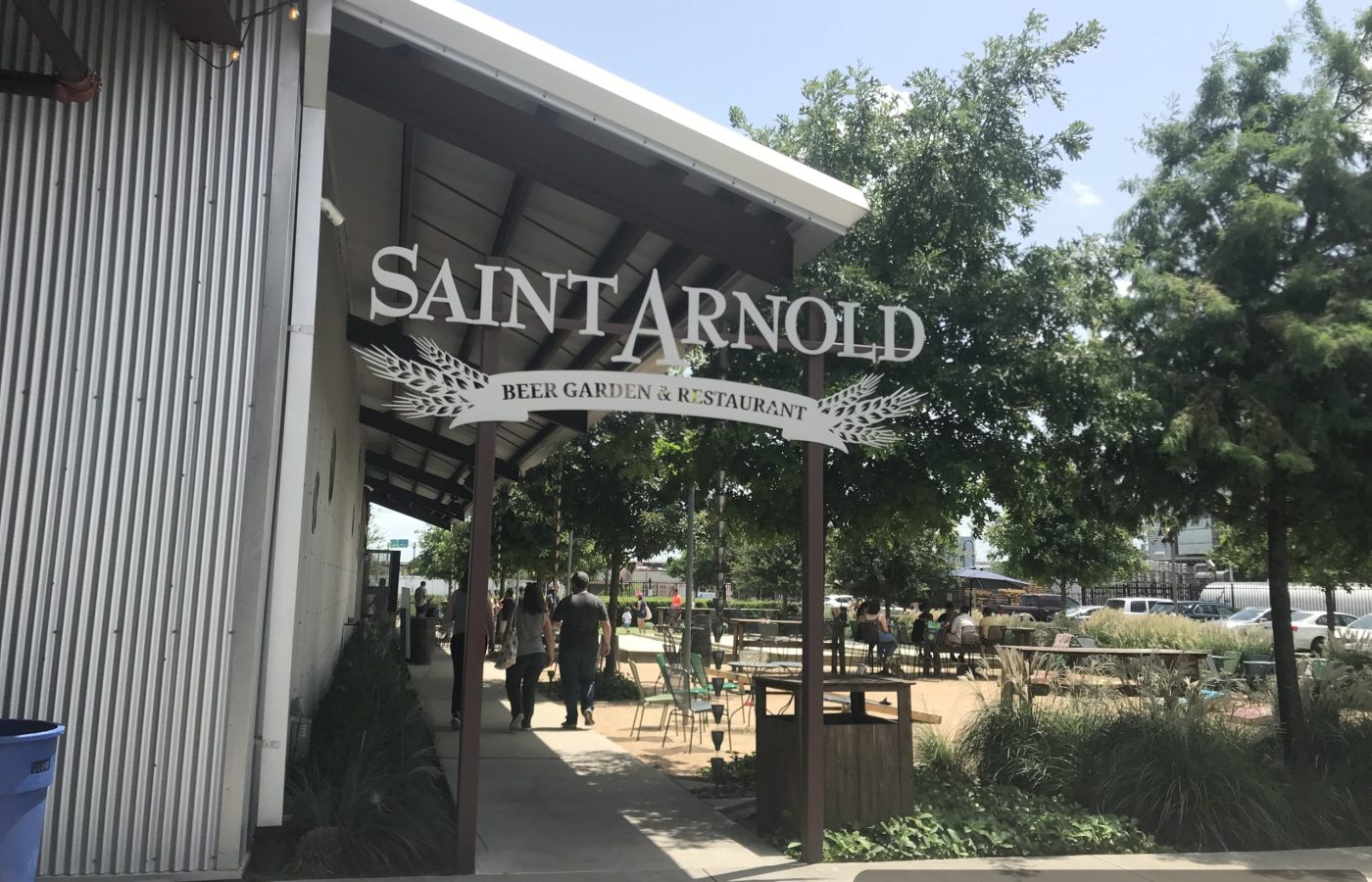
Caption: Saint Arnold Brewery on Lyons Avenue in Houston
Photo credit: Ralph Bivins, Realty News Report. Copyright 2021.
For readers interested in Texas real estate and local growth trends, the book “Houston 2020: America’s Boom Town – An Extreme Close Up” by Ralph Bivins explores the city’s recent development and market dynamics.
File: Brewery Boom in Houston Fueled by Craft Beer Lovers
File: Saint Arnold. Brewery Boom in Houston. SpindleTap Brewery