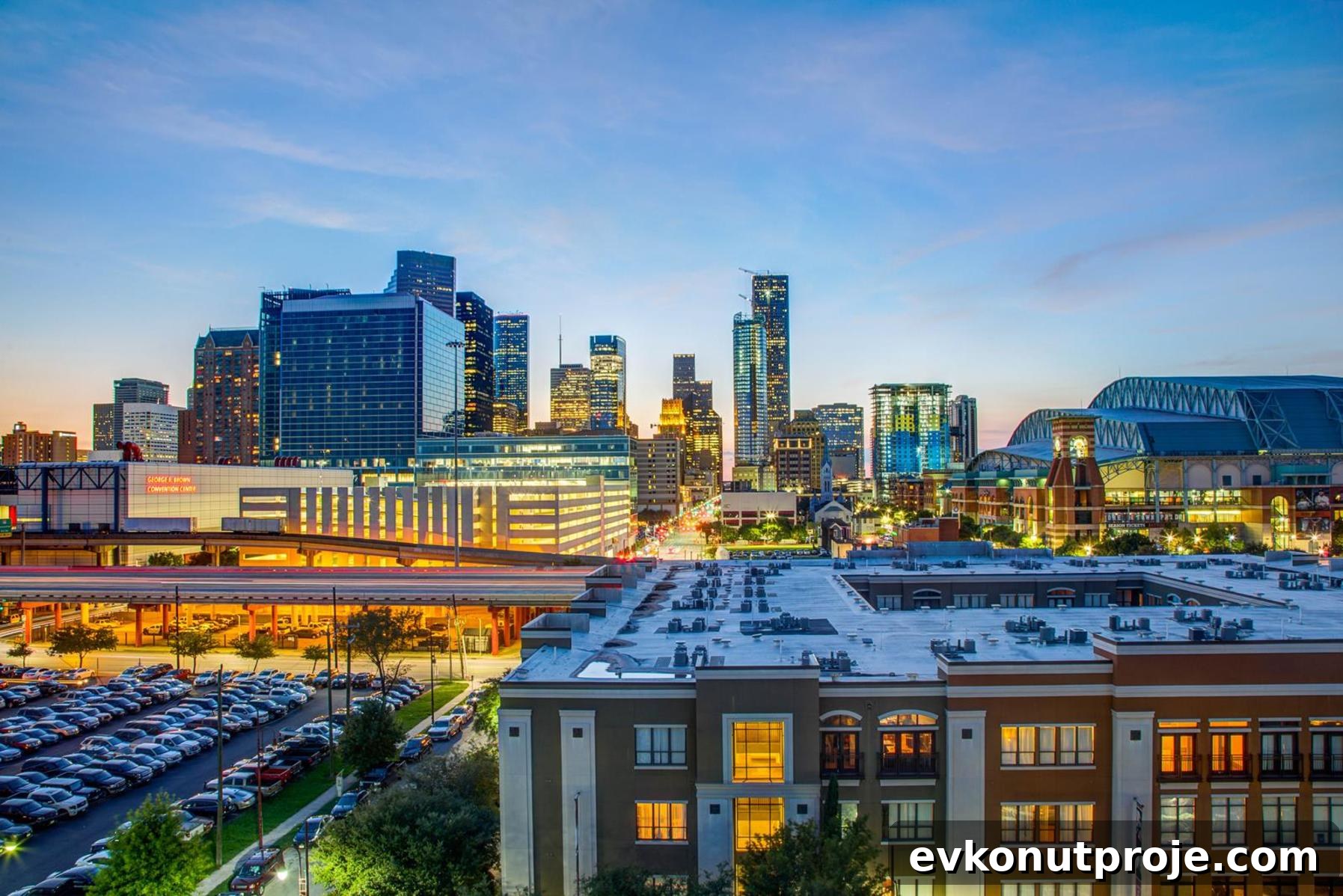
HOUSTON – (By Dale King, Realty News Report) – Last week members of Central Houston Inc. set aside the challenges brought by the coronavirus to acknowledge positive developments in the Bayou City’s urban core during 2020.
Due to COVID-19, Central Houston Inc. — the coalition of downtown business leaders formed in 1983 — held its annual meeting virtually to report how Houston’s downtown remained resilient and forward-looking despite the pandemic.
Mayor Sylvester Turner admitted he preferred “the energy of a ballroom full of people,” but he nonetheless praised Central Houston for its role in supporting the city’s large infrastructure and social initiatives. He highlighted the group’s contributions to the $7 billion North Houston Highway Improvement Project and its work addressing homelessness, an effort in which Houston has outperformed many other large U.S. cities.
The topic of homelessness was the focus of the keynote delivered by nationally recognized expert Mandy Chapman Semple.
Jonathan Brinsden, chair of Central Houston Inc. and CEO of Midway, a Houston-based real estate investment and development firm, summed up 2020 as a “perfect storm”: “Houston, the downtown and COVID-19 collided with the already volatile energy market.”
That combination emptied the city center as office workers, restaurant staff, retailers and small-business owners left downtown. But Brinsden emphasized that Central Houston — a group known for getting things done — has partnered with other stakeholders to spur a recovery that has already begun.
“More than 10,000 people now live downtown, and more than 70,000 live within a two-mile radius, with additional residential construction underway. We have 28 hotels with nearly 8,400 rooms and more than 400 food and beverage options,” he said.
“Significant investment has gone into new office construction and renovations, and many public spaces have been created or improved. Yes, COVID had an impact, but we are confident people will safely return to a downtown that is becoming an even more exciting place.”
Brinsden, who also serves with the Coalition for the Homeless, has partnered with Semple and Mayor Turner to address homelessness in the city.
The mayor noted that earlier in the summer he and Harris County Judge Lina Hidalgo announced a homelessness initiative. In response to the pandemic’s threat to housing stability, “the city and many, many partners” developed a $65 million wraparound program with services designed to prevent and alleviate homelessness, including:
- Capacity to serve 5,000 people who are homeless or at risk of homelessness;
- Rapid rehousing and rental assistance aimed at 1,700 people who recently became homeless;
- Creation of 1,000 permanent housing placements;
- Rent assistance for up to three months to divert 2,000 people from shelters;
- Expanded mental health case management;
- Targeted outreach and services for people living unsheltered on the street.
Mayor Turner added that construction of an emergency shelter for 130 people will begin in spring 2021, with services provided on site.
Semple, who served as Houston’s first special assistant for homelessness for three and a half years, spoke about both the practical challenges and the psychological toll of living without stable housing.
“Homelessness is the visible, human manifestation of failure,” she said. “We often react with pity, disgust, or outrage.”
She emphasized that homelessness is not only a lack of housing but also a failure of social systems: “People fall through the cracks — or, more accurately, through gaping holes in our system.”
Some cities manage the issue more effectively. Over the past decade Houston reduced its counted homeless population from about 8,500 to roughly 4,000. Meanwhile, the surge of people living on the streets in some West Coast metros, such as Los Angeles and San Francisco, has prompted national concern.
Semple stressed that addressing homelessness requires both a shift in strategy and a change in mindset. “There is no single cause of homelessness,” she said, noting that the pandemic, economic hardship and involuntary instability can all lead to housing loss.
“We often fail to appreciate the value of prevention and rehousing programs until we are literally stepping over people sleeping on new sidewalks. The solution is not only emergency shelters; it’s comprehensive rehousing and long-term support.”
She added that relying solely on charitable efforts to provide food, shelter and services is not sufficient — coordinated public and private strategies are essential.
Judge Lina Hidalgo also spoke about the importance of compassionate, coordinated care for people experiencing homelessness and praised Central Houston Inc. for its innovation and ambition in expanding public spaces, transportation options and downtown development, which keep the city dynamic.
“Downtown will continue to be an engine of progress and growth. We will emerge stronger on the other side of this crisis,” she said.
Central Houston’s other priorities include:
- Maximizing civic enhancements tied to the North Houston Highway Improvement Project in collaboration with partners and through PLAN Downtown;
- Advancing a re-envisioned regional commuter system and improving multimodal functionality of downtown’s street grid as new technologies evolve;
- Facilitating the creation of a technology and innovation corridor that connects the Downtown Launchpad, The Ion in Midtown and the Texas Medical Center;
- Launching a three-year plan to attract new employers to downtown and improving two-way communication about the benefits of being located in the central city;
- Supporting the community initiative to end homelessness, locally known as “The Way Home.”
Nov. 2, 2020 Realty News Report Copyright 2020
File: Resurgence: Central Houston Overcoming
File: Jonathan Brinsden, Lina Hidalgo, Sylvester Turner. Resurgence: Central Houston Overcoming COVID, Homelessness and Empty Sidewalks