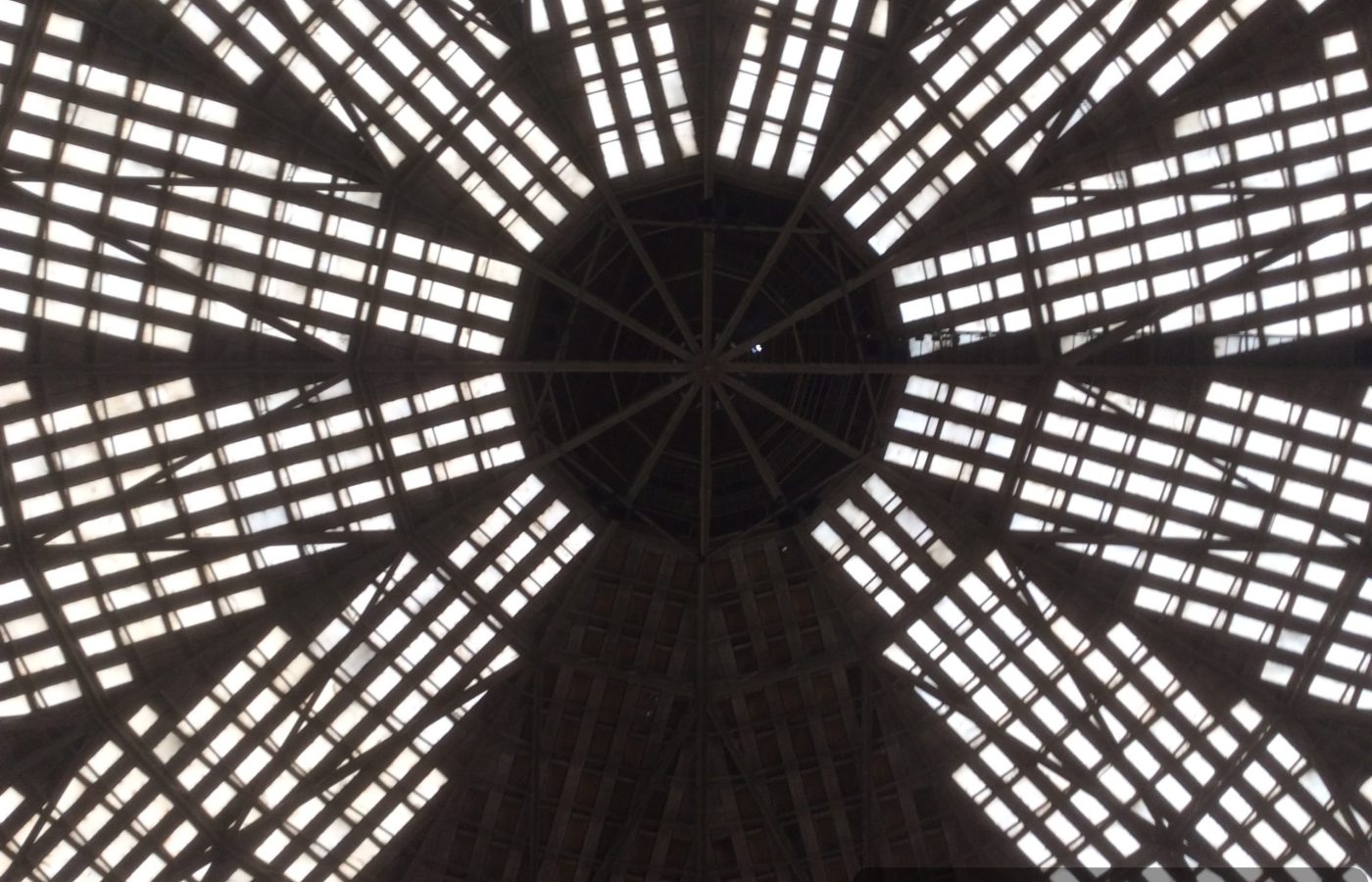
HOUSTON – (Commentary by Ralph Bivins, Realty News Report) – The Astrodome is more than a building; it is a testament to engineering ambition and Houston’s can-do spirit. Though it has sat empty for years, the Dome still stands as a symbol of the city’s past innovation and its potential for renewed purpose.
Roy Hofheinz envisioned a covered, air-conditioned stadium long before such structures were commonplace. Dubbed the “Eighth Wonder of the World” when it opened, the Astrodome captured the optimism of 1960s Houston. Its bold design helped define a city eager to push boundaries in technology, business and entertainment.
The Astrodome can be great again if leaders adopt a coherent, forward-looking plan that honors its history while imagining new uses that serve today’s communities. Too many recent proposals have been uninspired, piecemeal or lacking a unifying vision. Redevelopment requires a strong leader or team able to present a compelling long-term concept that matches—or surpasses—Hofheinz’s original ambition.
Fortunately, the Texas Historical Commission’s designation of the Astrodome as a State Antiquities Landmark protects the structure from demolition or significant alteration without state approval. That protection prevents the easiest, short-sighted solution—razing the Dome and turning its footprint into yet more surface parking. The building remains structurally sound, and demolition would be costly; estimates have placed the expense well into eight figures.
As the world’s first large-scale, air-conditioned domed stadium, the Astrodome earned its place in sports history. Its debut moment—Mickey Mantle’s first home run there on April 9, 1965, with President Lyndon B. Johnson in attendance—remains a memorable milestone. The Dome’s innovations and cultural resonance make it a landmark worth saving and adapting.
$105 Million Shelved
During former Harris County Judge Ed Emmett’s tenure, county leaders approved a $105 million redevelopment plan for the Dome. That concept proposed converting the Astrodome’s lower levels into two subterranean levels of parking—about 1,400 below-grade spaces—while using the 500,000-square-foot main floor for exhibits, events and entertainment. Though that plan stalled, it demonstrates one of many possibilities for bringing the site back to life.
The Dome has been vacant since Major League Baseball and NFL tenants moved to modern facilities, and in some quarters the building faded from civic discussion. Yet its ties to Houston’s identity are deep: the city’s prominence in the space program during the 1960s, led by NASA’s Mission Control nearby, inspired the Astros’ name and gave the stadium a distinctly local cultural resonance. Astronauts were national heroes then, and the Dome reflected that era’s enthusiasm for progress.
Hofheinz was not only an innovator in architecture but also a marketing pioneer. Under his leadership, the stadium introduced concepts such as corporate skyboxes—private suites that changed how sports venues generated revenue. When natural grass proved difficult to maintain under the dome, Hofheinz partnered with industry innovators and helped bring synthetic turf into the mainstream; “Astroturf” became an iconic product born from that challenge.
Houston’s larger identity—an entrepreneurial, opportunity-driven city with little zoning and a focus on practical achievement—lies behind the Astrodome’s symbolic power. The building embodies a time when innovation, hard work and risk-taking defined success in this region.
The Astrodome should remain a living part of Houston’s story. With the right leadership and community engagement, the structure can be repurposed to serve new cultural, recreational, educational and economic functions while preserving its historical significance.
What about the owners? Yes, You.
The Harris County Commissioners Court and the Harris County Sports & Convention Corporation are actively working on a plan to revitalize the 350-acre NRG Park, which includes the Astrodome, NRG Stadium and the surrounding convention facilities. County officials are coordinating with major tenants such as the Houston Texans and the Houston Livestock Show and Rodeo, and have engaged a number of planning, architecture and consulting firms to develop redevelopment scenarios.
But the ultimate owners of this land are the people of Harris County. Residents who pay taxes should have a meaningful voice in determining how this public asset is used. Recent planning efforts have included community-oriented partners like the Astrodome Conservancy, which can help ensure public interests are represented in final plans.
One immediate step would be to reduce the heavy fencing that isolates NRG Park. Reimagining the 350 acres as a genuine public park—with trees, lawns and year-round access—would reconnect the community to the site. NRG Park should feel like a place for families, sports fans and visitors to gather, not a gated expanse of underused asphalt.
The Elephant Not in the Room
Consultants and tenants will present ideas—and their needs should be considered—but redevelopment must balance commercial requirements with public benefit and historical preservation. There will always be advocates for more parking and paved surfaces, but the long-term value of green spaces, cultural programming and adaptive reuse far outweighs short-term convenience.
Other cities guard their historic landmarks jealously—San Antonio and its Alamo, New Orleans and its French Quarter. Houston can and should do the same with the Astrodome. Preserving the Dome while giving it a new, active role would honor the city’s past and support its future.
Aug. 14, 2024 Realty News Report Copyright 2024
Photo credit: Ralph Bivins, Copyright 2024 Realty News Report.
THE RALPH BIVINS PROJECT PODCAST
Recent podcast guests include Sam Scott of CommGate; John S. Moody, Jr. of Moody Law Group; Scott Martin of Granite Properties; Robert Clay of Clay Development; Alma Zavala of CommGate; Adam Lair of Partners Capital; Jake Donaldson of Method Architecture; Bill Baldwin of BLVD Realty; Johnny Cruz of RAMSA; John Breeding of Uptown Houston; Dean Strombom of Gensler; Lou Cushman of Cushman & Wakefield; Edward Griffin of Griffin Partners; Bill Odle of TBG Partners; Rusty Tamlyn of JLL Capital Markets; Carlos Bujosa of Transwestern; Mike Spears of Lee & Associates Houston; and Michael Scheurich of Arch-Con.
File: The Soul of Houston Lies Under This Roof