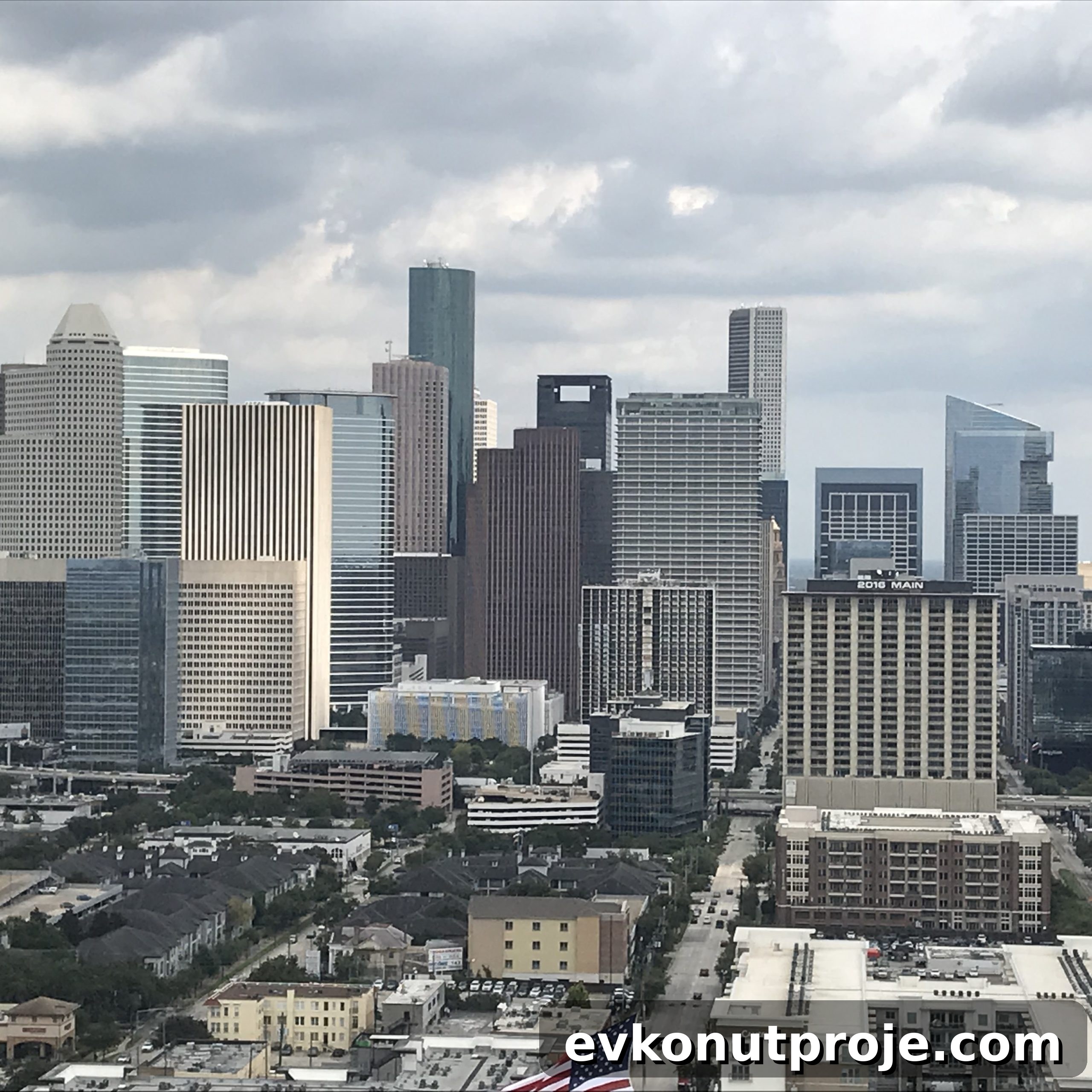
HOUSTON – (Excerpt from Houston 2020: America’s Boom Town by Ralph Bivins) — The boundaries of downtown Houston are set to be dramatically reshaped over the next decade.
The Pierce Elevated, the section of Interstate 45 that runs across the southern edge of downtown, will be removed. Once supported by heavy columns, that elevated roadway has long been a physical and psychological barrier between Downtown and Midtown. The ground-level areas beneath the freeway have been noisy, polluted, and frequently used as informal shelter by unhoused people. Removing the Pierce Elevated will eliminate a visible eyesore and free up land for new public uses.
Beyond removing an eyesore, taking down the Pierce Elevated opens new possibilities for development and for reestablishing connections between neighborhoods. The freeway’s relocation will also blur the eastern boundaries of downtown and raise questions about where Downtown ends and EaDo—the rapidly redeveloping district just east of downtown—begins. Opportunities exist to redefine downtown’s western edge as well.
Change is coming
Two decades from now, downtown Houston could look very different from today. Planners envision a transformed central business district with a five-mile Green Loop linking downtown by pedestrian and bicycle routes to adjacent neighborhoods, wider bayou trails, and even driverless vehicles integrating with new infrastructure. Encircled today by Interstates 10, 45, and 69, tomorrow’s downtown would no longer be isolated by concrete thoroughfares; instead, the core would weave seamlessly into surrounding, lower-density communities that were cut off when the freeways were first built.
Planners also expect a much greener downtown, with new parks and public spaces. One proposal anticipates a large elevated park similar in concept to Dallas’ Klyde Warren Park—a multi-acre open space built above a freeway with traffic routed beneath—providing an urban oasis and a connector to bayou trails and neighborhoods.
This transformation is driven by the North Houston Highway Improvement Project (NHHIP), a broad rebuilding effort led by the Texas Department of Transportation (TxDOT). NHHIP presents a rare opportunity to stitch back together parts of Houston that were separated by mid-century highway construction. TxDOT has identified roughly $7 billion in capital investments aimed at improving mobility and highway safety while fostering greater pedestrian activity and neighborhood connections.
“The North Houston Highway Improvement Project represents a once-in-a-century chance to literally remake our central city, not just along the Pierce Elevated but around downtown and in areas to the north,” said Guy Hagstette, vice president for parks and civic projects at the Kinder Foundation. Central Houston, a private nonprofit that has worked with TxDOT to manage project impacts and engage communities along the route, sees proposals such as a Green Loop around downtown and a greenway along Little White Oak Bayou to Acres Homes as key opportunities.
Hagstette notes that Houston’s park proposals aim to eclipse Dallas’ Klyde Warren Park in size and scope, with plans calling for roughly 30 acres of new green space integrated into the Green Loop. With three major sports venues and the George R. Brown Convention Center nearby, such a park could serve neighborhood residents, provide a welcoming introduction for visitors, and host large citywide events that have outgrown existing parks like Discovery Green and Eleanor Tinsley Park.
Public and private leaders are rethinking transit and land-use strategies as TxDOT plans to rebuild the highways that ring downtown and realign Interstate 45 to the north and east. The changes are expected to be significant and long-lasting.
Ric Campo: “Bridges Have To Be Fixed”
“All the freeways around the country generally go through the downtown area and Houston is no different,” said Ric Campo, chief executive officer of Camden Property Trust and chairman of the Quality of Place Committee for the North Houston Highway Improvement Project. “These freeways were built in the ’50s and ’60s and many bridges now need repair. Rather than simply repair them in place, TxDOT is undertaking major reconfiguration.”
The scale of the relocation will be monumental, effectively changing downtown’s footprint. Campo described plans to move I-45 north to run adjacent to I-10 and to align it side-by-side with I-69 on the east side of downtown. The rebuilt I-45 and I-69 would sit below grade in depressed lanes with caps placed over sections—extending from the George R. Brown Convention Center past Minute Maid Park—creating substantial new green space above the roadways. On the south side, the Pierce Elevated could be abandoned or repurposed as a linear park, reconnecting downtown with Midtown, the Fourth Ward, and Freedmen’s Town, neighborhoods that the original freeway construction severed in the 1960s.
Officials stress the project is not merely conceptual. Campo said TxDOT has funded the project and projected construction to start in 2020 with completion targeted for 2026 or 2027.
Available on Amazon
The road reconstruction promises substantial economic returns. HR&A Advisors, a planning and economic consultancy, analyzed potential benefits and found that full implementation of park-rich, activated public spaces and redeveloped green districts could generate between $5.6 billion and $9 billion in economic benefits over twenty years. Those gains would come from increased values of existing real estate, new development, visitor spending, and attraction of workers and residents back to central Houston.
Bob Eury, president of Central Houston Inc., noted that the Green Loop is the headline recommendation of the “Plan Downtown: Converging Culture, Lifestyle & Commerce” report, the product of fifteen months of planning and input from a large steering committee. “It’s ambitious and drawing the most attention,” Eury said. “TxDOT is moving forward with major reconstruction. Infrastructure improvements are needed and they create a unique chance to redevelop downtown edges and better connect downtown to adjacent neighborhoods.”
Under the plan, the main lanes of Interstate 45 will be reconstructed to run parallel to I-10 to the north and parallel to I-69 on the east. The reconstruction means the Pierce Elevated would no longer be necessary; smaller connector lanes would preserve access to the west side of downtown. Once realigned and capped, the old freeway corridor could be repurposed into public green space, enabling reorientation and redevelopment of nearby city-owned parcels—hundreds of acres that include municipal courts, public safety facilities, and cultural venues in the theater district.
Creating a park atop a capped freeway would echo the success of Klyde Warren Park but on a much larger scale. Such a space would offer residents and visitors a sizable urban amenity and, historically, similar parks have driven nearby development and increased property values.
Another anticipated benefit is improved traffic flow and air quality. By easing congestion and enabling smoother travel, vehicle emissions per trip can decline. Campo has suggested that increased speeds resulting from the redesign could reduce emissions enough to make a measurable improvement in regional air quality.
Reconnecting neighborhoods severed by mid-century highway construction and adding significant green space are central goals of the project. Those changes are also likely to strengthen downtown’s appeal to businesses and tenants, according to downtown broker Paula Bruns, vice president of Colvill Office Properties. “Downtown already offers restaurants, hotels, apartments, and walkability,” she said. “Removing the Pierce Elevated will make downtown more attractive to tenants who increasingly value quality workplace environments.”
(Excerpt from Houston 2020: America’s Boom Town – An Extreme Close Up by Ralph Bivins. Published by Fifth Estate Media.)
Update: The Texas Department of Transportation released its environmental analysis of the freeway rebuilding plan and opened a 30-day public comment period. Some residents have raised concerns about eminent domain and potential impacts; neighborhood groups have expressed opposition in certain areas. The project will take years to complete and will require ongoing public engagement.
Sept. 29, 2020 Realty News Report Copyright 2020.
Houston 2020: America’s Boom Town – An Extreme Close Up. Copyright 2018 Ralph Bivins through Fifth Estate Media LLC. All rights reserved.
Caption- Photo: Downtown Houston by Ralph Bivins. Copyright 2020.