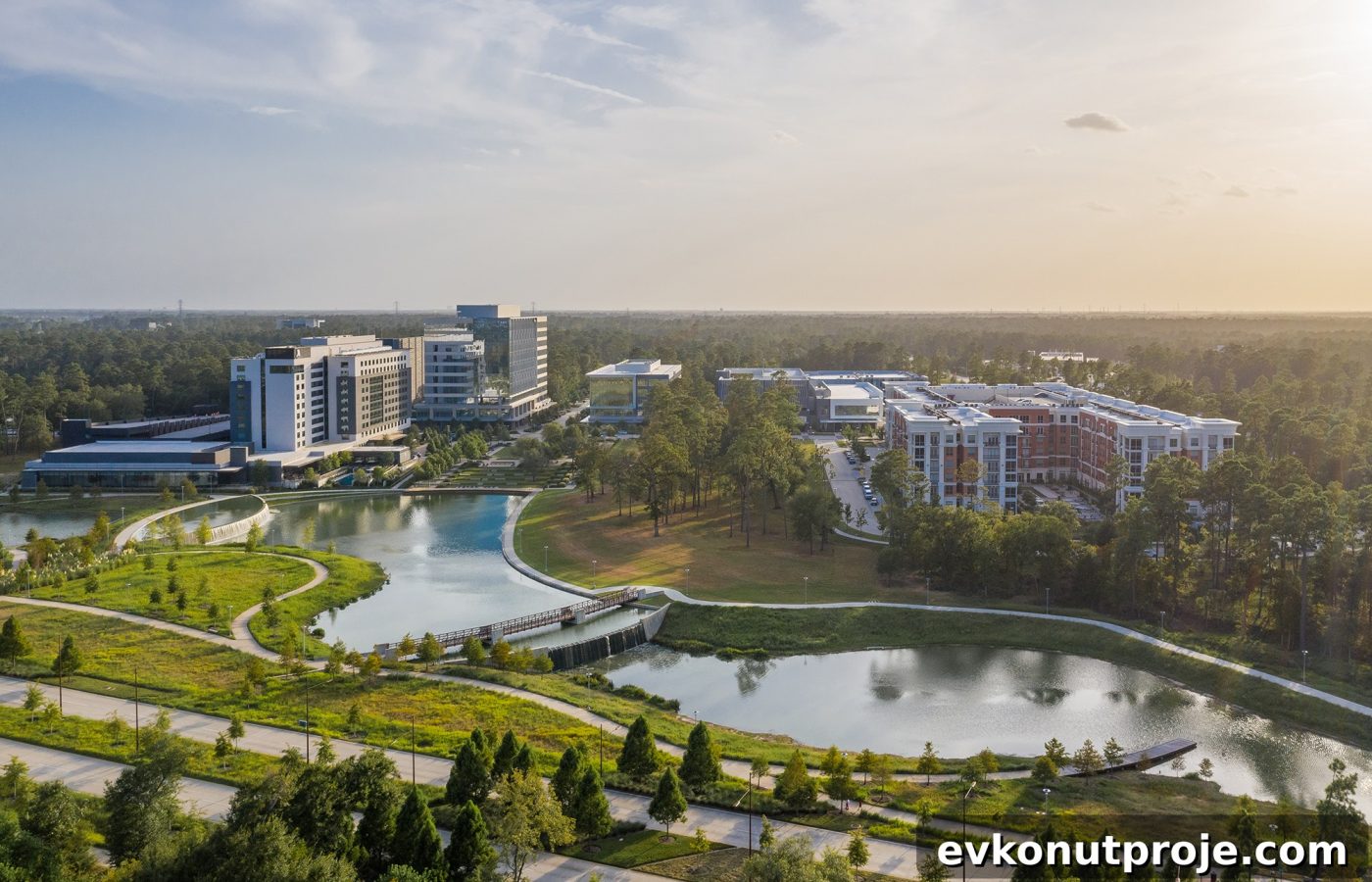
HOUSTON – (By Ralph Bivins of Realty News Report) – Aiming to create a more walkable, denser mix of housing and a new kind of urban experience near the Harris County line, the residential portion of what was known as Springwoods Village will depart from the typical subdivision model.
A Radical Commitment to Non-Auto Transportation
The developer’s new vision is straightforward: “Place the residential component into a sophisticated urban fabric that makes a radical commitment to non-automobile transportation.”
Springwoods Village, a 2,000-acre master plan that already attracted major corporate campuses including Hewlett Packard Enterprise and a 3 million-square-foot Exxon Mobil facility, has concentrated on commercial development in its early years.
Now, CDC Houston — a subsidiary of New York’s Coventry Development Corporation — is preparing to build out 450 acres of residential land on the western side of the project. The plan emphasizes an urban character rather than the conventional Texas residential pattern.
The first clear sign of this shift is a rebrand: CDC Houston announced that “Springwoods Village” will now be known as “City Place.”
“It’s really becoming a city,” said Warren W. Wilson, Executive Vice President of CDC Houston, when unveiling the new name. “As we refined the plan over the last 18 months, the name Springwoods Village felt increasingly outdated.”
Enter DMB Development
DMB Development, a community builder based in Scottsdale, Arizona, has joined as a joint-venture partner for the residential portion of City Place.
The site, located south of The Woodlands near the interchange of Interstate 45 and the Grand Parkway, benefits from a location that is not simply at the expanding outer edge of suburbia, said Brent Herrington, President and CEO of DMB Development.
At about 25 miles north of downtown Houston, City Place sits closer to the urban core than many recent large-scale suburban projects. That proximity supports positioning City Place as an urban-inflected development rather than conventional exurban sprawl.
Residential plans call for a mid-density housing mix uncommon in Houston: townhomes, garden homes, patio homes, detached townhomes and various condominium types. There will be limited traditional single-family lots. Phase one, with lot deliveries expected in 2023, will deliver roughly 600 homes.
Turning New Urbanism Inside Out
The residential neighborhoods in City Place will include an extensive network of sidewalks for pedestrians plus dedicated “alternative mobility pathways” for bicycles and electric scooters.
“We set an ambitious goal,” Herrington said. “If we get it right, you’ll be able to go anywhere without crossing a street busier than the one you live on.”
The overarching aim is to enable practical, everyday non-auto travel — walking or riding an electric bike to work. The City Place employment base already numbers close to 20,000 workers across existing campuses and office buildings.
DMB’s approach reframes New Urbanism — the planning movement that emphasizes walkable neighborhoods, narrow tree-lined streets and public plazas. While embracing New Urbanism’s ideals, Herrington says its street-centric focus was rethought.
“I love New Urbanism and I’ve done a lot of it,” he explained. “The problem is, it’s very street centric. It’s all about the street — eyes on the street.”
Rather than orienting homes primarily to streets, DMB’s plan orients many homes to shared greenways, pathways and open space, with vehicle access often relegated to the rear. The result is less pavement and more continuous green space woven into the neighborhood fabric.
“We took the New Urbanism I admire and turned it inside out,” Herrington said. The outcome is an interconnected framework of greenspace and pathways where many residences face communal open areas instead of main thoroughfares.
Prioritizing walking and cycling, City Place’s final design focuses on practical non-automobile mobility as a central organizing principle.
The Team
DMB is collaborating with the Esprit Loci planning firm from Arizona and local architect Jim Wendt, who has extensive experience working in The Woodlands. Alex Sutton, recently retired as co-president of The Woodlands Development Company, has been hired as general manager of the CDC Houston/DMB residential joint venture.
Houston homebuilders have shown interest in the range of housing types planned for City Place, drawn by the denser, more urban feel that DMB has implemented in projects out west.
Executives at the Patrinely Group, which developed several office properties and a 60-acre commercial core within the larger project, say the planned residential component complements the area’s character.
“City Place was conceived as a dynamic, 18-hour community,” said Robert Fields, President and CEO of the Patrinely Group. “Adding a thoughtfully planned residential program strengthens the character we’re building.”
Another Phoenix Developer Comes to Space City
When major Arizona-based developers previously entered the Houston market, the results were lasting — Del Webb’s mid-20th-century partnership on Clear Lake City is one example. DMB’s intentions, however, aim to reshape the region’s approach to master-planned residential communities.
Rather than dividing the land into conventional 50- and 60-foot lots for mass-produced single-family homes, DMB intends to promote mid-density housing — patio homes, townhomes and small-lot products — as a deliberate alternative.
“The real burden we have is to not screw this up,” Herrington said. With tens of thousands of jobs already on site, the land offers the chance to create neighborhoods where commutes can be short enough that a car isn’t necessary.
Herrington frames City Place as an ambitious effort: a development meant to be significant and replicable, not merely profitable. He speaks about the social costs of long solo commutes and imagines communities planned so workers can live minutes from their jobs rather than hours away.
This is his moonshot: City Place could push New Urbanism forward and influence how master-planned communities are designed in Texas, all centered on a decisive commitment to non-automobile transportation.
July 17, 2021 Realty News Report Copyright 2021
For more about Texas real estate, see the book Houston 2020: America’s Boom Town — An Extreme Close Up by Ralph Bivins. Available in print and ebook editions.
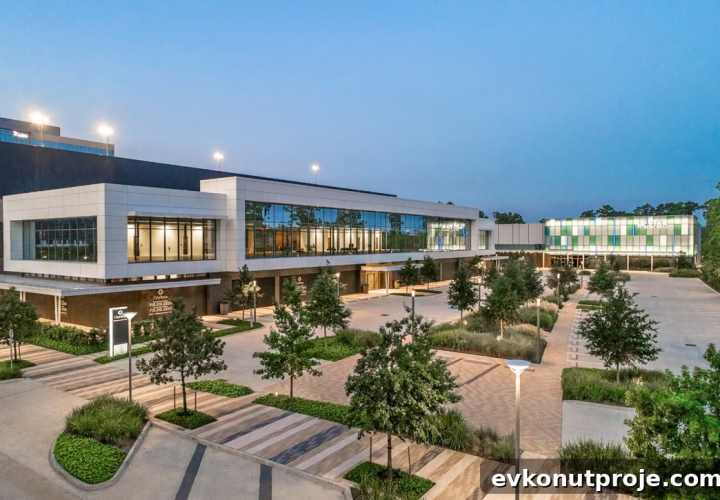
Image: City Place’s commercial development and adjacent acreage. Courtesy: Gensler
File: DMB. How to Turn New Urbanism Inside Out: Walk, Don’t Drive, Says Developer of New Houston Project