HOUSTON – (By Dale King, Realty News Report) – For many Houstonians, the start of the Atlantic hurricane season brings back painful memories. Nearly four years after Hurricane Harvey devastated the region with widespread flooding, property loss and fatalities, the 2021 hurricane season officially begins and residents along the Gulf and Atlantic coasts are watching forecasts closely.
The National Oceanic and Atmospheric Administration (NOAA) projects 13 to 20 named storms for the 2021 season, of which six to 10 may become hurricanes and three to five could reach major hurricane status (Category 3 or higher). Those projections underscore heightened concern for coastal communities, especially in regions that have experienced severe storms in the past.
In 2020 the United States experienced an unprecedented 30 named storms, a record high for a single season. As meteorological risks remain elevated, CoreLogic has released its seasonal storm analysis to help homeowners, property managers and local officials understand and mitigate property risk from hurricane-driven winds and storm surge.
31 Million Homes at Risk from Hurricanes
CoreLogic’s analysis finds that nearly 8 million homes nationwide face potential storm surge exposure. More broadly, over 31 million homes are at moderate to extreme risk of damage from hurricane-force winds. The report highlights geographic hotspots for the upcoming season, and Houston is among the metropolitan areas identified as vulnerable.
The report is published against a backdrop of vivid recollections from Hurricane Harvey, which made landfall as a Category 4 storm on Aug. 25, 2017. Harvey caused around $125 billion in damage, producing roughly one trillion gallons of rain across the Houston area over four days and triggering catastrophic flooding. The storm directly caused 68 fatalities, with additional deaths attributed to related causes such as traffic accidents; thousands were displaced and many sought shelter.
CoreLogic identifies areas most likely to be affected by storm surge—an impact that dealt a heavy toll on Houston during and after Harvey. Scientific and historical records show storm surge is frequently the deadliest component of tropical cyclones. For example, surge was the primary cause of fatalities and destruction in Hurricane Katrina and contributed substantially to damage from Hurricane Sandy. Although Harvey’s coastal surge was not as extreme as some historic events, the combination of intense rainfall and surge produced severe localized flooding.
Meteorologist Jeff Masters, co-founder of Weather Underground, described the phenomenon as “compound flooding.” He explained that when rivers swell from heavy rain and try to drain toward the Gulf while a storm surge pushes inland, the opposing flows meet at the coast and the water “piles up from both sides.” Local topography and elevation can amplify this effect. Masters cited Galveston as an example, where a sea surge of roughly three feet combined with inland water movement to create a surge around nine feet in specific locations.
Houston Ranks No. 8
CoreLogic ranks Houston eighth among the top 15 metropolitan areas with the highest numbers of single-family homes at risk from storm surge. The report estimates 261,103 single-family dwellings in Houston’s storm surge target areas, with a combined replacement value near $57 billion. In terms of wind damage exposure, nearly 2 million single-family homes in the Houston region sit within the wind-risk cone, with an estimated replacement value just over $492 billion.
Although Houston does not appear among the top metros for multi-family dwellings at risk from storm surge or wind damage, the report advises caution for renters and apartment occupants. Many large metros—including New York City, Miami, Boston and Tampa—appear on both single-family and multi-family risk lists, demonstrating that urban density and coastal exposure can concentrate vulnerability.
CoreLogic’s analysis also addresses the influence of climate change on storm behavior and risk profiles. The report notes that climate-driven factors—such as sea level rise, increased rainfall intensity and potential changes in hurricane strength—are reshaping storm impacts and will likely increase risk in hurricane-prone areas over time.
Based on NOAA National Centers for Environmental Information data, the report highlights a marked rise in inflation-adjusted losses from weather events over recent decades. Over the past 40 years, total weather-related losses in the United States have increased substantially, and that upward trend shows little sign of slowing.
Hurricane impacts extend beyond physical damage to homes and infrastructure; they can also disrupt local economies. CoreLogic cites Houston data after Harvey as an example: mortgage delinquencies in the region rose from 6.2% in August 2017 to 10.9% by October 2017. Housing inventory also fell sharply, remaining about 23% below pre-storm levels even five months after the storm.
The report attributes part of the growing exposure to population shifts toward more affordable coastal metro areas. Many of these communities are low-lying and inherently hurricane-prone, making them especially vulnerable to sea level rise, heavier rainfall events and other climate-related factors.
CoreLogic emphasizes that preparation and risk awareness are critical to reducing the impacts of hurricanes. Understanding and quantifying risk can accelerate recovery and strengthen resilience, the report says. For the housing ecosystem—insurers, lenders, property managers and homeowners—the focus should increasingly shift from loss adjudication to loss prevention and avoidance.
“While climate change and rising customer expectations introduce uncertainty into how insurers, lenders and the housing finance ecosystem offer products, organizations that fail to modernize processes and technology risk falling behind,” CoreLogic states. The firm recommends leveraging data not only for risk management and loss prevention but to improve customer experience and support community resilience goals.
June 1, 2021 Realty News Report Copyright 2021
For more about Texas development, see the book Houston 2020: America’s Boom Town – An Extreme Close Up by Ralph Bivins. Available through common retailers.
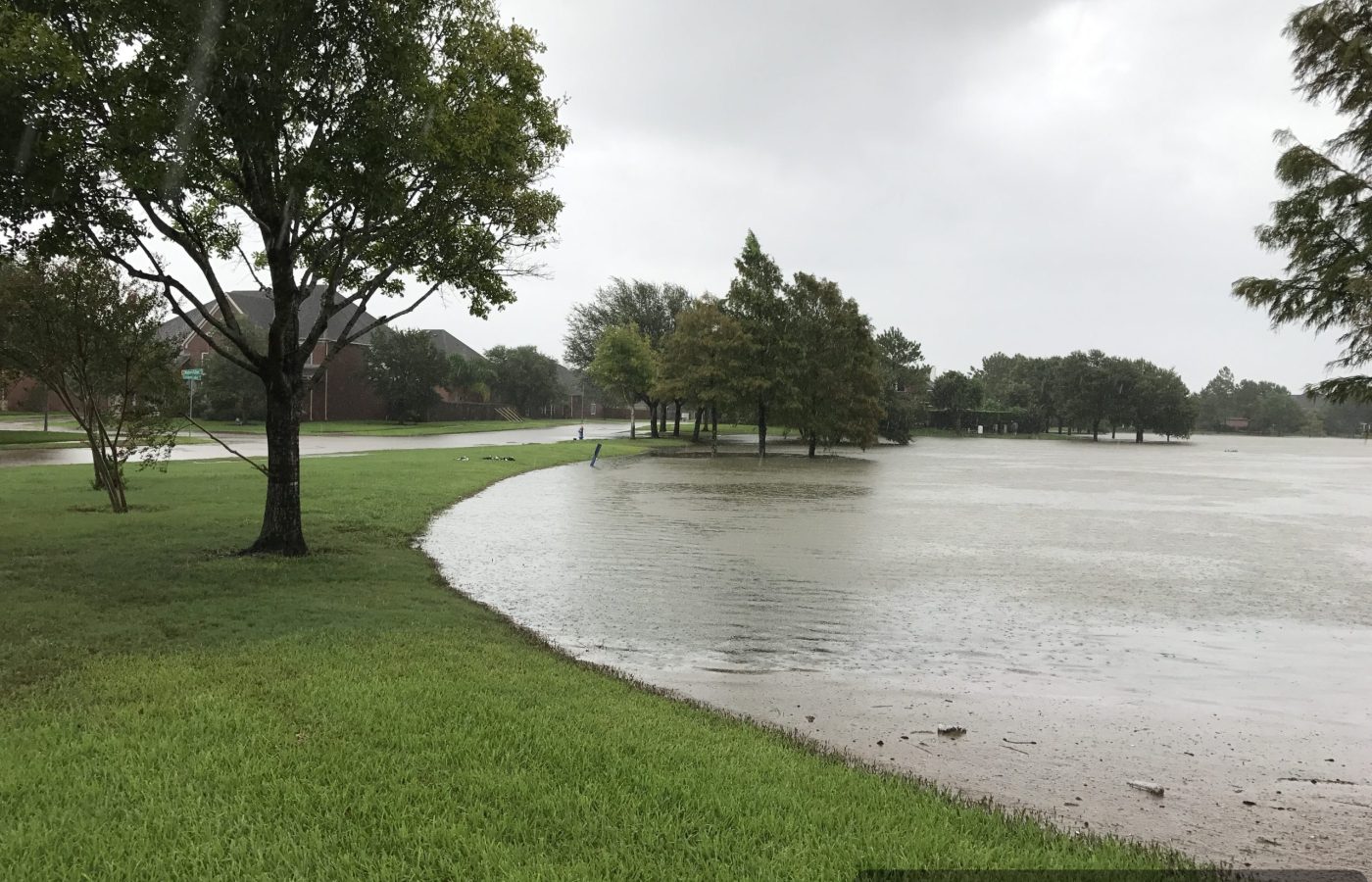
Copyright Photo Caption: Hurricane Harvey’s rains in 2017 caused massive flooding in Houston. Photo taken Aug. 27, 2017. Photo Credit: Ralph Bivins, Copyright Realty News Report, 2021.
File: Houston Enters Hurricane Season