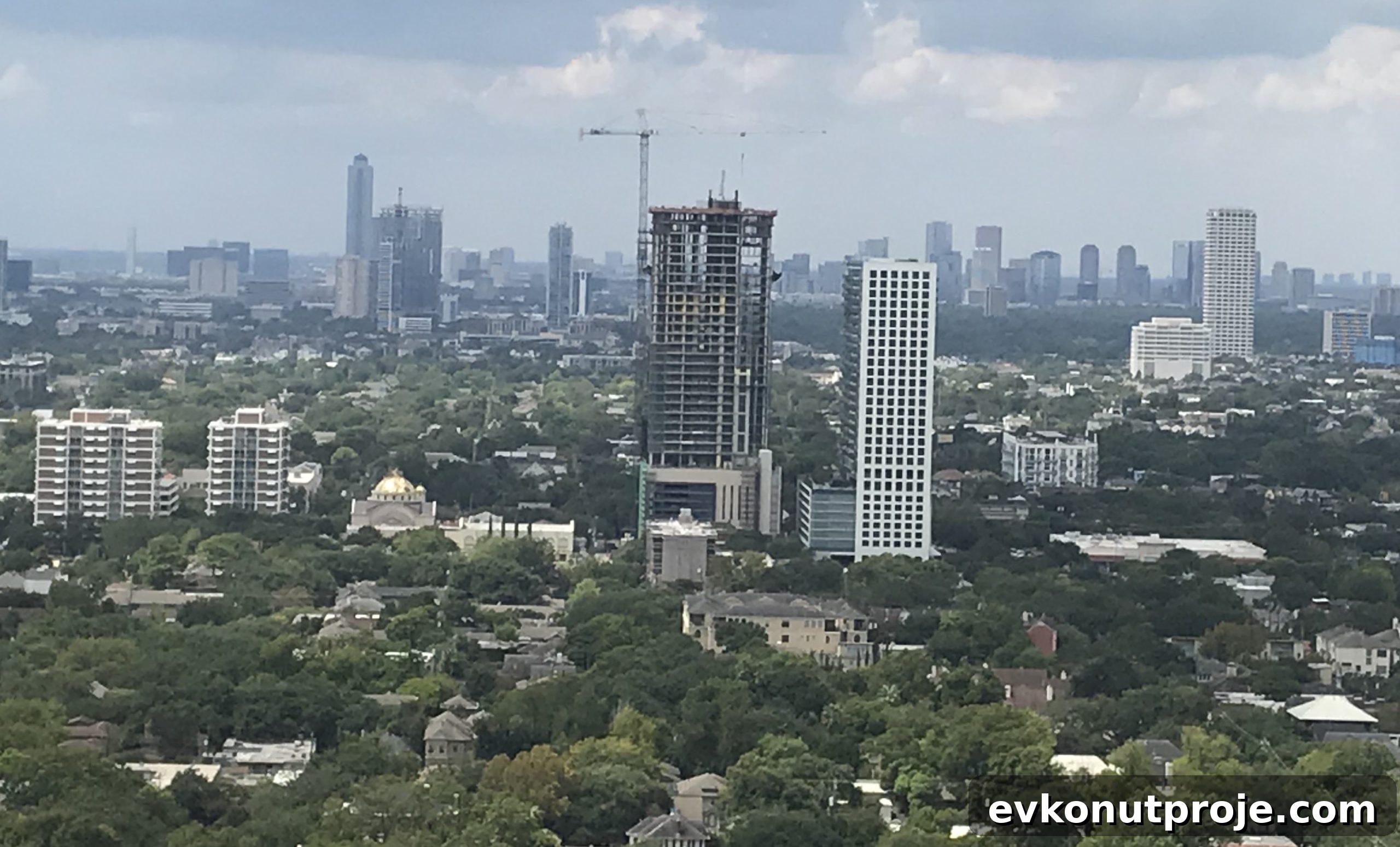
HOUSTON – (Realty News Report) – Houston’s office vacancy rate has climbed to levels not seen since the 1980s, and the market’s recovery will likely hinge on how employers redesign and use their workplaces in the post-pandemic era, according to Madison Marquette.
Nearly 51 million square feet of office space—equivalent to about 50 downtown high-rises—remains vacant in Houston.
Citywide office vacancy ended the year at roughly 22 percent, up from under 20 percent a year earlier. Madison Marquette expects vacancy to rise further in 2021 as market adjustments continue.
Many companies have delayed decisions on office footprints. Fourth-quarter office leasing was down about 42 percent from the prior year average as uncertainty put a freeze on new commitments.
“Houston’s office market was struggling amid a glut of available space even before the COVID-19 pandemic,” said Wade Bowlin, president of property services for Madison Marquette’s central division. “Although many companies adapted quickly to remote work with minimal operational disruption, that shift to remote or hybrid arrangements will ultimately influence office demand as firms reassess whether to reduce, maintain, or expand their physical footprints.”
In a post-COVID workplace, some companies may opt to expand their leased space to provide more room per employee and support social distancing. At the same time, hot-desking and heavy desk sharing are likely to fall out of favor.
Remote work will affect demand patterns, though few firms are expected to move to a fully permanent, 100 percent work-from-home model.
Mentoring younger staff and integrating new hires into company culture are difficult to achieve solely through remote arrangements, said Jonathan Brinsden, chair of ULI of the Americas for the Urban Land Institute and CEO of Houston-based Midway. He made the remarks during a conference hosted by the National Association of Real Estate Editors.
“A consensus is beginning to form among tenants and institutional partners: operating with no one in the office is detrimental,” Brinsden said.
The downturn in Houston’s office market in 2020 coincided with severe local job losses and substantial layoffs in the energy sector. Corporate mergers and acquisitions also left large blocks of space vacant—an influence that could persist into 2021, Madison Marquette noted.
Houston experienced negative absorption of 3.9 million square feet of occupied office space in 2020, the largest annual decline in about 30 years, according to Madison Marquette.
Landlords continue to list rents at advertised levels while offering significant concessions to secure tenants. Concessions such as free rent periods and generous tenant improvement allowances have become common.
“With tenant incentives highly negotiable, effective rents are running roughly 20 to 30 percent below asking rents as the gap widens. Lease concessions are likely to stay elevated, with greater term flexibility and historically high tenant improvement packages shaping the market,” said Kim Shapiro, senior vice president in Houston for Madison Marquette.
Despite the overall downturn, two notable downtown lease renewals or extensions were completed in the fourth quarter. Hess committed to 565,913 square feet in Hess Tower near Discovery Green, and TC Energy extended approximately 321,000 square feet in TC Energy Center, the landmark tower developed by Hines near the theater district.
Jan 8, 2021 Realty News Report Copyright 2021
File: Houston Office Vacancy Hits High