HOUSTON – (Realty News Report) – Houston’s economy and Port Houston stand to gain as U.S. supply chains move away from an overreliance on China and diversify into additional Asian and European markets, according to a CBRE report.
In response to recent trade tensions and the disruptions caused by COVID-19, many companies are establishing new national distribution models in the U.S. that will particularly benefit regions such as Houston and the Southeast, the CBRE international trade report found. (The report was written and released prior to a July 22, 2020, U.S. State Department order regarding the closure of the Chinese Consulate in Houston.)
While China is expected to remain an important trading partner for the United States, the recent supply chain disruptions have accelerated adoption of a “China Plus One” approach. This strategy is increasingly common among manufacturers that have most of their Asian operations in China but seek to reduce dependency on a single source—partly to lessen the impact of tariffs and other trade risks.
As supply chains diversify, the Port of Houston—the Gulf region’s dominant global trade hub—could see meaningful benefits from population growth and strategic logistics advantages.
Texas, with a population exceeding 29 million and continuing as one of the fastest-growing states in the nation, provides an expanding consumer base for imported goods. Companies are likely to route shipments to Texas whether arriving from East Asia via the Pacific and the Panama Canal or from the Western Hemisphere via the Atlantic, maintaining robust inventories for the regional market.
“For companies shipping into the Port of Houston it’s about reaching a significant, growing population and at the same time cutting back on truck and rail transportation costs from the east and west coast,” said Michael Valleskey, associate research director for CBRE. “Houston has a prime trading location, with the ability to efficiently reach all directions on the globe. It also has significant logistics capacity, available land, and lower asking rents. These fundamentals, along with access to a growing population will help drive Port growth and capitalize on select shifts in supply chains.”
Shipping activity at the Port of Houston has been muted in recent months amid the economic downturn, but long-term forecasts anticipate substantial growth as e-commerce expands. Port Houston is pursuing Project 11, a major public-private initiative to widen and deepen the Houston Ship Channel, the nation’s busiest waterway, to accommodate larger vessels and higher cargo volumes.
Earlier this year, the U.S. Army Corps of Engineers completed a four-year, $10 million study in partnership with Port Houston to identify needed Ship Channel improvements and to evaluate its economic value to the nation. The study’s findings support investment in channel enhancements that would bolster long-term competitiveness and capacity.
The CBRE report notes that the China Plus One trend toward sourcing diversity is already underway. China-to-U.S. exports fell 12.7 percent in 2019, and total trade between the two countries declined by approximately $100 billion year-over-year. As a result, countries such as Taiwan and Vietnam have emerged as some of the fastest-growing U.S. trade partners, with trade between the U.S. and these Southeast Asian nations rising significantly in 2019. Nations outside Asia—including Belgium, the Netherlands, and France—have also seen increased trade activity as companies diversify sourcing and routing strategies.
These shifts in global trade flows, combined with Houston’s logistics assets—deepwater port facilities, available industrial land, competitive rents and proximity to a growing consumer base—position the region to capture a larger share of import activity as companies reconfigure supply chains for greater resilience and geographic balance.
July 22, 2020 Realty News Report Copyright 2020
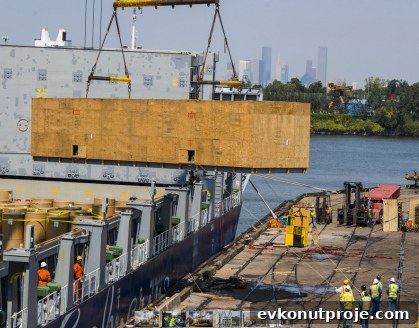
Photo: Port of Houston Authority
File: Houston Port to Benefit . File (2) Houston Port to Benefit as Firms Move to China Plus One