Levy Park’s ULI Recognition: Q&A with Jonathan Brinsden of Midway
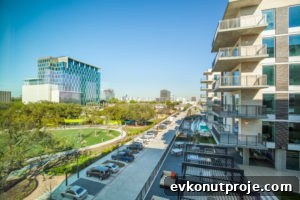
Levy Park, redeveloped in a public/private partnership with Midway, is a finalist for a major ULI international award. The park is west of Kirby Drive on the south side of Richmond Avenue.
HOUSTON – Two years ago, Levy Park — a nearly six-acre green space on a dead-end street in Houston’s Upper Kirby District — saw very few visitors. Following a collaborative public-private revitalization, the park now attracts roughly 7,000 visitors each week. The dramatic turnaround has earned national recognition and placed Levy Park among five finalists for the 2018 Urban Land Institute (ULI) Open Space Award, an international honor. Houston-based Midway played a leading role in the redevelopment. To explain how the partnership worked and how similar approaches might be applied elsewhere in the city, Realty News Report spoke with Jonathan H. Brinsden, Chief Executive Officer of Midway.
Realty News Report: Levy Park was once overlooked and underused in the Upper Kirby area, yet it’s now a finalist for an international ULI award. How did your collaboration with the Upper Kirby Redevelopment Authority begin?
Jonathan Brinsden: Jamie Brewster, the former President of the Upper Kirby District, had visited Midway’s Kings Harbor project in Kingwood and CITYCENTRE many times and observed active, well-used green spaces there. Levy Park didn’t have that same energy, so she reached out to exchange ideas. What began as a conversation grew into a shared vision. I believed Upper Kirby, with its established neighborhoods and mature office buildings, needed a signature public gathering place — a visible, welcoming “there” that would give the neighborhood a stronger sense of place.
Realty News Report: Midway committed long-term resources to support Levy Park, which now offers extensive programming. What role did Midway play?
Jonathan Brinsden: Midway signed a long-term ground lease for parcels we developed adjacent to the park: the Kirby Grove office and retail building facing Richmond Avenue, and the Avenue Grove multifamily project along the southern edge of the park. Those developments bring people, restaurants and services that animate the park and produce revenue that helps sustain ongoing maintenance. Equally important is the Levy Park Conservancy, an affiliate of the Upper Kirby Foundation, which raises funds to support a full calendar of free health, wellness and cultural programming. In short, activating the surrounding blocks and providing steady funding were both essential to the park’s success.
Realty News Report: Why do you think ULI judges have recognized Levy Park? What distinguishes it?
Jonathan Brinsden: Levy Park and the adjacent Kirby Grove project exemplify what ULI seeks: an effective partnership among public, private and philanthropic partners — what I like to call a P4. ULI studies these innovative collaborations to identify best practices and share lessons with the industry. Beyond its world-class design and aesthetics, the park’s success is measured by how private development performed and how the surrounding community benefited. The combination of design, programming, funding and positive neighborhood impact is what sets Levy Park apart.
Realty News Report: Parks like Discovery Green are increasingly seen as transformative community assets. What is driving this shift toward emphasizing parks and placemaking?
Jonathan Brinsden: This trend isn’t unique to Houston—people across many cities are rediscovering urban cores and choosing denser, mixed-use living. Parks become an urban “living room,” a public realm where diverse groups can come together safely and comfortably. Well-designed public spaces break down social barriers and create opportunities for interaction among different ages, cultures and incomes. That social value, alongside improved health and quality of life, explains why parks are central to modern placemaking strategies.
Realty News Report: What are the keys to making public-private partnerships like Levy Park effective?
Jonathan Brinsden
Jonathan Brinsden: Successful partnerships require patience, transparency, and a long-term mindset. Treat the engagement as an ongoing relationship rather than a single transaction. Both public and private partners should be willing to teach and learn from one another, recognize each other’s constraints, and clearly define shared interests. Mutual respect and an understanding of each party’s objectives are essential for a sustainable collaboration.
Realty News Report: Midway built two private developments bordering Levy Park: the 16-story Kirby Grove office building and the Avenue Grove apartments. How have those projects performed?
Jonathan Brinsden: The Houston market has presented challenges for Class A office and upscale apartment projects, but Kirby Grove achieved healthy absorption without heavy concessions. The Amsterdam-based coworking company SPACES selected Kirby Grove for its Houston debut because the building overlooks Levy Park—a selling point for creative and collaborative tenants. Similarly, Avenue Grove residents value the park as an amenity. In both cases, Levy Park serves as a differentiator that reduces the need to compete solely on price.
Realty News Report: Houston’s philanthropic community has played a major role in many park initiatives. Should developers make a more deliberate effort to integrate high-quality development with the public realm?
Jonathan Brinsden: Houston benefits from exceptionally strategic and results-oriented philanthropists who invest thoughtfully in green spaces and trails that revitalize underperforming areas. The public sector often seeks partnerships to extend limited budgets, so combining philanthropic, public and private resources amplifies impact. Smart investments in green infrastructure, trails, parks and open spaces create economic opportunity and advance public health and safety while improving quality of life for communities.