May 20 Opening: MFAH’s Expanded 14-Acre Campus — More Walkable, Connected
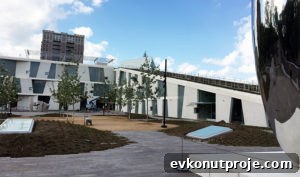
Glassell School of Art. Photo: CALpix
HOUSTON – (By Cynthia Lescalleet for Realty News Report) – The way visitors move through the 14-acre Museum of Fine Arts, Houston campus is a central element of the museum’s redevelopment—just as important as the new buildings and amenities that expand space for exhibitions and programs.
With the first completed elements of the multi-venue master plan opening on May 20, visitors will immediately notice a more walkable, better-connected cultural campus emerging.
The public opening includes the new L-shaped Glassell School of Art; the expanded BBVA Compass Roof Garden; and the adjacent Brown Foundation Inc. Plaza, now the setting for Anish Kapoor’s gleaming Cloud Column. The new plaza links directly to the museum’s Lillie and Hugh Roy Cullen Sculpture Garden, currently undergoing restoration, and guides visitors across the street to the museum’s main building.
Although cranes still tower over parts of the campus, signaling ongoing work on other components of the transformative $450 million expansion, several major pieces are underway. The largely translucent and transparent 184,000-square-foot Nancy and Rich Kinder Building for 20th- and 21st-century art is scheduled for completion in mid-2020.
The Sarah Campbell Blaffer Foundation Center for Conservation, which tops a section of the museum’s existing parking structure, is expected to be operational for conservators this fall.
In total, MFAH’s redevelopment adds roughly 500,000 square feet of improvements. The project dramatically increases exhibition and program space, creates two levels of underground parking to maximize usable surface space, and—critically—better connects and integrates the Susan and Fayez S. Sarofim Campus. New tunnels, gardens and landscaped plazas will link old and new features, while upgraded sidewalks, signage and street lighting will improve navigation and street presence.
Most of the funding for the expansion has come from Houston philanthropists, and the museum’s capital campaign remains active.
Steven Holl Architects developed the master plan and designed both the new art school and the contemporary art facilities.
On the Up and Up
Clad in sandblasted precast concrete panels, the Glassell building features trapezoid-shaped windows that increase natural light throughout the interior.
Architectural highlights include a distinctive walkable roofline: a three-story slope leading to a sky-view garden, landscaped surfaces and terraced seating that face a small amphitheater at the base.
The 85,000-square-foot interior houses roughly three dozen studios serving students across the Junior School, Studio School and Core Program, as well as a 75-seat auditorium and a street-level coffee bar open to students and the public. MFAH materials highlight the wide central staircase as both a visual focal point and a social gathering place for students.
The building’s L-shape reflects a “space-shaping strategy” used throughout the master plan, a design approach noted by architect Steven Holl in the project summary.
Designed by Deborah Nivens & Associates with Nevins & Benito Landscape Architecture, the Brown Foundation Inc. Plaza provides shade, seating, a reflecting pool and room for monumental sculpture. Installed in March 2018, Kapoor’s 30-foot Cloud Column is joined in the plaza by Eduardo Chillida’s Song of Strength (1966). The latter, a stacked-granite work weighing about 42 tons, was relocated from the south side of the main MFAH building.
The new plaza also creates an outdoor venue for programs and performances and connects to the museum’s Lillie and Hugh Roy Cullen Sculpture Garden, which is being restored across the street from the main building.
Museum officials say the initial plan to complete the campus stretches back more than a decade, when MFAH recognized the need for a new gallery building to display a larger portion of its masterworks.
MFAH draws roughly one million visitors each year. Museum staff note that an increasing share of visitors arrive on foot or by MetroRail as the Museum District and neighboring neighborhoods like Montrose and Midtown see denser development and enhanced transit connections.