Commentary by Ralph Bivins. (Originally published on March 1, 2021 in the RNR newsletter)
Houston — the Energy Capital of the World — has weathered hard times before.
What was the worst? The flooding from Hurricane Harvey in 2017? The wild overbuilding, financial failures, job losses and oil bust of the 1980s?

Or was it last year’s double blow — coronavirus shutdowns that damaged retailers, hotels and landlords, followed by an unprecedented oil crash that pushed West Texas Intermediate crude briefly below zero in April? Energy firms announced layoffs and the list of bankruptcies grew, exposing weakness among local energy companies and retailers.
Overall office vacancy rates surged to near-record highs, though newer Class A buildings and well-renovated properties performed better. The apartment market showed strain while roughly 20,000 multifamily units remained under construction.
Could things get worse?
Not likely.
This is March 1, 2021. I’m calling the bottom right here, right now.
The Houston real estate market is turning the corner. It has hit bottom. From here, conditions should improve.
This isn’t a prediction of a rapid, headline-grabbing rebound. The recovery will be uneven and may be bumpy. Still, indicators point to improvement sooner than many expect.
One: COVID-19 vaccination is advancing. Tens of millions of Americans have received at least one dose, and additional vaccines received approval, accelerating the pace of inoculation. COVID won’t vanish, but as vaccinations increase, restaurants, hotels and airlines should resume stronger contributions to the economy.
Two: Oil has climbed back above $60 a barrel. That price level won’t instantly trigger mass hiring, but it can act as a stabilizer for struggling companies. The energy sector still faces serious challenges — for example, Exxon Mobil reported a substantial loss — but increased travel and reduced remote work will lift energy demand. It’s reasonable to expect energy activity in April 2021 to outpace April 2020, which benefits Houston.
Three: Houston’s housing market remains one of the nation’s strongest. Builders and real estate agents have been busy; last year delivered the best year ever for existing home sales in Houston. Nationally, single-family home construction and sales are robust compared with a decade ago. Locally, land brokers report strong demand for residential parcels. With the Federal Reserve maintaining a low-rate stance, mortgage rates near 3 percent will continue to support buyer activity.
Four: The life sciences sector offers promising growth, anchored by the Texas Medical Center. Projects like the $1 billion Levit Green life science district on Holcombe Boulevard and the TMC3 collaboration should generate positive spillover benefits. Pharmaceutical and biotech employers in the region are actively recruiting, signaling expanding opportunities in this field.
Five: Industrial real estate in Houston is strong, with 19.4 million square feet under construction — second only to Dallas–Fort Worth. While that level of development raises questions about overbuilding, Houston logged 11.8 million square feet of industrial leasing in 2020, one of the highest totals nationally. Large tenants, including major e-commerce companies, continue to consume distribution space.
Economists expect positive job growth for Houston in 2021. The city known as Space City showed how abruptly the pandemic arrived when officials canceled the Houston Rodeo on March 11, 2020 — a moment many residents remember as the start of the crisis.
Last year was difficult. But signs show Houston pulling out of the downturn. Conditions are improving, and the outlook is more positive than it was a year ago. The tide has turned.
(Commentary by Ralph Bivins. Originally published March 1, 2021 in the RNR newsletter.)
March 12, 2021 Realty News Report Copyright 2021
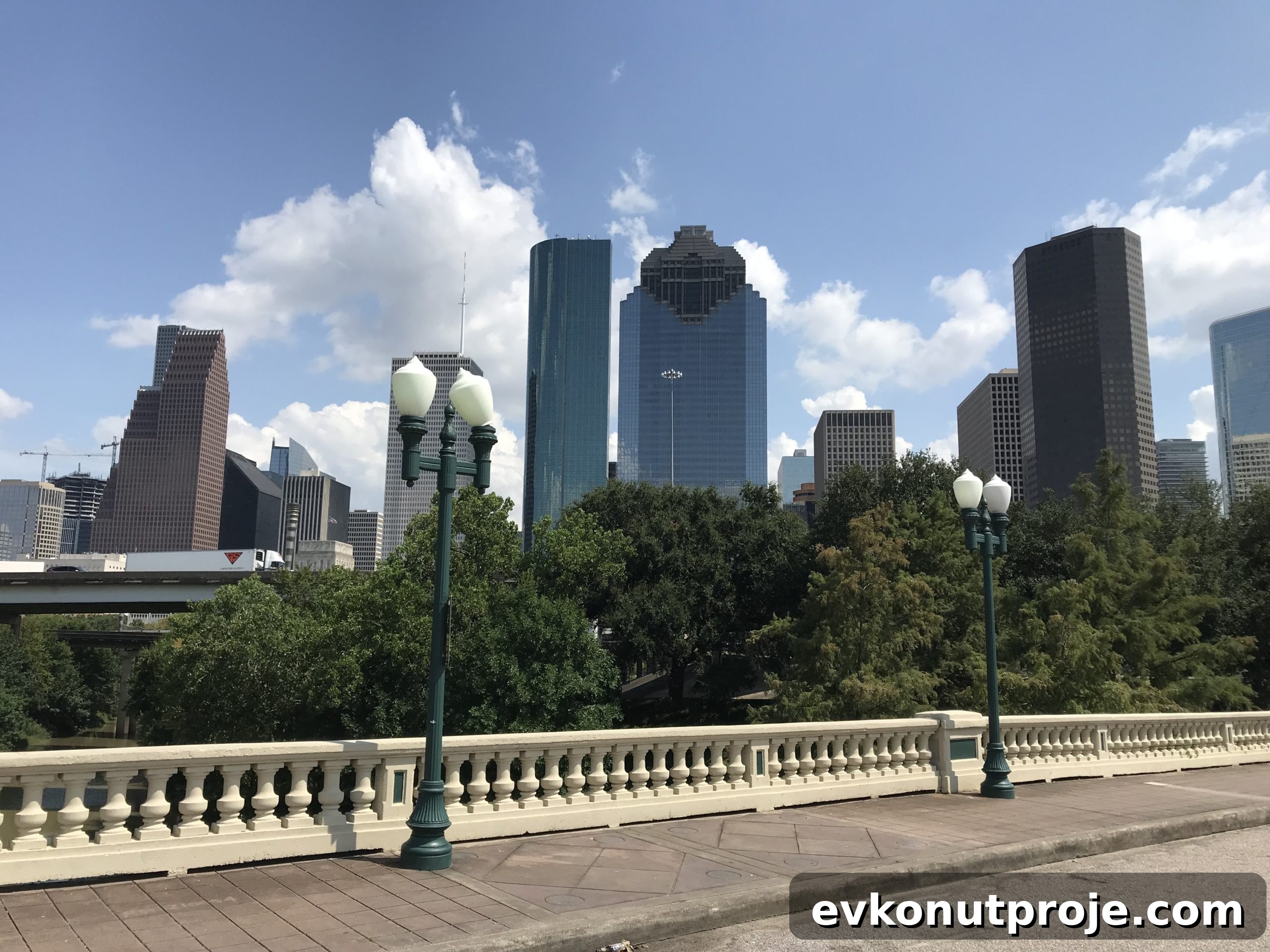
Downtown Houston: Photo credit: Ralph Bivins. Copyright 2021
Houston 2020: America’s Boom Town, the book by Ralph Bivins, is available on Amazon.