HOUSTON – (By Dale King, Realty News Report) – Texas and Florida continue to dominate domestic relocation trends as people shift away from denser, higher-cost regions. Recent U.S. Census Bureau estimates show the nation’s population grew by about 1.15 million between mid-2019 and mid-2020, and Texas and Florida together accounted for more than half of that increase.
According to the Census Bureau, Texas added 373,965 residents during that period, while Florida gained 241,256. Frank Nothaft, chief economist at CoreLogic, says, “Texas and Florida and a few other states have really been the big gainers in terms of net population growth.”
Analysts point to a combination of affordable housing, lower taxes, and strong job markets for the boom. Observers note that Texas—already home to corporate centers in Houston, Dallas and Austin—offers comparatively lower home prices and a lighter tax burden, making it especially attractive to families and businesses looking for value and room to grow.
The Losers List
Not all states have benefited from these trends. The Census Bureau reported that 27 states and the District of Columbia experienced net domestic migration losses between 2018 and 2019. The largest declines were in California (-203,414), New York (-180,649) and Illinois (-104,986).
The COVID-19 pandemic intensified these shifts. Public-health concerns about crowded transit, elevators and other dense urban spaces prompted many residents to leave big cities. Media and research outlets observed a wave of migration from the Northeast, the Midwest and California into more affordable Sun Belt states.
The Appeal of Suburbia
Robert Dietz, chief economist at the National Association of Home Builders, says Americans are moving from dense urban centers into lower-density suburban areas where they can find more space for home offices and family life. With many white-collar workers adopting work-from-home schedules, demand for larger homes and yards has increased, encouraging moves to the suburbs and smaller metro areas.
Job growth in Texas has also been a major draw. CoreLogic’s Nothaft points out that employment opportunities and corporate relocations have boosted the state’s appeal. In recent months, major companies announced plans to shift key operations or headquarters to Texas, further reinforcing the state’s position as a relocation hub.
Elon Musk: ‘Austin is Biggest Boomtown in 50 Years’
One high-profile example is Tesla’s decision to build a $1 billion electric pickup truck manufacturing plant on the outskirts of Austin. Tesla CEO Elon Musk called Austin “the biggest boomtown the U.S. has seen in 50 years,” and his move—both corporate and personal—has heightened interest in the region.
Austin Realtor Teresa Scott-Tibbs describes the market as “crazy busy,” with many newcomers, especially from California, arriving since Tesla announced its expansion. Factors she cites include lower taxes and comparatively affordable housing, along with incentives that are attracting both small businesses and larger technology and manufacturing investments.
Local leaders say incentive agreements and targeted economic development efforts could encourage additional major employers and suppliers to expand operations in the region.
Policy changes during the pandemic also played a role: mask mandates and other restrictions shaped how residents responded to local public-health rules, and some policies were later adjusted at the state level.
Marvin Jolly, 2021 chair of Texas Realtors, notes that Texas has consistently drawn residents from other states. Citing 2019 figures, he said the state welcomed between 537,000 and 582,000 new residents from out of state, marking the seventh consecutive year Texas attracted more than half a million newcomers. People cite lower cost of living, strong job markets, better weather and quality-of-life reasons for moving.
From 2014 to 2018, the top destination counties for out-of-state movers to Texas included Harris, Dallas, Tarrant, Bexar and Travis. On a metropolitan level, the Dallas–Fort Worth–Arlington and Houston–The Woodlands–Sugar Land areas recorded the largest inflows of residents from other states during that period.
Homebuilders also reported increased activity tied to migration. For example, Megatel Homes in Dallas recorded more than 200 sales in January 2021 and attributed part of that strong start to purchases by newcomers from other states.
Texas: ‘Welcome to Californians’
Jolly noted the highest numbers of new Texans came from California and Florida, followed by Louisiana, Illinois, Oklahoma, New Mexico, Georgia and Arizona. Ed Curtis, founder and CEO of YTexas, said business relocations to Texas began years before the pandemic and that COVID-19 accelerated many companies’ decisions to relocate or expand in the state.
Curtis, who moved from New York to Texas himself, says newcomers often find a helpful business culture and fewer tax burdens compared with some other states. For many, the move is less about politics and more about pursuing a better quality of life and economic opportunity.
Even before the pandemic, Texas’s combination of job prospects, relatively affordable housing, and quality neighborhoods made it a top destination for Americans leaving colder regions, the expansive Midwest and high-cost West Coast metro areas. The pandemic sharpened those trends as families sought larger homes, safer schooling options and communities better suited to remote work.
March 9, 2021 Realty News Report Copyright 2021
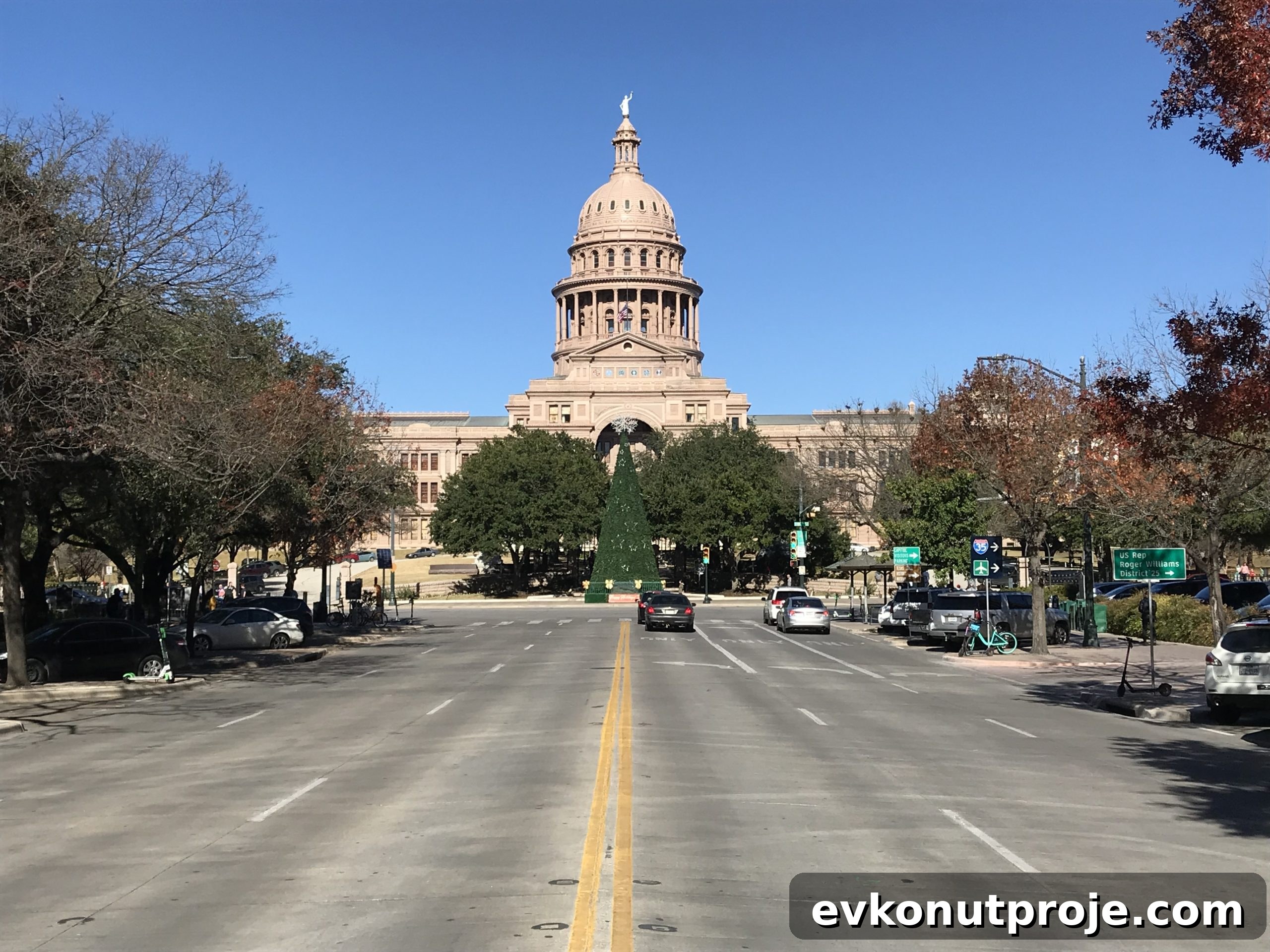
Caption: Texas State Capitol in Austin on Congress Avenue. Photo credit: Ralph Bivins, Realty News Report Copyright 2021.
File: Texas Leads Nation in Relo Activity. Population. Migration.