HOUSTON – (By Dale King, Realty News Report) – Texas and Florida have emerged as the top destinations for people relocating within the United States.
According to recent estimates from the U.S. Census Bureau, California and New York are the biggest losers in domestic migration trends.
From mid-2019 to mid-2020, the national population grew by about 1.15 million. Two states — Texas and Florida — accounted for more than half of that growth, adding roughly 600,000 people combined during that period.
The Census Bureau reported Texas added 373,965 residents and Florida added 241,256.
“Texas and Florida and a few other states have really been the big gainers in terms of net population growth,” said Frank Nothaft, chief economist at real estate data firm CoreLogic.
Several factors explain Texas’s rapid growth. Observers note that Texas, the nation’s second-largest state, offers relatively affordable housing and a lighter overall tax burden. Major metropolitan areas such as Houston, Dallas and Austin are established corporate and cultural centers that have become increasingly attractive to new residents.
States Losing Residents
The Census Bureau found that 27 states plus the District of Columbia experienced net domestic out-migration between 2018 and 2019. The largest losses were in California (-203,414), New York (-180,649) and Illinois (-104,986).
When the COVID-19 pandemic struck in 2020, migration patterns accelerated.
The pandemic prompted many Americans to leave dense urban centers in favor of more affordable Sun Belt states. High-density urban settings such as subways and crowded apartment buildings became less appealing as people sought safer, less congested living environments.
The Appeal of Suburbs
“Americans clearly are moving out of denser urban areas and into less-dense suburban areas,” said Robert Dietz, chief economist at the National Association of Home Builders. He added that growing demand for lower-density housing stems in part from the need for home office space.
With remote work likely to remain common for many white-collar employees, housing economists expect migration to more spacious suburbs to continue. Many workers who can perform their jobs remotely are choosing to trade higher urban housing costs for larger homes and yards outside city centers.
“Texas’ strong job growth makes it appealing to younger workers,” Nothaft said. Recent corporate relocations and expansions have reinforced that trend: Hewlett Packard Enterprise announced plans to move its headquarters to Houston, and Oracle said it would relocate to Austin.
Elon Musk: ‘Austin Is the Biggest Boomtown in 50 Years’
Elon Musk’s decision to build a $1 billion Tesla electric pickup plant on Austin’s outskirts highlighted the region’s appeal. In a podcast interview, Musk described Austin as “the biggest boomtown the U.S. has seen in 50 years.”
Local real estate professionals say demand is intense. Teresa Scott-Tibbs, an Austin Realtor, described the market as “crazy busy,” noting many newcomers—especially from California—have arrived since Tesla announced its investment.
Musk also relocated his personal residence from Los Angeles to Austin, a move that further symbolized the city’s rise.
Scott-Tibbs cited lower taxes and more affordable housing in Austin as major draws, which are attracting both small businesses and larger tech ventures. Local incentive programs in Travis County are also encouraging further corporate investment and expansion.
Before COVID-19, Texas was already gaining residents steadily. Marvin Jolly, 2021 chairman of Texas Realtors, cited Census figures showing Texas welcomed between 537,000 and 582,000 new residents in 2019, marking the seventh consecutive year the state attracted more than 500,000 out-of-state newcomers.
“Some moved here for a lower cost of living, a great quality of life, diverse job opportunities and good weather—there are many reasons people continue coming to Texas,” Jolly said.
Between 2014 and 2018, the Texas counties receiving the most in-migrants were Harris, Dallas, Tarrant, Bexar and Travis. At the metropolitan level, the Dallas-Fort Worth-Arlington and Houston-The Woodlands-Sugar Land areas recorded the largest influxes from other states.
For example, Dallas homebuilder Megatel Homes reported more than 200 sales in January 2021, attributing the strong start in part to buyers relocating from out of state.
Welcoming New Texans
Jolly noted that the largest number of new Texans moving from other U.S. states came from California and Florida, followed by Louisiana, Illinois, Oklahoma, New Mexico, Georgia and Arizona.
Ed Curtis, founder and CEO of YTexas (WhyTexas?), which assists businesses relocating to Texas, said corporate moves began well before the pandemic but were accelerated by it. He personally moved from New York to Texas and emphasized the helpful, community-oriented business culture he found.
Curtis added that many people relocate to Texas to avoid high taxes and intense political battles elsewhere and to pursue a better quality of life.
Even prior to the pandemic, Texas had a long history of attracting people seeking job opportunities, affordable housing, and a family-friendly environment. When COVID-19 prompted a nationwide retreat from crowded indoor venues and sparked new remote work arrangements, many Americans decided to move to places offering more space and lower living costs—factors that made Texas an especially attractive option.
For many newcomers, Texas represented both an economic opportunity and a lifestyle choice: more space, warmer weather and vibrant regional economies that offer room to grow.
March 9, 2021 Realty News Report Copyright 2021
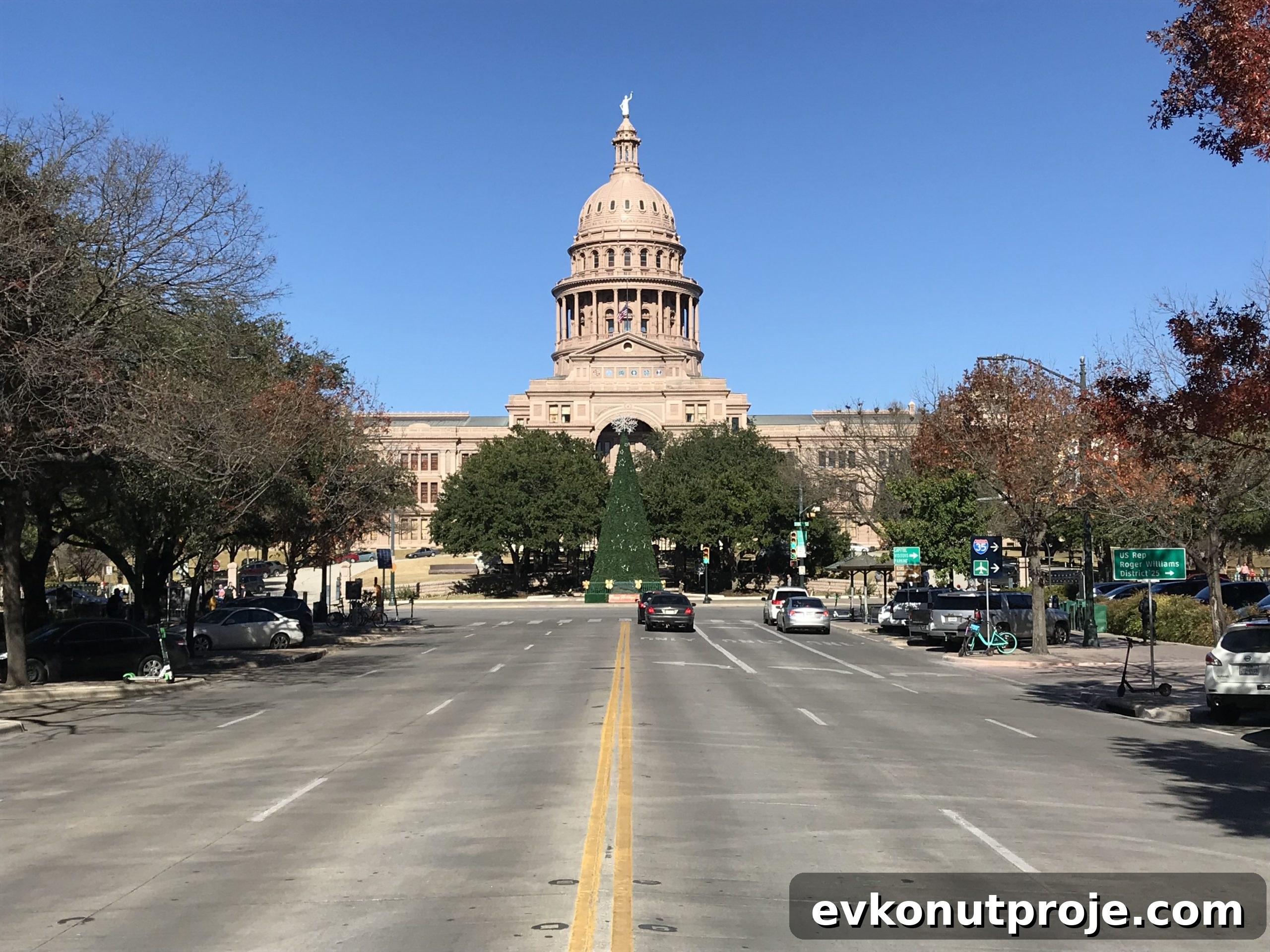
Caption: Texas State Capitol in Austin on Congress Avenue. Photo credit: Ralph Bivins, Realty News Report Copyright 2021.
File: Texas Leads Nation in Relo Activity. Population. Migration.