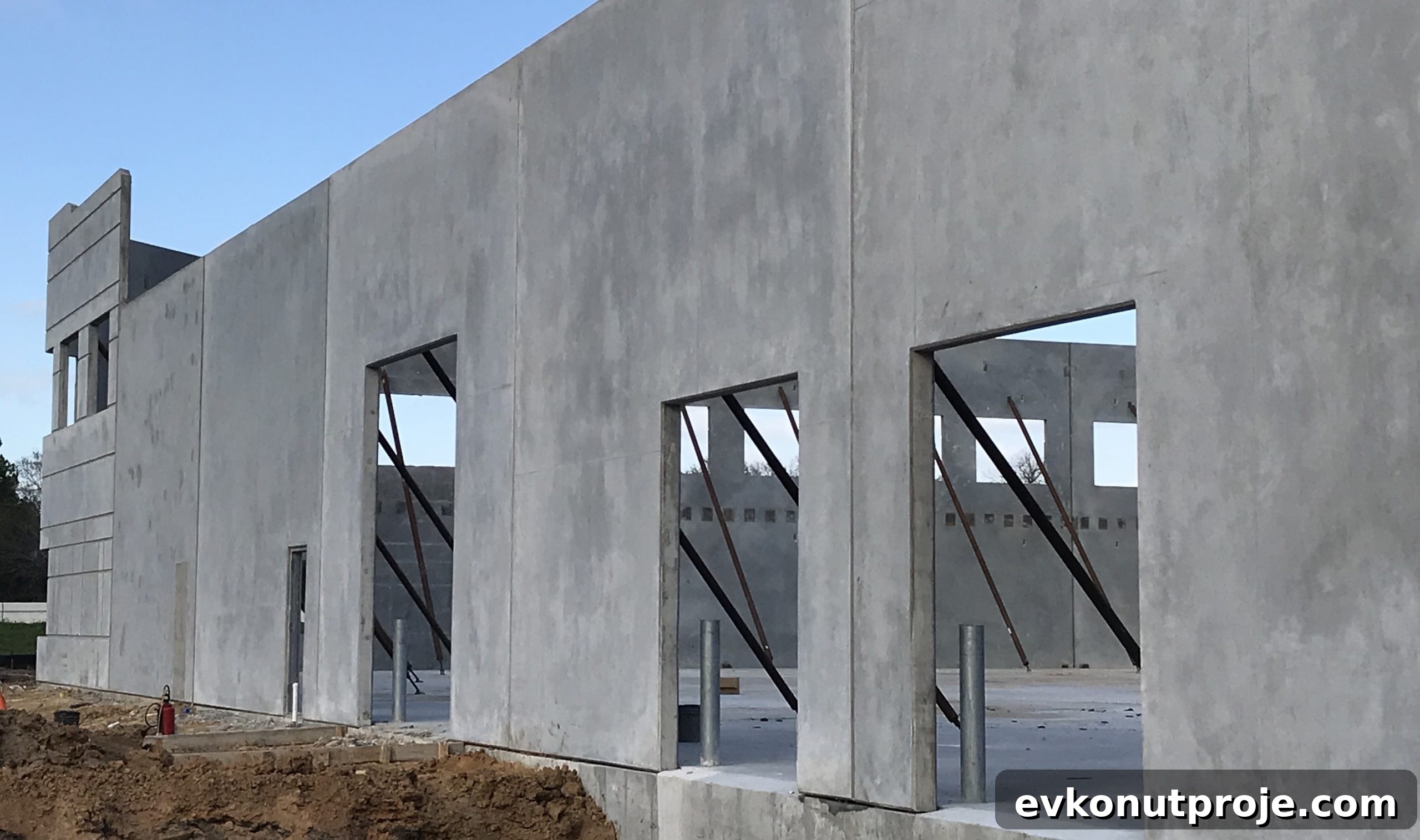
HOUSTON – (Realty News Report) – Pushed by the pandemic and long-term trends, surplus retail space is increasingly being repurposed as e-commerce warehouses.
In short, Sears is out and Amazon is in.
“Retail-to-industrial property conversions are accelerating across the U.S., driven by the growth of e-commerce. There are now 59 such projects that have either been completed, proposed, or are underway since 2017—up from 24 in January 2019,” according to a CBRE Research report. “These projects total approximately 13.8 million square feet of retail space converted to 15.5 million square feet of industrial space.”
Amazon has reportedly been in talks with mall owner Simon Property Group about converting vacant anchor-store space into large Amazon fulfillment centers, according to the Wall Street Journal.
With large retailers such as J.C. Penney and Sears closing stores, many malls now face substantial vacancy. The problem isn’t limited to anchors; inline stores and mall restaurants have also been forced to close amid the pandemic.
For years, e-commerce and brick-and-mortar retail have been in escalating competition as online sales steadily captured more market share.
Industry commentators and real estate conferences frequently warned of a coming “retail armageddon.” The COVID-19 pandemic accelerated that shift, increasing both urgency and scale.
“Stay-at-home orders across the U.S. have introduced an entirely new customer base to e-commerce,” CBRE reported. “Adobe estimates that online sales in April and May were 7 percent higher than those of the 2019 holiday season and were $52 billion above normal online sales in April and May. The disruption to the retail sector and the growth of e-commerce will continue to increase the viability and payback of retail-to-industrial property conversions.”
E-commerce operations increasingly require “last-mile” distribution facilities that enable fast, flexible delivery to customers’ doorsteps. The rise of online grocery shopping is accelerating the conversion of retail stores into distribution facilities, as more stores are repurposed as small warehouses to support rapid fulfillment.
H-E-B, a major Houston grocer, converted a 28,000-square-foot store at Memorial at Dairy Ashford into an e-commerce fulfillment site a few years ago.
A surge in warehouse construction around Houston has been driven largely by demand for e-commerce distribution space.
CBRE recently reported that 18.8 million square feet of industrial space is under construction in Houston, a record high. With this new space coming online, industrial vacancy was 6.9 percent in the second quarter.
Retailers themselves are leasing sizable portions of new warehouse space in the Houston market: Dollar Tree committed to 1.2 million square feet and Five Below to about 860,000 square feet.
An 850,000-square-foot Amazon fulfillment center has broken ground in Richmond, west of Houston near the Grand Parkway. Trammell Crow is developing the facility, which is expected to create approximately 1,000 jobs.
Given the growing need for e-commerce warehousing and the continued closures and restructurings of traditional retailers, the outlook for mall real estate is changing dramatically.
Malls may never return to their previous form.
Which cities lead in retail-to-warehouse conversions?
“The top five markets for these conversion projects are Milwaukee, Cleveland, Chicago, Omaha, and Dallas/Ft. Worth, accounting for one-third of the total number of projects nationally,” CBRE said. “This is primarily due to the number of ‘dead malls’ in the Midwest.”
Aug. 19, 2020 Realty News Report Copyright 2020
File: Mall Stores Becoming Warehouses
File: 13.8 Million SF, per CBRE. Mall Stores Becoming Warehouses in Space Conversion