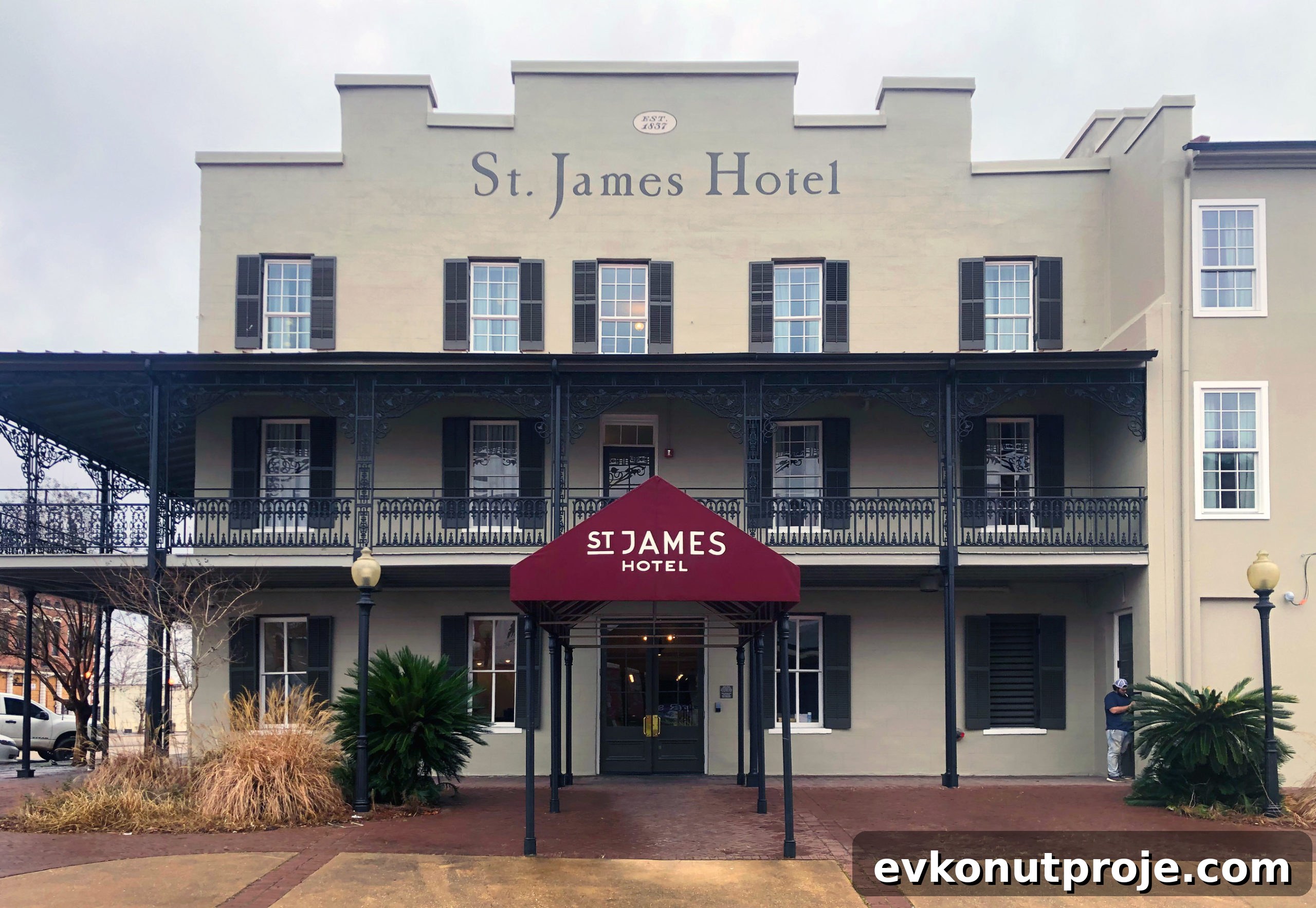
SELMA, Ala. – (Realty News Report) – With financing from a Houston-area bank, the historic St. James Hotel has been redeveloped and reopened near the Edmund Pettus Bridge, a key landmark in the Civil Rights movement.
The 55-room hotel, originally built in 1837, reopened this week as part of the Hilton Tapestry Collection.
The Edmund Pettus Bridge
Located one block from the historic bridge, the hotel will support Selma’s Civil Rights tourism and contribute to the local economy.
In 1965, on a day remembered as “Bloody Sunday,” roughly 600 marchers set out from Selma across the Edmund Pettus Bridge toward the state capitol in Montgomery to protest the earlier shooting death of Jimmie Lee Jackson by a state trooper.
Bloody Sunday
Although the march was peaceful, Alabama state troopers attacked the demonstrators with nightsticks, causing numerous injuries and hospitalizations. Television footage of the violence shocked the nation and helped build the momentum that led to the Voting Rights Act of 1965.
Forty-two of the hotel’s rooms opened Tuesday; the remaining 13 rooms will be introduced to the market at a later date, according to the Selma Times-Journal.
The redevelopment of the hotel, the only full-service hotel in downtown Selma, was supported in part by a $2 million equity investment from the Woodforest CEI-Boulos Opportunity Fund, a commercial real estate Opportunity Zone fund formed by Woodforest National Bank and CEI-Boulos Capital Management.
“Woodforest is proud to see our fund invest in high-impact and meaningful projects like the St. James Hotel,” said Doug Schaeffer, Executive Vice President and CRA Executive Director of Woodforest National Bank. “Investments like this often rely on banks combining Opportunity Zone incentives with Community Reinvestment Act strategies. We hope other banks will use this powerful tool to invest in underutilized assets so communities can realize their full potential.”
The St. James Hotel is the last pre–Civil War riverfront hotel in the Southeast and is central to Selma’s rich history. After the Civil War, Benjamin Sterling Turner—who in 1870 became the first African American elected to the U.S. Congress—operated the hotel. The building ceased functioning as a hotel in the 1890s and served commercial and industrial purposes for more than a century. It reopened as a hotel in 1997 but closed in 2017 after years of operational challenges.
“The redevelopment of the St. James Hotel marks a new chapter for Selma,” said Joanne Bland, a lifelong Selma resident and civil rights activist, owner of Journeys for the Soul and co-founder and former director of the National Voting Rights Museum in Selma. “Like many rural towns, our population has declined and many young people don’t return. Visitors used to stop, take pictures of the bridge, and move on. This hotel will make a significant difference for our community.”
Rhaglan Hospitality, a firm that specializes in restoring and adaptively reusing historic properties, will manage the hotel. The project aligns with the City of Selma’s comprehensive plan to revitalize the historic downtown and nearby Riverfront Park.
Jim Lewis, CEO of Rhaglan Hospitality, said, “The reopening of the St. James Hotel concludes a five-year journey for Rhaglan Hospitality, made possible by the equity investment from the Woodforest CEI-Boulos Opportunity Fund and a redevelopment loan from American South Real Estate Fund.”
The St. James Hotel is one of nine investments made so far by the Woodforest CEI-Boulos Opportunity Fund. The fund recently completed a separate investment in the redevelopment of the American Red Cross Building in Birmingham.
“CEI-Boulos Capital Management is committed to using the Opportunity Zone incentive for its intended purpose: to benefit and revitalize underinvested communities like Selma,” said Sam Spencer, CEO and Managing Director of CEI-Boulos Capital Management. “Despite its global recognition, Selma represents thousands of small rural communities facing economic challenges—exactly the kind of places the Opportunity Zone incentive was created to help. This investment will help revive Selma’s downtown and draw visitors from around the world to learn about an important chapter of American history. It exemplifies how private capital can be leveraged to address renewed focus on racial and economic equity.”
Jan. 26, 2021 Realty News Report Copyright 2021
File: Civil Rights Landmark Hotel near Edmund Pettus Bridge
Photo: Courtesy Woodforest Bank