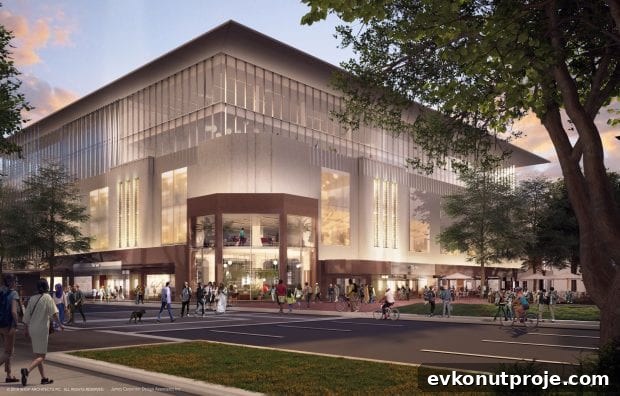
HOUSTON – (By Michelle Leigh Smith for Realty News Report) – The Ion, an innovation hub in Midtown Houston, is now open and accepting entrepreneurs, academics and collaborators who will build and advance startups on a new campus created from an historic Sears building.
The Ion is a redevelopment of an 82-year-old, multi-story Sears building led by Rice Management Company, the organization that manages Rice University’s $6.2 billion endowment. The project transforms the former department store into a 266,000-square-foot center designed to foster innovation across space, medicine, technology and clean energy sectors.
Academics Collide with Entrepreneurs
As Houston’s nucleus of innovation, The Ion aims to drive resilient, inclusive economic growth. The campus has attracted major tenants and partners—Microsoft has leased the entire fifth floor, and Chevron Technology Ventures is building space on the third level—alongside university and community collaborators.
“We want to create collisions between academics and entrepreneurs,” says Deanea LeFlore, Senior Director of Partnerships for The Ion. To catalyze those collisions, The Ion is launching several accelerator programs:
- The Ion Smart and Resilient Cities Accelerator (with a Super Demo Day planned for June 14–16)
- The Ion Aerospace Innovation Accelerator for Minority Business Enterprises
- DivInc Houston (its first cohort is already underway)
- Rice Alliance Clean Energy Accelerator (scheduled to begin in early summer)
LeFlore and Bryson Grover, Investment Manager for Real Estate Development at Rice Management Company, led tours for local journalists to showcase the building and its programming.
“The Ion begins a five- to ten-year phased development,” says Ann Taylor, who joined the Rice Management Company team as Communications and Marketing Strategy Lead for The Ion District. “As a Rice alum, I’m excited to see the university, the city, corporate and community partners united and committed to Houston’s future in innovation and inclusion.”
The Luminescent Blue Screen
A striking luminescent blue lobby screen greets visitors entering from Wheeler Avenue, while finishing touches continue on outdoor seating and landscaping designed to invite public use.
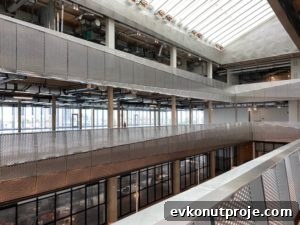
Inside, the second level features a large stair-stepped amphitheater with seating for about 250 people. “Capital Factory will be on this floor, near the academic flex space,” Grover explains. The design provides areas where college students and entrepreneurs can meet with mentors, seek business guidance or present to angel investors.
Construction for the first tenants is expected to finish over the summer. Offices on site are already in use; some Rice Management Company staff worked from The Ion during recent tours.
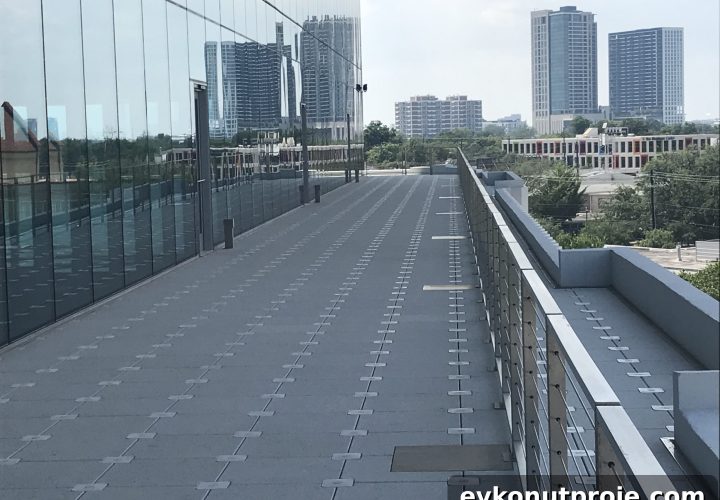
Grover highlights the dramatic natural light that fills the atrium from the rooftop down. “By opening the building’s central core, we brought in much more daylight than typically possible at this scale,” he says. Guests also visited a fourth-floor terrace—formerly the Sears roof—that offers sweeping views of downtown Houston.
Can the Historic Sears Sign Be Saved?
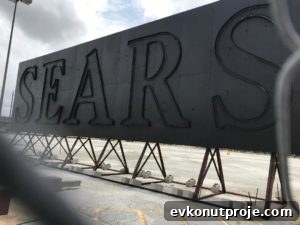
The renovation preserves architectural character where possible: marble columns and terrazzo tile remain on the main floor. The building’s original central escalator—the first in Houston when the store opened in 1939—no longer connects floors, but the 40-foot Sears sign has been preserved. Rice Management Company hopes a creative new use, perhaps as an art installation, can be found for the historic signage.
In pursuit of sustainability and occupant well-being, the project is seeking Platinum WiredScore, WELL Building, and LEED Gold certification. Wellness features include extensive bike storage and showers to encourage cycling and transit use as part of an intentionally walkable district.
Design teams include Gensler and SHoP Architects of New York City, whose collaborative approach produced a contemporary conversion that respects the building’s history while orienting it for future use. The development team overseeing the project is Hines, the Houston-based real estate firm founded by the late Gerald D. Hines.
Architecture, Materials and Ventilation
The exterior combines sleek dark glass and bronze accents but avoids a uniform “skin.” Some panels are clear, revealing interior metal staircases; others are laminated to reduce solar gain. Portions of the facade are designed to open, providing a natural ventilation strategy with paired panels that fold out in an accordion-like fashion.
Meyerland Roots: The Lymbar Drive Restaurant
The Ion’s ground level will host four new restaurants. One highlight is The Lymbar, a collaboration between chef Michael Cordua and David Cordua that marks the return of the father-son team to Houston. Named for the Lymbar Drive neighborhood in Meyerland where Michael Cordua grew up, the restaurant was designed by Gin Braverman of Gin Design Group. The 4,000-square-foot space includes indoor and outdoor seating for about 120 guests, an open kitchen and a bar emphasizing barrel-aged spirits. Menus sampled during previews showed globally inspired flavors rooted in Latin, South American and Mediterranean cuisines.
Flavors Galore in New Ion Restaurants
Other dining options include Common Bond On-the-Go, a compact version of the popular Montrose bakery; Late August, led by Chris Williams and Dawn Burrell of Lucille’s, offering international influences from Cuba, Jamaica and several African cuisines; and Stuff’d Wings, a beloved Third Ward food-truck concept moving into its first brick-and-mortar location at The Ion.
Supporting amenities include a forthcoming multilevel parking garage located behind Greentown Labs, which occupies a nearby redevelopment site that formerly housed a large grocery store.
Coworking operator Common Desk will occupy an entire floor to provide flexible office space and support for startups and early-stage companies.
A 16-Acre District Opportunity
The property’s transformation traces back to 1945, when Rice University leased the land to Sears under a 99-year agreement. In 2017, Rice Management Company acquired the property as Sears closed stores nationwide. Today Rice Management controls 16 acres surrounding The Ion, much of which is currently used for surface parking and underutilized retail and commercial buildings.
The Ion sits near METRO Rail’s Wheeler Station, where a street-level transit alignment creates a diagonal connection that can be confusing to drivers. Rice Management’s long-term plan is to redevelop the broader 16-acre district into a coherent, walkable, transit-friendly neighborhood that supports innovation, housing, retail and public life.
Published May 12, 2021. Realty News Report. Copyright 2021.
For more about Texas real estate, see the book Houston 2020: America’s Boom Town — An Extreme Close Up by Ralph Bivins.