HOUSTON – (Realty News Report) – Despite soaring lumber prices, Hines continues to expand its portfolio of mass timber boutique office buildings.
The global developer currently has two T3 (Timber, Transit and Technology) projects under construction, two completed, and roughly 20 additional wood-built buildings in the pipeline across North America and internationally.
These new Hines structures draw inspiration from the century-old brick-and-timber warehouses that have been reinvented as lofts and creative office space. Those historic buildings are known for their exposed wooden columns and industrial character. Hines preserves that aesthetic appeal while delivering modern performance, safety and comfort.

Hines has developed a new generation of mid-rise office buildings that use engineered wood for vertical supports and other structural elements. Tenants appreciate the combination of the historic, warm aesthetic and the efficiencies of contemporary construction.
“Tenants get that old‑school feel that evokes creativity and a sense of space, but they get it with modern technology, amenities and the comforts of a brand‑new building,” says Laura Hines‑Pierce, Senior Managing Director – Office of the CEO at Hines. “That intersection is what appeals to both tenants and investors.”
Hines‑Pierce, the granddaughter of founder Gerald D. Hines, made the remarks on CBRE’s Weekly Take podcast hosted by Spencer Levy.
The Weekly Take

During the conversation, CBRE’s Spencer Levy asked about construction costs for mass timber projects. Steve Luthman, Hines’ Senior Managing Director based in Chicago, explained how those costs compare with conventional materials.
“If you just compare construction costs alone, mass timber buildings tend to be about 10 percent higher than comparable concrete or steel buildings,” Luthman said. “But when you account for other factors, net‑net, we believe mass timber buildings are equivalent in overall cost.”
Luthman also noted that recent increases in steel prices have made timber more competitive. While commodity lumber prices spiked during the pandemic, he emphasized that engineered mass timber products are distinct from raw lumber and that log prices have remained fairly stable over the last decade.
Green Building
Reducing carbon emissions is central to modern development, and mass timber delivers clear sustainability advantages. Compared with concrete, timber construction typically generates significantly lower CO2 emissions during the build process and provides higher insulation values, contributing to operational efficiency.
“In North America, we grow enough timber to build one of these seven‑story buildings every 20 minutes,” Luthman said, noting that the projects use young, sustainably managed trees and do not deplete regional forest volumes. “These buildings are far more environmentally sustainable than many other building typologies.”
Major real estate firms are also setting ambitious carbon targets. Emma Buckland, CBRE’s global president of Property Management, described CBRE’s science‑based commitment to reduce emissions by 67 percent by 2035. CBRE is also transitioning its fleet to electric vehicles as part of broader decarbonization efforts.
The Next Timber Project
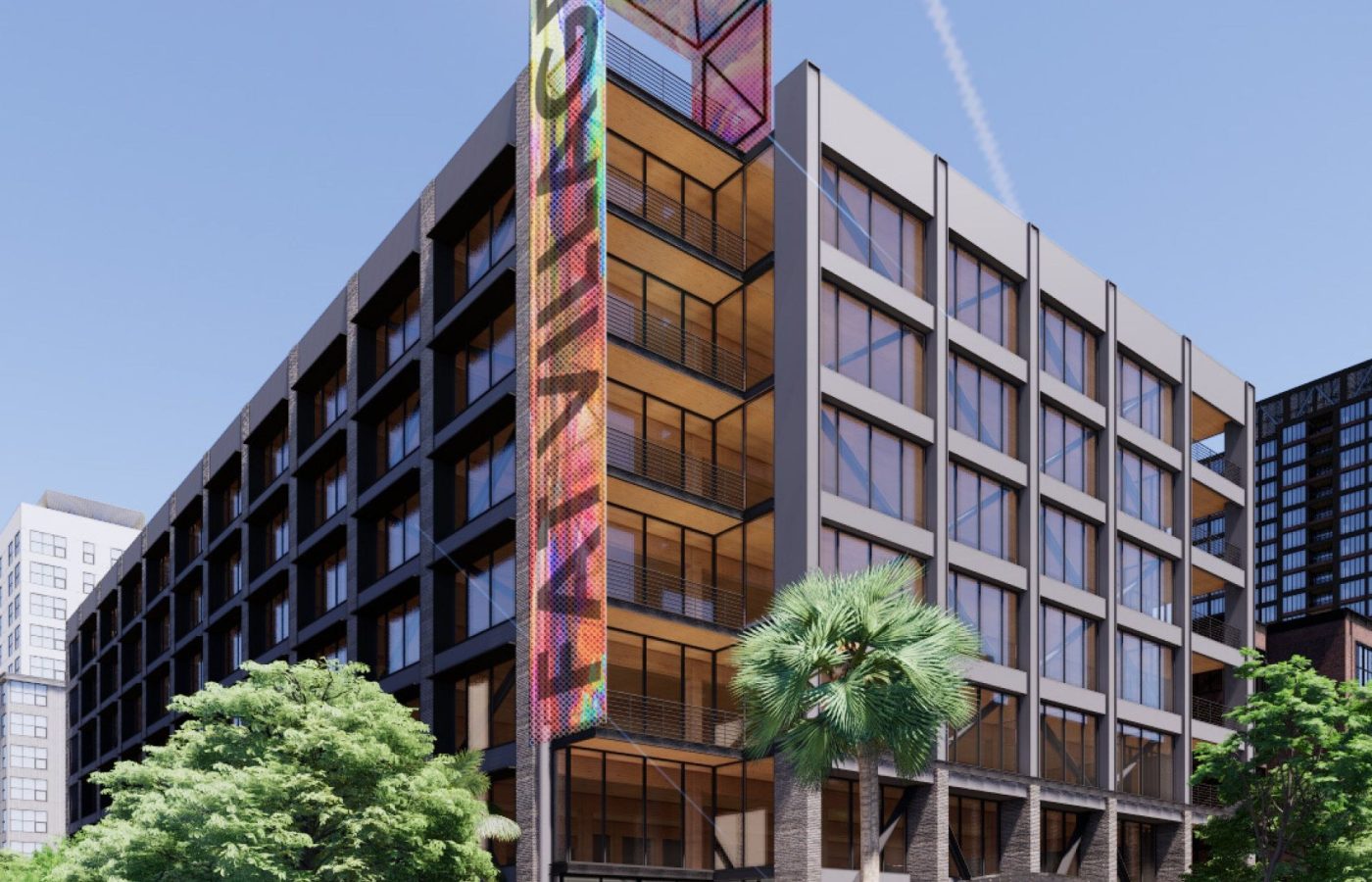
Hines recently announced a new mass timber project in Florida in partnership with Fort Lauderdale‑based Urban Street Development. The Fort Lauderdale building will be part of FAT (Food Art Technology) Village, a 5.6‑acre mixed‑use creative district in Flagler Village. The development is planned as a 835,000‑square‑foot urban village combining office, retail and residential uses, and will reinforce the neighborhood’s reputation as an art‑centric hub.
The 180,000‑square‑foot T3 FAT Village office building is planned for completion in 2024 and will reflect Hines’ continued commitment to timber construction and sustainable urban development.
June 1, 2021 Realty News Report Copyright 2021
Images: Courtesy Hines, CBRE