SAN DIEGO – (By Ralph Bivins of Realty News Report) – After a dramatic surge that pushed home prices up more than 30 percent in some cities during 2021, the U.S. housing market is expected to be far less intense in 2022, said Lawrence Yun, chief economist of the National Association of Realtors (NAR).
“Next year is going to be essentially flat,” Yun told a large audience at the San Diego Convention Center during the association’s annual meeting. “All markets are seeing strong conditions and home sales are the best they have been in 15 years. The housing sector’s success will continue, but I don’t expect next year’s performance to exceed this year’s.”
The extreme low inventory of homes for sale fueled the recent frenzy: sellers received multiple offers, many buyers engaged in bidding wars, and record prices were the result. Yun noted several factors that should moderate that intensity in 2022. Home construction is expected to increase, helping to ease the supply shortage. Mortgage forbearance programs will end for many homeowners, which should translate into more properties coming to market. Additionally, mortgage interest rates are anticipated to rise, removing some of the urgency created by historically low rates.
Yun predicts that the 30-year fixed mortgage rate will average about 3.7 percent in 2022. Without the availability of extraordinarily low rates such as those near 3 percent, buyer behavior is likely to normalize compared with the heightened competition seen in 2021.
Key Forecasts from NAR Chief Economist Lawrence Yun
1. Home price growth: Yun expects national home prices to increase by approximately 2.8 percent in 2022, down sharply from the projected 14.7 percent increase in 2021.
2. Sales activity: The number of homes sold is forecast to decline by about 1.7 percent in 2022, following a projected 6.4 percent increase in 2021. This reflects a cooling from the extraordinary activity seen during the pandemic-influenced market rebound.
3. Commercial real estate: Office vacancy rates are expected to rise, with the national average vacancy projected to reach about 13.5 percent in 2022, up from a projected 12.2 percent in 2021. The multifamily sector is forecast to experience a modest decline in vacancy rates. The ongoing shift toward remote and hybrid work will continue to reshape demand for office space and influence where people choose to live, affecting neighborhood preferences and residential location decisions for years to come.
Can Inflation Be a Positive?
Inflation will play an important role in real estate markets next year. “Inflation is high and it could go higher,” Yun said, pointing to rapidly rising costs for building materials and ongoing supply-chain disruptions.
Builders face shortages and steep price increases for lumber, paint, windows and many other materials needed to construct homes. Mobile home prices, for instance, have risen substantially, adding pressure to affordable housing options.
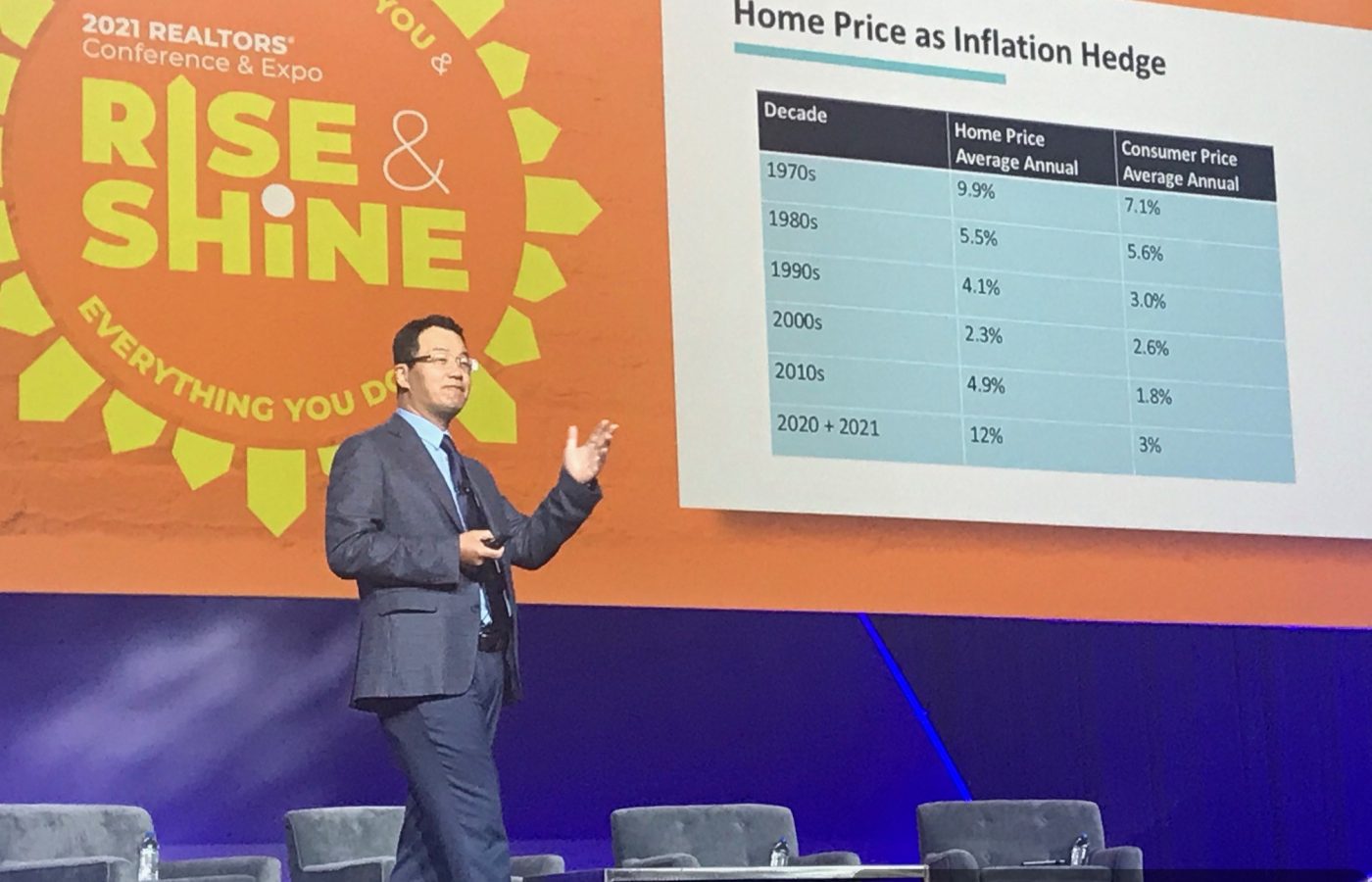
Despite these headwinds, Yun highlighted a potential silver lining: real estate often serves as a hedge against inflation. He noted that during the high-inflation period of the 1970s, home prices rose faster than inflation. For buyers and investors concerned about preserving purchasing power, real estate can offer protection by appreciating in value while inflation erodes cash holdings.
For Realtors and agents looking to advise buyers in 2022, emphasizing that homeownership can provide long-term protection against inflation may help prospective buyers make informed decisions. However, each market and individual financial situation is different, and buyers should weigh affordability, financing costs, and local inventory dynamics before acting.
The 2022 outlook from NAR suggests a transition from the frantic market conditions of 2021 to a more balanced environment next year. Rising construction, the end of forbearance programs for some homeowners, and higher interest rates are expected to increase listings and slow the pace of price growth and sales activity. At the same time, long-term trends such as changing work patterns will continue to influence both commercial and residential real estate markets.
Nov. 15, 2021 Realty News Report Copyright 2021
Photo credit: Ralph Bivins, Realty News Report 2021
Caption: NAR Chief Economist Lawrence Yun addresses the National Association of Realtors convention in San Diego on Nov. 12, 2021.
Related reading: For more about Texas real estate, see the book Houston 2020: America’s Boom Town – An Extreme Close Up by Ralph Bivins. Available on Amazon.
File: NAR 2022 Realty Forecast