Market briefs
Biotech Expansion at Levit Green, Market briefs
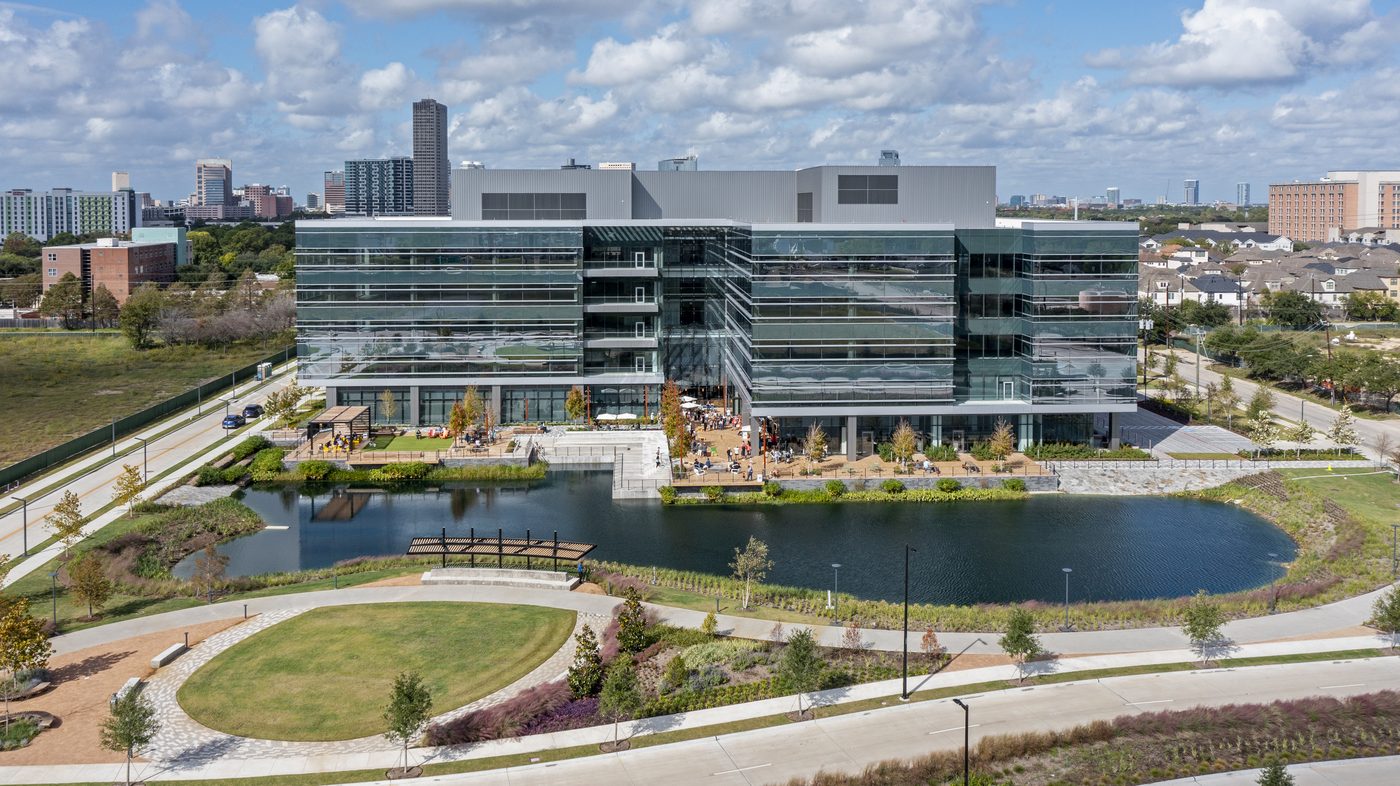
In Houston, Cerenome Inc., an oncology company focused on developing advancing radiation therapies, has significantly expanded its space at Levit Green, the 53-acre multi-use life sciences district adjacent to the Texas Medical Center in Houston.
The Levit Green development provides the opportunities for life sciences firms to take innovation from labs and expand as discoveries move toward larger scale treatments and therapies.
Cerenome’s new lease of 36,500 SF at Levit Green, is one of the one of the largest industry life sciences leases reported in Houston in recent years and underscoring continued demand for flexible, purpose-built laboratory infrastructure adjacent to the medical center.

John Mooz
Levit Green, located along Holcombe Boulevard west of Highway 288, is being developed by Hines in partnership with 2ML Real Estate Interests and Harrison Street.
“Cerenome’s expansion is exactly the type of growth Levit Green was designed to support,” said John Mooz, Senior Managing Director at Hines. “The company was able to move quickly into turnkey lab space and can now expand into a purpose-built environment on the same campus, demonstrating the flexibility we believe is increasingly important as life sciences companies grow.”
The Cerenome expansion demonstrates Levit Green’s ability to support life sciences companies as their space and infrastructure needs evolve, Mooz said.
“We appreciate Hines’ partnership and look forward to continuing to grow our presence in Houston as we advance the next phase of Cerenome,” said Marc H. Hedrick, M.D., Cerenome’s President and CEO. “Cerenome’s expansion at Levit Green reflects our continued investment in the infrastructure needed to support the anticipated growth of CNSide Diagnostics and our broader CNS oncology platform.”
In collaboration with Hines, Cerenome is designing and constructing a new laboratory and office on the fifth floor of the Levit Green building. The new space is slated to be completed in the fourth quarter of 2027. Cerenome was formerly known as Plus Therapeutics.
Levit Green’s first phase, completed in 2023, is a five-story, 290,000-SF biomanufacturing and lab facility. The long-term master plan, designed by Gensler, depicts research facilities, office, residential, shopping and dining, outdoor amenities and green space rendered to reflect the site’s location at the epicenter of Houston’s biotech, corporate life sciences and medical research hub.
Levit Green is a key component in advancing Houston’s reputation as a biotechnology and pharmaceutical mecca.
Over the last year, major pharmaceutical firms have laid out plans to construct manufacturing facilities in Generation Park, a 4,300-acre large-scale planned community developed by McCord Development in northeast Houston.
On August 10, Bristol Myers Squibb laid out plans to build a 600,000 SF pharmaceutical manufacturing campus in Generation Park. Bristol Myers Squibb’s $2.3 billion plant followed another major score at Generation Park last year when Eli Lilly laid out plans for a $6.5 billion pharma plant.
“We are grateful for this strong endorsement of Generation Park as a home for advanced life sciences manufacturing,” said Ryan McCord, CEO & President of McCord Development. “With beautiful parks, resilient infrastructure, higher education workforce development and certainty of execution, Generation Park attracts jobs and supports the industry producing next-generation therapies.”
In Also significant is theTMC3. Tmc3 is a 37, acre life sciences campus designed to advance science from the Texas Medical Center to commercialization ventures. The TMC3 is located along Braeswood Boulevard on the southern edge of the 1,300-acre Texas Medical Center where over 100,000 people are employed at medical schools and hospitals including MD Anderson Cancer Center, Methodist Hospital, and Texas Children’s Hospital.
And Pearland’s Lower Kirby District, a 1,200-acre multi-use development, has become a magnet for life sciences employers. Cardiovascular Systems Inc. was the first medical manufacturer to move into the Lower Kirby District in 2009. The manufacturer of interventional treatment systems for vascular disease was purchased by Abbott in 2023 and has continued operations out of a 46,000-SF facility. Other major life sciences players followed, including Lonza, the largest dedicated cell and gene therapy manufacturing facility in the world; Millar, Inc., a global leader in precision pressure sensing technology; and Merit Medical Systems, a manufacturer of proprietary, disposable medical devices.
Houston is On Its Way to Becoming the “Third Coast of Life Sciences.”
“Houston’s economic leaders have been touting the city as a burgeoning life sciences sector for years, and while there has been growth, it’s been slower than the projections suggested. That’s changed. There’s real momentum now, and the Eli Lilly and Bristol Myers Squibb commitments, along with TMC3, are proof of it,” says Coy Davidson of Colliers. “Houston isn’t at Boston, Northern California, or San Diego’s level yet, and I’d be doing the market a disservice to say otherwise. But I’d argue Houston is now the front-runner to graduate from an emerging life sciences market to a primary one.”
Mooz of Hines said Houston has developed all the necessary components of becoming a top-tier life sciences market, like Boston, although the Houston is not there yet. However, Levit Green has been attracting increasing attention in the marketplace.
Houston has made great strides in the last eight or nine years in enlarging its work force of people prepared to work in biomanufacturing, said Will Tankersley, senior director at Hines. Colleges such as the University of Houston, Rice University, Lone Star College, Alvin Community College, and Houston Community College, to name a few, have developed educational programs, training and certifications to prepare a biotech workforce.