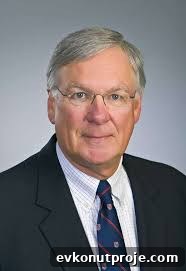
Inside Master-Planned Communities: Q&A with Ted Nelson, President of Newland Communities
Ted Nelson
HOUSTON – (Realty News Report) – West Houston has experienced remarkable growth over the past several decades. As the region continues to evolve, what does the future hold? Realty News Report spoke with one of the people who has been involved since the beginning — Ted Nelson, President & Chief Operating Officer of Newland Communities. According to the West Houston Association, Nelson “continues to be an indispensable presence in the development community.” As chairman of the West Houston Association, Ted led the effort to create WHA’s Master Plan 2050, which has influenced development and infrastructure planning across the region. A longtime Houston area resident, Ted began his career in residential development with The Woodlands Development Corporation. He later held various roles at American General Land Development and Terrabrook (a predecessor to Newland), where he helped plan and develop communities such as Cinco Ranch, Telfair, Seven Meadows, Greatwood, and Summerwood. At Newland, Ted provides operational and senior leadership for the company’s residential master-planned, commercial, retail, and urban mixed-use projects across 12 states.
Realty News Report: How have master-planned communities (MPCs) changed over the past 10 years? Are they being adapted for Millennials?
Ted Nelson: Master-planned communities today are generally smaller in scale than in the past. With The Woodlands and Cinco Ranch largely built out, Bridgeland remains one of the few very large communities on the west side at more than 10,000 acres. Elyson is about 3,600 acres, while Cinco Ranch and The Woodlands are 8,400 and 27,000 acres, respectively. Millennials now represent a substantial share of buyers — roughly 35% of homebuyers in our communities. In many ways, Millennials’ needs and desires echo what Baby Boomers wanted decades ago: they want the newest and best. However, the context is different. Millennials prioritize digital connectivity, a sense of community with the option to be active or not, high-quality schools, modern amenities, and safety. While their expectations differ technologically and culturally, the underlying desire for quality living is similar. The rapid pace of change is a challenge for developers, but we remain focused on anticipating and meeting buyers’ evolving preferences.
Realty News Report: How are things going at your new Elyson master-planned community?
Ted Nelson: We are very pleased with Elyson’s early performance, especially considering its opening came during a downturn in energy prices. As of this month, Elyson has sold 327 homes. Between 2014 and 2016, Houston lost more than 80,000 energy-related jobs, equal to about $7 billion in payroll — a factor that affected housing elasticity across the region. Like much of the Houston area, Elyson was impacted by Hurricane Harvey, but because Elyson uses the latest stormwater management design and strict building standards, no homes there flooded during Harvey.
Realty News Report: How has the Grand Parkway influenced Houston’s growth?
Ted Nelson: That’s a broad question. To frame it, consider Detroit: at the Urban Land Institute meeting I attended in Detroit, I learned the city is now about one-third of its 1960 population. Cities that stop growing face serious challenges. Growth, when managed well, is positive, and infrastructure planning is essential to support it. Loop roads are a critical part of traffic planning. Houston’s loops — 610, Beltway 8, and now the Grand Parkway — have all helped the region accommodate growth. These roadways have spurred development by making travel between points more efficient. I want Houston to continue growing in a healthy way; a city that stops growing, like Detroit, yields no winners.
Realty News Report: What if the Grand Parkway had not been built? What would have happened?
Ted Nelson: Without the Grand Parkway, congestion would be worse and development would push even farther out along the major spokes such as IH-10, IH-45, and IH-69.
Realty News Report: Which stretch of the Grand Parkway mattered most — the western part near Cinco Ranch?
Ted Nelson: The first segment connecting IH-10 West to FM 1093 (Westheimer) through Cinco Ranch was important for growth in the greater Katy area. However, I believe the segment linking IH-69 South to IH-69 North (U.S. 59) is the most significant. It offers a major alternative for southbound traffic that previously had to pass through the city to continue west or south. It also links western and southwestern parts of the region to Bush Intercontinental Airport without entering the city and serves as a critical evacuation route during hurricanes and other natural disasters.
Realty News Report: Did the Grand Parkway have any negative impacts?
Ted Nelson: That question depends on whom you ask. I don’t see it as a zero-sum issue; rather it’s a matter of whether the benefits outweigh the drawbacks. In my view, the positives do outweigh the negatives. Planning and building infrastructure that improves quality of life is, overall, a beneficial investment.
Realty News Report: People say the Grand Parkway contributed to urban sprawl. What do you think?
Ted Nelson: What do we mean by urban sprawl? Post-automobile cities tend to have similar residential densities — typically between 2,000 and 3,000 people per square mile. Neighborhoods inside Loop 610 were not substantially different in density when they were built than communities like Cinco Ranch. Houston’s strength is its ability to offer a wide range of lifestyles. A healthy inner city and a growing suburbs both serve different needs. Without transportation infrastructure, Houston could not provide those options. A diverse set of housing choices and affordability is a key part of what makes Houston a vibrant and welcoming city.
Realty News Report: You’ve helped develop master-planned communities where tens of thousands of Houstonians now live. How does that make you feel?
Ted Nelson: Humbled and grateful. A close friend told me decades ago that I might not fully understand the impact of my work on families and individuals. It took me years to grasp what he meant. I sincerely hope my efforts, together with those of many colleagues over the years, have helped make Houston a better place and improved the lives of the families who live in the communities we built.