Market briefs
Keeping it Fresh: Next Gen Mixed-Use Development

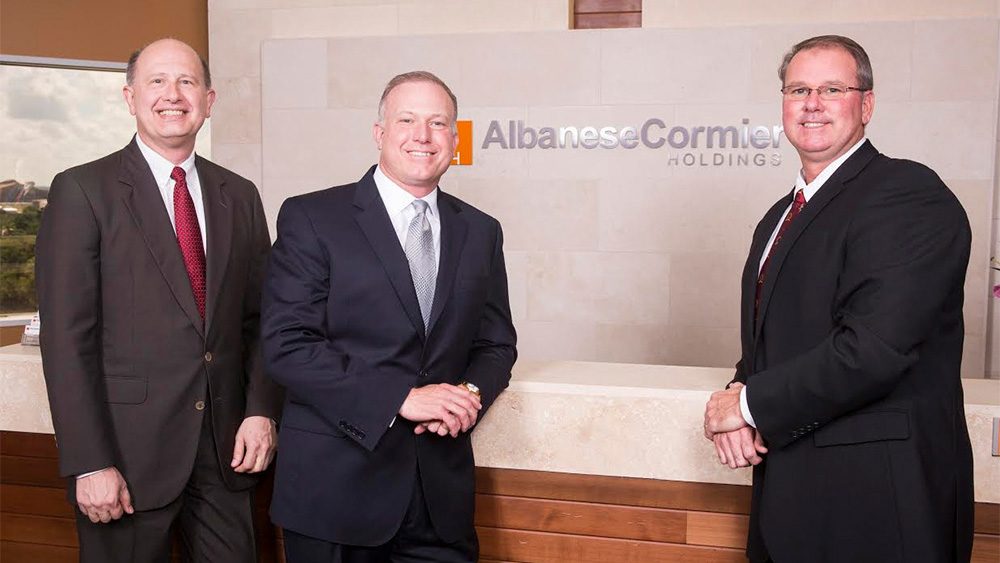
East River, a future multi-use development by Midway, is located one mile east of downtown Houston.
In Austin, Mixed use real estate developments, while extremely popular today, can’t be built just anywhere and must follow certain criteria, as stated by Jonathan Brinsden, chief executive officer of Houston-based Midway a privately-owned, fully integrated real estate development and investment firm.
Brinsden spoke from experience, Midway boasts nine multi-use projects in Houston that have been completed, under construction or on the planning boards.
“We opened our first multi-use project, CityCentre, in 2009,” said Brinsden, “and now we are planning East River with a 20 year build-out. East River is amazing opportunity and we hope to start phase 1 next year. It is a trail oriented, waterfront project connected to Buffalo Bayou Park that will be the highest and best use of land. We seek to deliver an enduring product that is a remarkable place.”
Brinsden participated on the “Next Gen Mixed Use Development” panel during the National Association of Real Estate Editor’s (NAREE) Annual Real Estate Journalism Conference at the Hyatt Regency Austin. Moderated by the Houston Chronicle’s Nancy Sarnoff, the panel included Kyle Reis, Principal and Director of Planning at Atlanta-based design firm Cooper Carry’s Urban Design Planning Studio and Sagar Rathie, vice president, development commercial multi-use at Crescent Communities of Charlotte, a real estate company that specializes in developing, owning and selling commercial, multi-use and multifamily across the Southeast and Southwest.
“What’s interesting is that not all multi-use developments are created equal,” continued Brinsden. “There is no formula. All are unique and all are special, each has to fit its location. While CityCentre was Midway’s first project, 37 acres of fully integrated multi-use with office retail, hospitality, entertainment and even education, our focus remains how to keep it fresh and relevant today.”
In Midway also took over GreenStreet in downtown Houston, a failed three, block multi-use development in 2012. “We had a lot of fun reinventing the project,” he noted. “Greenstreet had retail, entertainment, and office but we tore down part of project and added a 225-room hotel and took some of the second floor retail space and converted it into coworking space.”
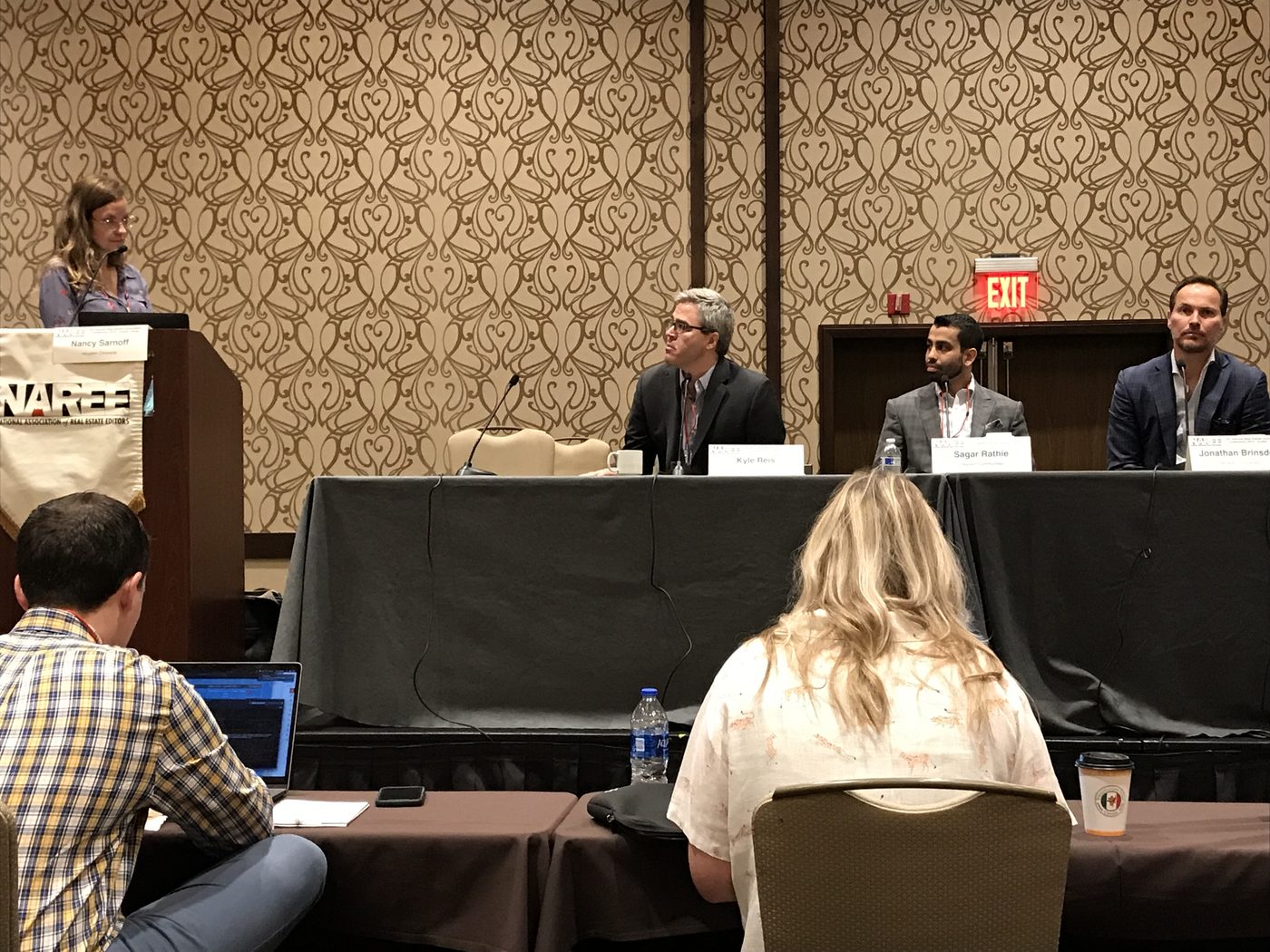
In The Naree mixed, use panel: Nancy Sarnoff, Houston Chronicle, Kyle Reis of Cooper Carry, Sagar Rathie of Crescent Communites and Jonathan Brinsden of Midway. Photo: Ralph Bivins.
Reis noted that as stated by the definition of the Urban Land Institute in Washington, D.C., multi-use projects have three or more significant revenue producing uses, foster integration, density and compatible land uses and create a walkable community with uninterrupted pedestrian connections “We are now in era of smart growth, walkability, transit-oriented development and traditional neighborhood design,” he added.
“There are both examples of horizontal and vertical multi-use. The benefits of multi-use include quality of life, tying healthy living and wellness to communities, economic through shared parking, for example in urban core, environmental, getting more density on smaller parcels on brownfield infill sites.”
Rathie noted Crescent first started out as a land developer then entered the multifamily sector and finally created a commercial platform. One of the company’s current projects is the 26-story Ally Charlotte Center now under construction in downtown Charlotte. “It is a true multi-use, with a 745,000 sq ft office tower sitting on 30,000 sq ft of retail adjacent to a new JW Marriott hotel with access to light rail,” he continued. “We wanted to get people out into the plaza, so we created an inviting sense of openness not only for tenants of building but entire city block. It creates interactions with people they might not otherwise see and helps drive value. We’re even putting in an oak and a tire swing. The tire swing creates a cool sense of community.”
Rathie added that developers must manage risk and be careful in deciding what to include in their multi-use offering. “You have to manage risk,” he said. You can look at new opportunities but the last thing you want to do is stick new uses on to drive value.”
Public support is also important. Reis said Cooper Carry does a great deal of public engagement with a new multi-use project. “We let everyone be heard,” he said. “At every public meeting, there will usually be one or two vocal people who have a single agenda that they want to get across. We listen. If the process is transparent, they see 85% of the people around them are for the project. It’s a way to gain consensus.”
Cooper Carry large-scale planned and is he architect of record of 725 Ponce, an innovative 360,000 sq ft office tower over a new 60,000 sq ft new Kroger, featuring modern industrial architecture, Class-A amenities, and public art. Developer Jim Irwin of New City Development had purchased an infamous Kroger site in Atlanta adjacent to the Beltline and wanted to transform it into the multi-use destination with the high-rise office tower topping the grocery store. “Jim talked to all the neighborhoods before the project became public and got the buy in, which is the way this kind of development should happen,” said Reis.
With multi-use projects, engaging community groups and stakeholders is very important, particularly in Houston, a city sans zoning, Brinsden said “Just because you can do it doesn’t mean you should,” he joked.
One of the concerns about multi-use developments today is the retail component. “With some projects, you can’t fill every ground floor space with retail, because there isn’t the demand to justify the retail,” he added.
Financing of multi-use projects has become easier, said Rathie. “It’s been a learning process around multi-use,” he said. “Institution capital likes the idea behind multi-use but it’s new.”
Brinsden agreed, noting that Midway had to capitalize each use separately for CityCentre. “Today you probably could raise capital from one institutional partner,” Brinsden said. “The capital markets understand multi-use developments better now. But even today, office residential, retail and hospitality cycles operate differently, so we’re always working with different market forces.”
Retail has become a major challenge in multi-use. “The retail world is more competitive; the tenant base is changing,” he continued. “What was a 5,000 sq ft soft good clothing retailer a few years ago now may be a 2,500 sq ft retailer. We built 400,000 sq ft of retail at CityCentre and even though it is all full now, probably we would have built less of that today.”