HOUSTON – (By Michelle Leigh Smith for Realty News Report) – Until the COVID-19 pandemic is under control, forecasts remain uncertain. James P. Gaines, chief research economist at Texas A&M University’s Real Estate Research Center, told a seminar hosted by Community Development Strategies that no economist can precisely predict the future under current conditions. He noted that increased household spending, federal fiscal stimulus, pent-up demand and accumulated savings have supported portions of the recovery, but ongoing challenges — including the Delta variant and persistent supply-chain disruptions — continue to slow progress. “If the Delta variant hadn’t hit, we’d probably already be recovered,” he said.
The Real Estate Research Center at Texas A&M is the state’s primary organization for real estate research.

“Major federal stimulus packages have helped fuel recovery, though not as much as anticipated,” Gaines explained. “When people shelter in place, they don’t spend as much despite increased online purchases. Couple that with the 21 million jobs lost in April 2020, and recovery becomes a steep climb.”
The economy experienced dramatic swings in 2020: GDP fell a record 31.4% in the second quarter, then rebounded with a record 33.4% gain in the third quarter, but the rebound did not fully offset the losses. For 2020 as a whole, U.S. GDP declined about 3.5%, a milder contraction than countries such as the U.K. (-9.9%), France (-8.3%) and Germany (-5%).
“We had expected GDP growth of 7.5–8.5% in 2021, but the Delta variant reduced that outlook by at least a full percentage point,” Gaines said. “As of August 2021, about 8.4 million people remained unemployed. Total U.S. nonfarm employment was 147.2 million in August versus 152.5 million in February 2020 — roughly 5.3 million jobs short of a full recovery, meaning we are approximately 96.5% back to pre-pandemic employment levels.”
Gaines added that the Delta surge pushed expectations lower, but recent data show a “hump over” with a downward trend in reported cases that he hopes will continue. During his 15 years at the center, Gaines has specialized in housing and land development issues, authored more than 50 center reports and frequently serves as the organization’s principal speaker.
“With the recent rise in inflation, the Consumer Price Index could remain above 5% for a few more quarters before easing back into the 2–3% range by the end of the year,” he said. “If wages begin rising materially, we could see inflation stabilize around 4–4.5% over the next year or two.”
“Although I had predicted a 3.5% mortgage rate by year-end, rates have remained close to 3% for much of the period,” Gaines noted. Looking ahead six months, persistent inflation and ongoing shortages — from new home construction materials to automobiles affected by the global semiconductor shortage and other consumer goods — will likely keep upward pressure on prices. Builders face shortages of windows, doors, appliances and LED lighting and are managing backlogs of contracted but unfinished houses.
Gaines also pointed to events preceding the pandemic that hurt the state’s economy: in January 2020, a price war between Saudi Arabia and Russia drove oil prices down just before the pandemic began, delivering a double blow to energy-dependent economies. He believes that reopening the economy will take the better part of 2021 and that employment will continue to face headwinds even as consumer spending and entrepreneurial activity strengthen. Historically, housing is the sector that falls first and recovers first; while housing remains comparatively strong, it is not yet driving a broad U.S. recovery because much of the rest of the economy remains sluggish.
Before joining the Real Estate Research Center, Gaines spent 16 years with KPMG and Arthur Andersen providing real estate consulting services and served five years as president of the Rice Center, an urban research center affiliated with Rice University. His decades of experience span real estate research and education, urban economics, land-use analysis, development, and project risk assessment. He has worked extensively with corporations, developers, investors, financial institutions and government agencies nationwide.
In 2019, Gaines was part of a Texas Realtors delegation representing the United States at the MIPIM Engaging the Future conference in Cannes, France.
Sept. 29, 2021 Realty News Report Copyright 2021
Dr. James Gaines authored the introduction to the book Houston 2020: America’s Boom Town – An Extreme Close Up by Ralph Bivins. (Book available commercially.)
Houston 2020 Ebook version
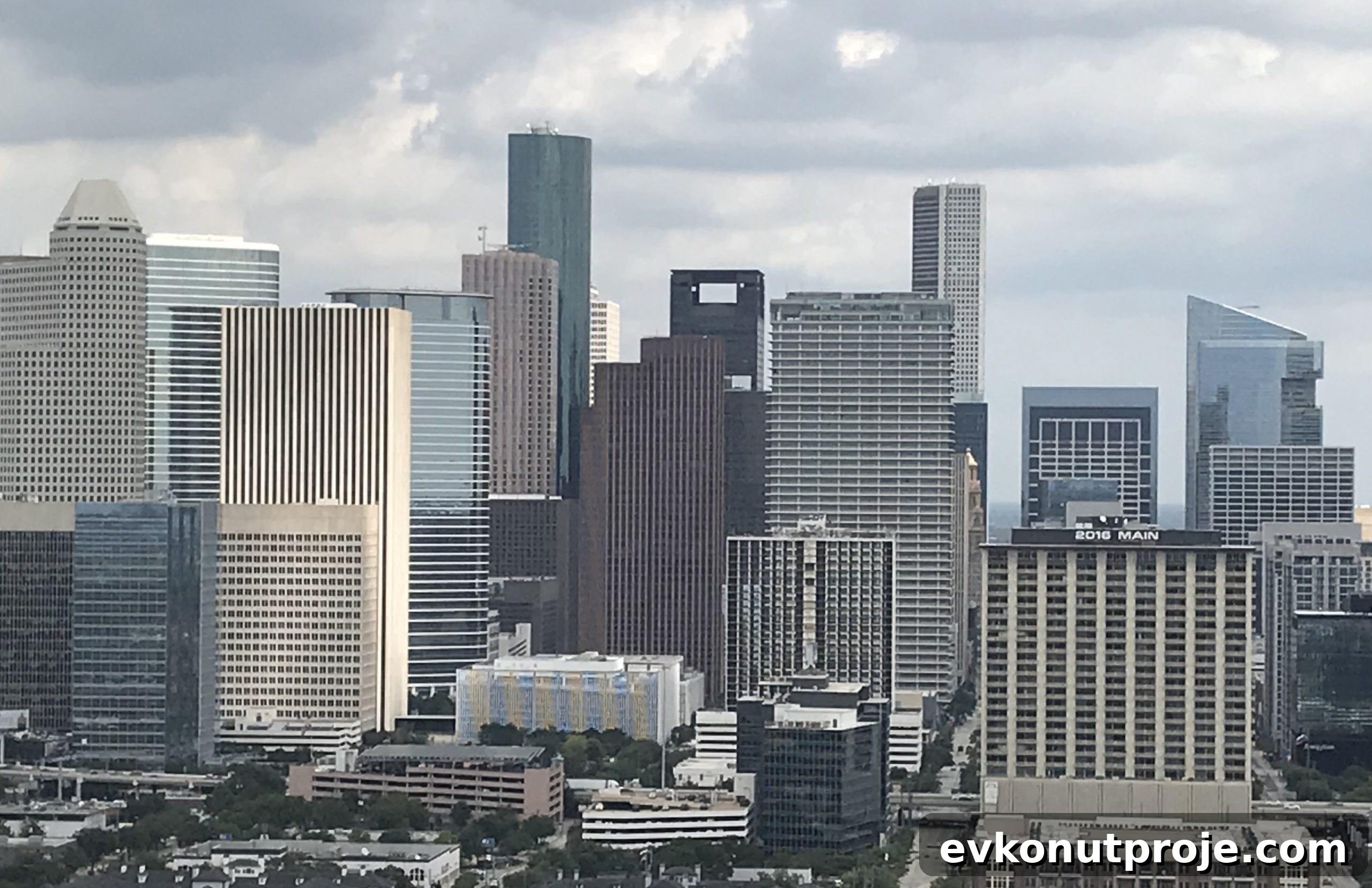
Skyline photo credit: Ralph Bivins, Realty News Report Copyright 2021
File: Economic Recovery Unfolds Slowly. Jim Gaines.