Market briefs
Evolution of Downtown’s Market Square District
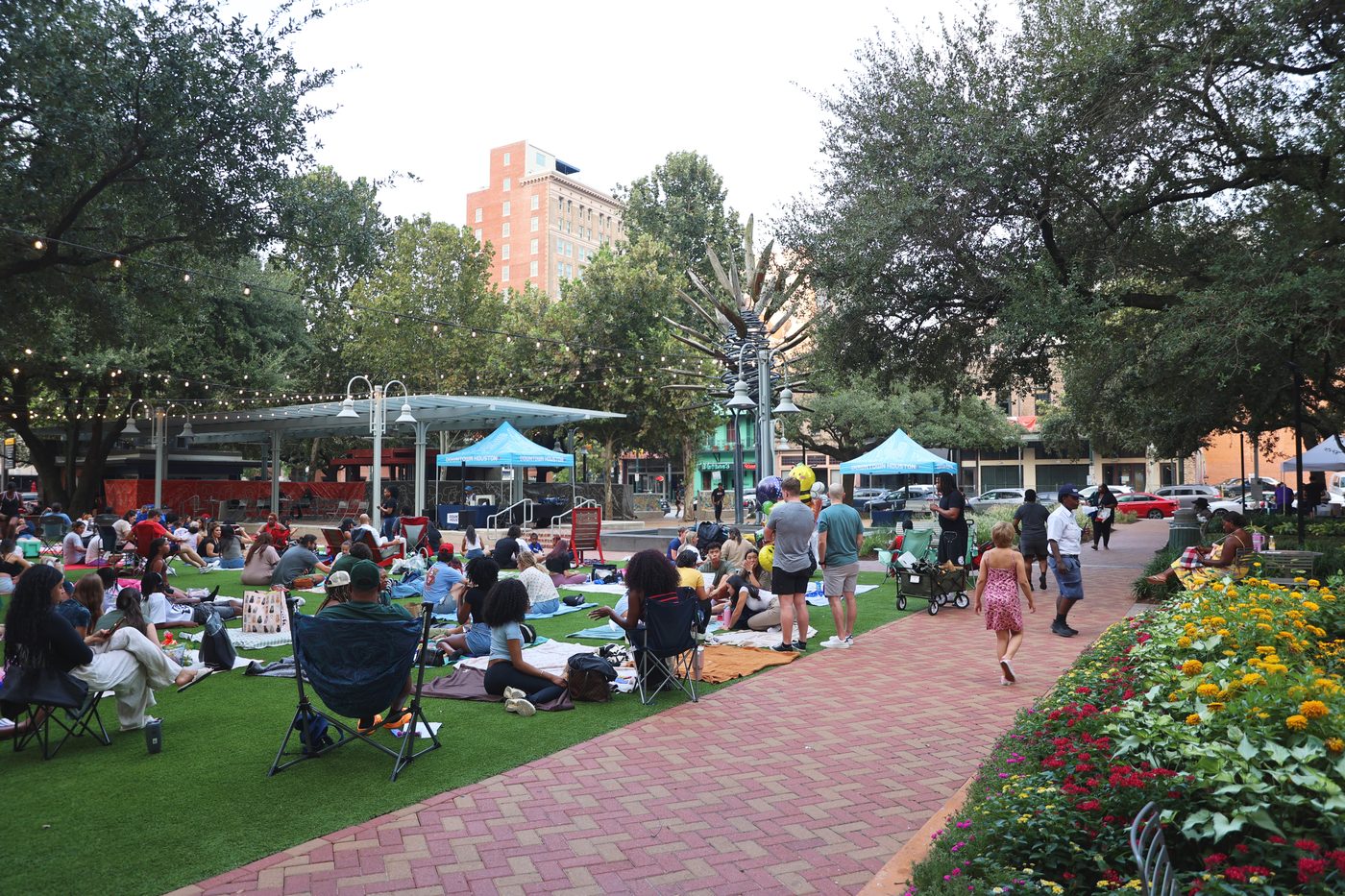
In Houston, It’s Market Square. Once the site of the City Hall for a fledgling, bayou-proximate, 1840s outpost called Houston. Once part of a boomtown that was the epicenter of the oil business.
Then, Houston spread to the suburbs, to new office towers, new housing, new freeways and trendy shopping center, and drained the life from Market Square and the nearby properties in the oldest part of downtown Houston.
Market Square Park, bounded by Travis, Milam, Congress, and Preston streets, went into a deep decline along with other blocks that were in Houston’s original business district.
“I remember walking these streets when much of it looked abandoned,” says Minnette Boesel, a Houston preservationist who has been devoted to downtown.
“This is the story of vacant buildings and absentee owners,” Boesel said in a recent presentation about Market Square’s revitalization at the Heritage Society Museum. “This is the story of peep shows, Triple X theaters, a Kung Fu movie house, pawn shops and bars plagued by dozens of calls to the HPD (Houston Police Department) each year.
“This is the story of politics and the lack of any protectionary laws for historic buildings, no civility ordinances or ordinances mandating certain types of building maintenance,” Boesel said.
The decline in the Market Square District shifted course in the late 1980s and 1990s as preservation advocates pushed for recognition, investment, and reuse. A rebound was coming, but nobody knew that the results would exceed expectations.
Through the last 44 years, Boesel and a corps of historians, architects, builders, and people who care, faced anonymous phone calls, vagrancy and panhandling, lawsuits, fires and even a death threat.
Today, Market Square Park and the surrounding district is now a lively pocket of lofts, restaurants, hotels and an urban park with a new restaurant. A major redevelopment by Downtown Houston + is in progress on a neighboring stretch of Main Street.
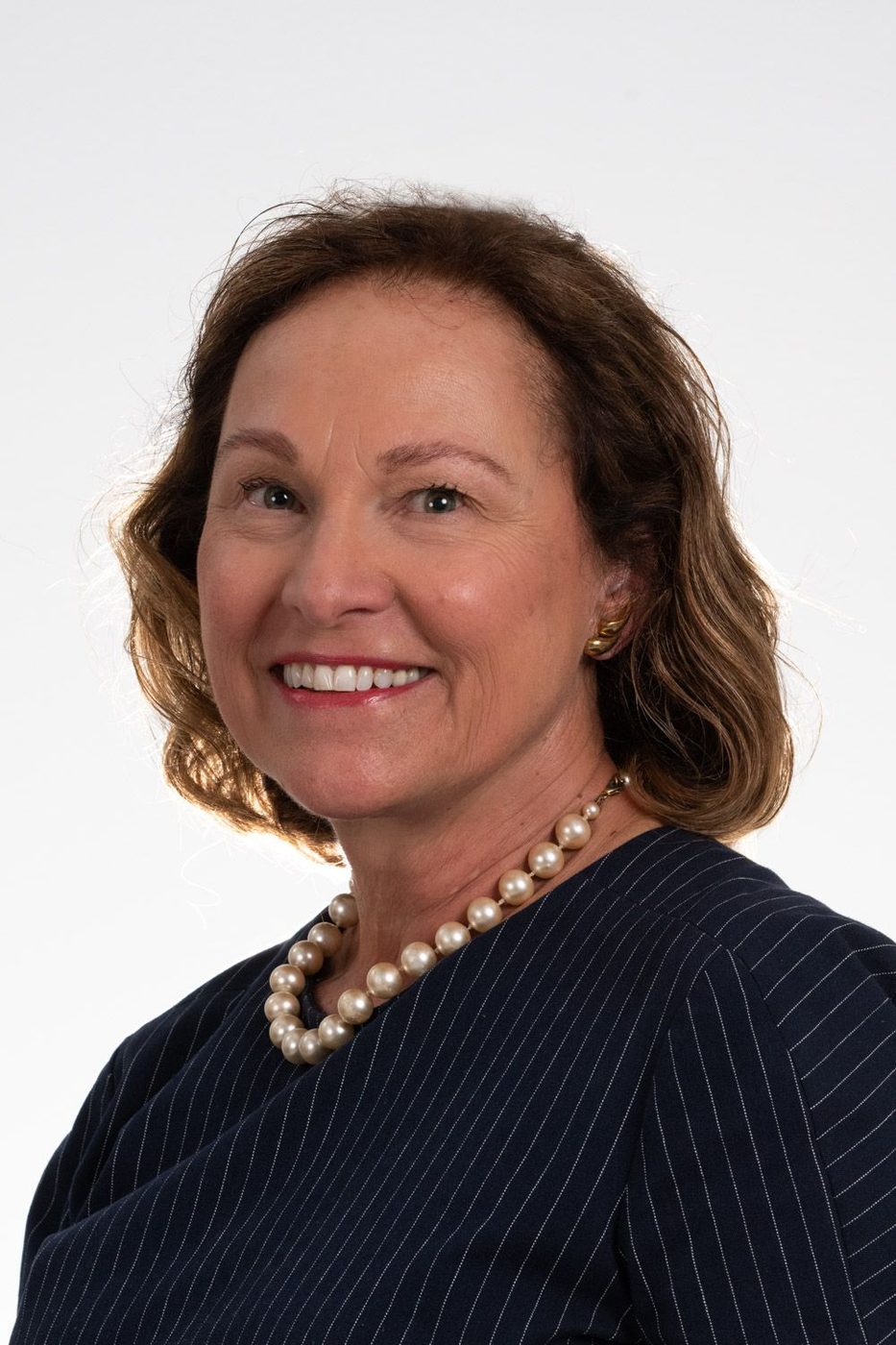
Minnette Boesel
“We didn’t set out to romanticize the past. We set out to make the past useful again so the city could grow around it,” said Boesel, founding Director of the Market Square Historic District Project.
“We’re proud that Market Square is now a place where people choose to live, work and gather,” says Alison Bell, Executive Director of The Heritage Society. “That transformation didn’t happen by chance. It happened because people believed history could be an asset, not an obstacle.”
After the completion of the Market Square Park renovation in 2010, the Downtown Management District entered into an operational agreement with the City to manage the park in terms of maintenance, programming and food operations. This has been a game changer for the Historic District.
The larger historic district extends north of Buffalo Bayou, to the University of Houston Downtown, and to Fannin and Texas, encompassing 52 buildings, the Main Street Viaduct and Allen’s Landing Park. Many Houstonians have fond memories of fabulous margaritas at Warren’s Inn, rambunctious lunches at Treebeards and romantic evenings at the low lit La Carafe, in Houston’s oldest commercial building at 813 Congress with a jukebox that played Edith Piaf, Django Reinhart, and Hank Williams.
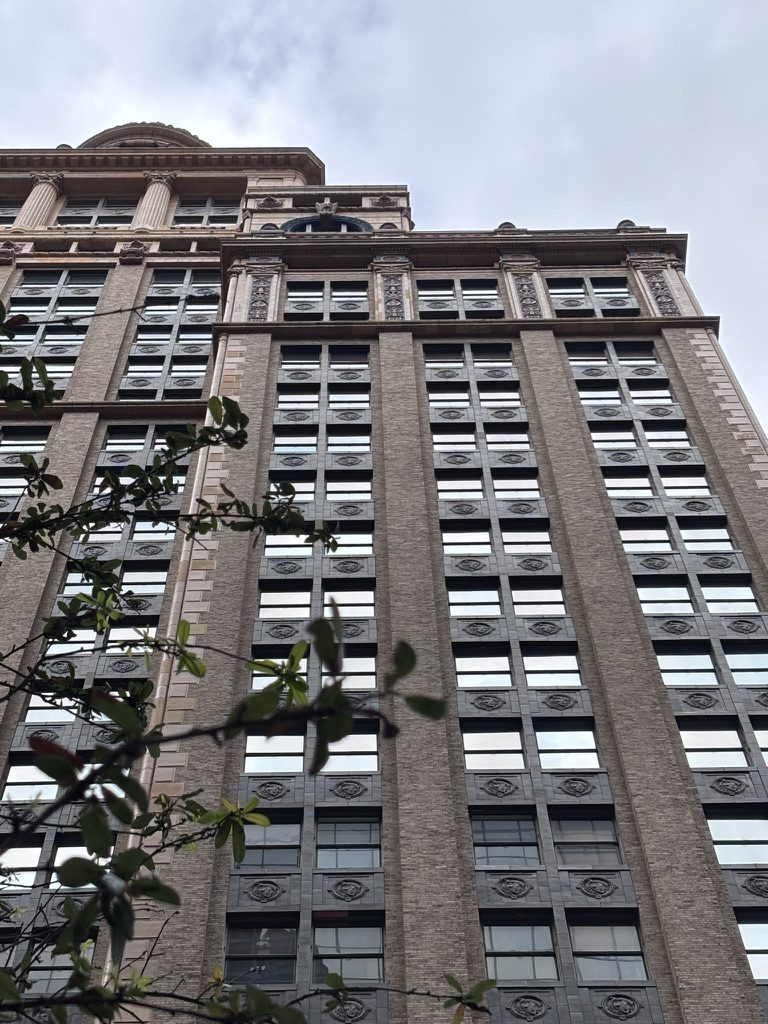
In The first home of Charlotte Baldwin, widow of Houston co, founder Augustus Allen, was built at the corner of 718 Main and Rusk in the 1850s and demolished to make way for the 37-story Gulf Building, the tallest building at the time after Jesse Jones bought the property and commissioned the building in 1927.
The Houston Old Town Development Corporation formed in the late 1970s with the purpose of trying to save and revitalize the Market Square area. “They hired our firm along with Stephen Fox to research when we were asked to write the nomination of what would officially become the Main Street Market Square Historic District to the National Register of Historic Places,” Boesel says.
“The first project we embarked on was Market Square Park and we were undaunted. The first collaborative art installation was put together with Diverse Works and we worked out of the Foley Dry Goods Store in the 1889 Foley Building on Travis.
“It was exciting because people were starting to look at Market Square and see potential in the area,” recalls Dan Tidwell, founder of Treebeards restaurant, which was located across the street from Market Square Park for many years.“We considered Market Square as Treebeards’ front yard and we were very proud that it was across the street from our restaurant,” says Tidwell.
“Diverse Works, a newly formed and work start alternative artist space housed in the 1889 Foley Building, saw this new green space as a canvas,” says Boesel. “We raised the funds for one of the first Houston artist collaborative installations. The artworks reflected Houston’s history. The central small plaza featured a sculpture entitled Points of View by Texas artist James Surls. The walkways included fragments from demolished buildings and noted photographers Paul Hester created photo tiles showcasing the history of the square.
“We all felt that remaking the park would be a catalyst toward revitalization,” she says.
The Old Town corporation for whatever reason disbanded and the financial proceeds were given to a new business non-profit, the Downtown Houston Association, housed at the historic Christ Church Cathedral, to be used for projects in the Market Square Historic District.
Firms from out of state began considering Houston for projects. The fact that the mayor Bob Lanier, helped get Houston’s first historic preservation ordinance passed in 1995 furthered this effort.
In redevelopment of downtown’s nearby historic properties, Spire Realty Group created the Bayou Lofts, the Sam Houston Hotel and several other Houston projects. Many of these had been sitting vacant for years. Bill Franks was the local lead in the projects for Spire Realty and Doug Crosson was the development and construction coordinator for the Bayou Lofts with Minnette Boesel Properties serving as project advisor and broker for the condominium loft sales.
The revitalization efforts saw the some of the first loft and condo opportunities downtown, with the circa 1917 Hermann Lofts, and Randall Davis’ $60 million transformation of the Rice Hotel into lofts on Texas Avenue.
There were many challenges, some fine victories, some disappointments, but Boesel believes the preservationists reached the goal.
“The goal to save the neighborhood was with the help, partnership and leadership along the way with many others was achieved to keep the tangible evidence of our city’s birthplace preserved and revitalized and serve as important evidence and reminders of our city’s early growth and development,” Boesel said. “It is hard to believe that now the Downtown historic district is a popular destination for restaurants, entertainment venues, amazing activities in Market Square Park and downtown is home to more than 12,000 residents.”