HOUSTON – (By Dale King, Realty News Report) – Multiple analyses of the Texas apartment market show sharp increases in rents, occupancy rates and unit absorption during the summer of 2021, a clear turnaround from the summer of 2020 when the early phase of the coronavirus pandemic disrupted real estate activity.
Houston Market Compares Closely to Austin
ApartmentData.com’s September 2021 report notes that apartment absorption in Houston “continues to be strong.” The report highlights that Houston now appears roughly on par with Austin in both occupancy and rental rate growth, a development many in the multifamily industry hope will persist.
According to Bruce McClenny, president of ApartmentData.com, Houston has seen rising rents and improving occupancy for at least five months after more than a year of market softness. The uptick in leasing activity and the gain in occupancy that began in April 2021 continued through September, with few signs of a slowdown.
The comparison between Austin and Houston shows both cities registering gains in rent and occupancy. ApartmentData.com reports 91.7 percent occupancy in Houston’s rental stock versus 91.9 percent in Austin’s multifamily units.
Average Rents and Unit Size
The report lists Houston’s average rent at $1,155 per month, compared with $1,516 per month in Austin, which remains one of the nation’s strongest local economies. The typical leased unit in Houston averages 887 square feet, while Austin’s average leased unit is 886 square feet.
Over the past 12 months, Austin’s rental rates jumped 20.9 percent with 18,587 units absorbed. Houston’s average rent rose 10.6 percent during the same period, and the market absorbed a larger volume of units—33,451—reflecting Houston’s much larger multifamily inventory.
ApartmentData.com’s figures show Austin’s multifamily supply at 260,623 units across roughly 1,100 communities. Houston’s inventory is substantially larger, with 696,883 units in about 2,954 properties.
For context, the Dallas/Fort Worth metro area reported 92.7 percent occupancy as of September, with an average rent of $1,332 for an 878-square-foot unit. D/FW saw a 14.2 percent increase in rental rates over 12 months and absorbed 37,594 units. San Antonio matched D/FW’s 92.7 percent occupancy but at a lower average rent of $1,103 for an 856-square-foot unit; San Antonio’s rental rate grew 11.2 percent over the year while absorbing 10,526 units.
Dallas/Fort Worth’s multifamily stock totals 793,825 units across 3,317 communities, while San Antonio has 207,709 units distributed among 967 neighborhoods.
McClenny’s September report also identifies five Houston-area submarkets that registered especially strong growth and solid absorption rates over the prior three months.
Top-Growing Submarkets
The Tomball/Spring submarket posted the greatest growth at 34.6 percent, with a 7.3 percent absorption rate.
The Heights, including the Washington Avenue corridor, recorded 29.8 percent growth and a 6.2 percent absorption rate, placing it second among Houston submarkets.
The Montrose/Museum/Midtown area posted 30.3 percent growth and a 3.8 percent absorption level, ranking third.
Katy/Cinco Ranch/Waterside came in fourth, with 31.2 percent growth and 3.3 percent absorption. The Highland Village/Upper Kirby/West University region ranked fifth, growing 28.2 percent with a 3.9 percent absorption rate.
Sept. 6, 2021 Realty News Report Copyright 2021
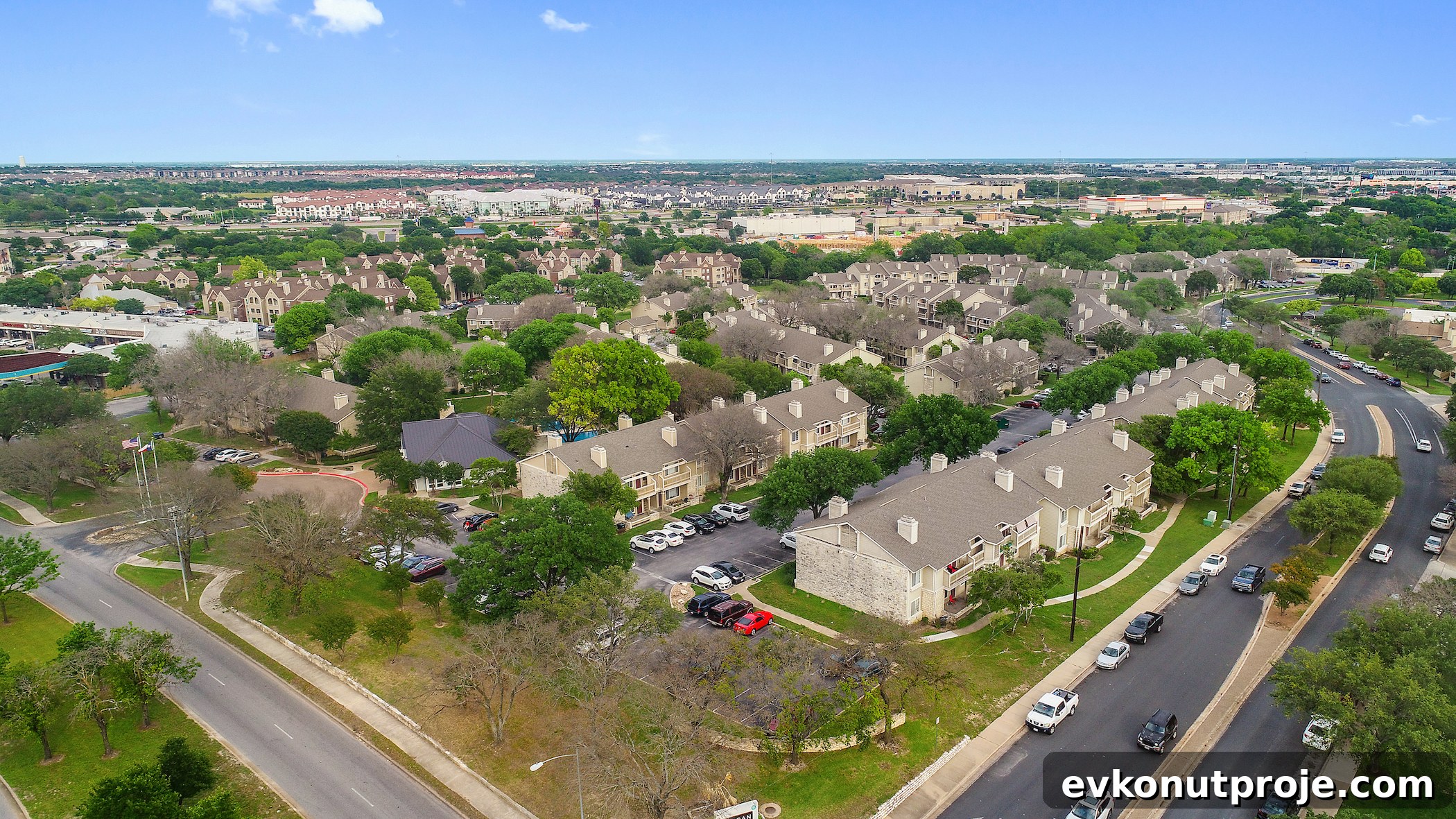
Photo: The Morgan, a 504-unit apartment community at 1801 Wells Branch Parkway in Austin, was recently acquired by a partnership of Archway Equities and CAF Capital Partners. Image courtesy: Archway Equities, CAF Capital Partners, via DB&R Marketing Communications.
For readers interested in Texas real estate, the book Houston 2020: America’s Boom Town – An Extreme Close Up by Ralph Bivins covers local market trends and context.
File: Texas Apartment Industry Skyrockets
File: Bruce McClenny. Texas Apartment Industry Skyrockets after Covid 2020 impact. Archway Equities, CAF Capital Partners.