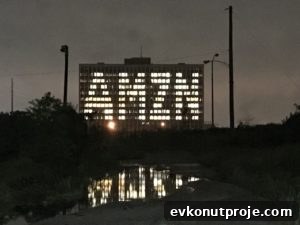
HOUSTON – Rice University, which controls the former Sears building and nearly 10 acres around it in Houston’s Midtown, is backing the city’s bid to host Amazon’s proposed second headquarters.
Thursday marked the deadline for cities to submit proposals to Amazon for the $5 billion headquarters project, which is expected to house as many as 50,000 employees and encompass roughly 8 million square feet of office space once completed.
Rice University President David W. Leebron has been in communication with the Greater Houston Partnership regarding the city’s proposal, Realty News Report has learned. Leebron, who has been mentioned in national media as a possible candidate for other prominent academic leadership roles, did not provide a public comment.
“Rice University is supportive of the city’s effort to bring Amazon’s second headquarters to Houston,” a university spokesperson said, without offering further details.
Rice, ranked among the nation’s top universities by U.S. News & World Report, controls a strategically located redevelopment parcel: the 1939-era Sears store at 4201 Main Street, adjacent to U.S. Highway 59 in Midtown.
Sears had announced plans to close the store in January. Rice Management Company, which manages the university’s endowment, owns the store site and the surrounding property—about 9.4 acres in total—making it one of the most significant available sites between downtown and the Texas Medical Center.
Crucially, the Rice/Sears property is served by METRO light rail, aligning with Amazon’s stated preference for locations with strong mass transit access. The site is also close to Montrose, downtown, and numerous multifamily developments and entertainment and dining options that appeal to Millennials and young professionals.
Among national site-selection observers, Houston has not been widely viewed as a leading contender in the Amazon sweepstakes. Cities such as Austin, with its established tech profile, Denver, Atlanta, and Northern Virginia suburbs have frequently been cited as favorites. Dallas has also been mentioned.
Within Houston, other competitive locations include downtown’s 800 Bell tower—formerly an Exxon building—and the 147-acre East River development on the eastern edge of downtown being planned by Midway.
Amazon’s request for proposals stresses immediate access to transit and shows a preference for urban locations. The company also calls for strong air connectivity, including a substantial number of nonstop flights to hubs such as Seattle, San Francisco, New York and Washington, D.C.
On that measure, Houston benefits from two international airports with relatively convenient access to downtown, giving it an advantage over some competitors when it comes to air service.
Critics have questioned Houston’s concentration of tech talent, but the region has produced significant tech success stories in the past, including companies that helped establish a large technical workforce. Recent corporate investments, such as a major office project under construction in north Houston tied to HP, underscore the local tech and corporate infrastructure.
A key factor in Amazon’s evaluation will be the package of tax incentives and abatements offered by the winning city and local jurisdictions. Details of Houston’s proposal, including any incentive requests, were not disclosed publicly.
Amazon was expected to announce its chosen location in 2018.