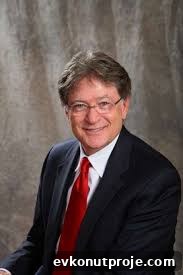
World Capital of Master-Planned Communities: Interview with David Jarvis
David Jarvis
HOUSTON – (Realty News Report) – Houston is famous for many things: space exploration, the energy industry, and a unique urban landscape shaped by its lack of formal zoning. It is also arguably the world capital of Master Planned Communities (MPCs) — large residential developments that offer extensive recreational amenities like parks, golf courses, lakes, bike paths, and jogging trails. These communities are far larger and more amenity-rich than typical subdivisions. Vast tracts of land north, south, and west of Houston have been developed as MPCs. Their rise is closely tied to Houston’s zoning-free environment and a demand for organized suburban living. What does the future hold for MPCs? Did some development practices contribute to the flooding experienced during Hurricane Harvey? And how has the Grand Parkway shaped residential and retail growth? Realty News Report interviewed David Jarvis, Senior Vice President at John Burns Real Estate Consulting, a leading expert on MPCs, to explore these questions.
Realty News Report: Houston is known for its Master Planned Communities. How are MPCs changing in Houston?
David Jarvis: Houston was the place where MPCs really took hold. While other regions may have had early examples, Houston is where the model matured and expanded dramatically. MPCs grew out of necessity — the city lacked zoning and many homebuyers looked to the suburbs for planned neighborhoods with consistent standards and predictable amenities. Visionary developers, like the late George Mitchell who created The Woodlands, demonstrated how a large, thoughtfully planned community could include schools, retail, parks, and residences to create a self-contained, attractive place to live. At one point MPCs accounted for about half of all home sales in the metropolitan area; today they represent about 30–35% of Houston’s home sales. Their evolution has been a defining feature of the region’s residential landscape.
Realty News Report: How are MPCs like Cincinnati Ranch addressing growth and mobility issues? How have they helped the city?
David Jarvis: Take Cinco Ranch as an example. The completion of the Grand Parkway (State Highway 99) improved access and made the community more attractive. When Cinco Ranch opened in 1991, the developers introduced a novel amenity package, including a four-acre lagoon and a Beach Club, along with multiple pools, lakes, and playgrounds. These amenities differentiated the community and drew buyers. MPCs don’t just provide homes; they deliver large-scale infrastructure, amenities, and planning that benefit residents and shape regional growth.
Realty News Report: Have MPCs in Houston evolved over the years? How so?
David Jarvis: Yes. Communities like The Woodlands have become economic engines of their own. They generate jobs, attract businesses, and aren’t solely dependent on downtown Houston. MPCs increasingly function as independent urban centers with their own commercial and employment bases.
Realty News Report: What about the future of Master Planned Communities? Some say development contributed to the flooding from Hurricane Harvey. What are your thoughts? Others say we need denser development.
David Jarvis: MPCs still have a strong future. Millennials are reaching life stages where they’re marrying, paying down education debt, and thinking about starting families. Many choose suburbs and MPCs for the schools, community amenities, and lifestyle they offer. New residents often decide where to live after arriving in the region, and many opt for the structure and predictability of an MPC.
Realty News Report: How can the city avoid the severe flooding it experienced from Hurricane Harvey? Did the flooding damage Houston’s reputation?
David Jarvis: Flooding has long been a challenge for Houston, but Harvey revealed how vulnerable the city is to extreme rainfall. One critical issue is conveyance—the systems and channels that move water away from populated areas. Historically, plans from the 1940s proposed reservoirs and channels (such as Addicks and Barker reservoirs) and conveyance routes to move water toward the ship channel, but many elements were never fully implemented. Conveyance requires widening and routing channels in ways that can be controversial, especially where trees and existing neighborhoods are affected. Houston is decades behind earlier plans in this respect. The technical problem is clear: water must be moved away from developed areas more effectively. Addressing conveyance, along with coordinated regional planning, will be essential to reducing flood risk going forward.
Realty News Report: Has the Grand Parkway been a game changer for the city?
David Jarvis: Absolutely. The Grand Parkway has improved connectivity across the region, enabling people to access more job centers and housing options. Houston’s economy supports multiple employment hubs—Downtown, the Galleria, Westchase, Clear Lake, The Woodlands—so improved highways create more viable living and commuting alternatives. The freeway network and toll roads have helped guide growth corridors and support suburban job centers, reflecting Houston’s market-driven approach to development.
Realty News Report: Most retail construction nowadays is along the Grand Parkway. How has it changed retail development?
David Jarvis: Retail follows rooftops. Developers of MPCs are skilled at forecasting when a market reaches the population threshold that supports retail, and they buy land and plan accordingly. Without sufficient households in an area, retail won’t be sustainable. As MPCs build density, retail naturally follows to serve those residents.
Realty News Report: Where is real estate development headed? Will we see more development downtown than in the suburbs?
David Jarvis: There has been a renewed focus on affordability. The housing market went through cycles of lax underwriting, then severe correction after 2008. Today, mortgages and lending standards are more balanced and builders are responding by producing more homes priced under $300,000. While urban infill and downtown development have roles to play, the market still supports a large share of suburban, attainable housing—particularly in MPCs that package amenities, schools, and infrastructure.
Realty News Report: Where do you see Houston’s future expansion?
David Jarvis: Much of Houston’s growth is concentrated along corridors where land and infrastructure are available. Southbound along State Highway 288 is one major growth area, and west and northwest corridors continue to expand where roadway and utility infrastructure exist. Toll roads have facilitated movement and enabled development farther from the urban core. Houston’s economy remains tied to the energy sector, though it’s more diversified than in past decades. Even when oil prices have tumbled, the region has shown resilience. The city faces challenges—flooding among them—but Houston’s pragmatic, can-do spirit and market-driven development will continue to shape how it grows and adapts.