Hotel Trends: Food & Beverage, Design Teams, and Airbnb Realities
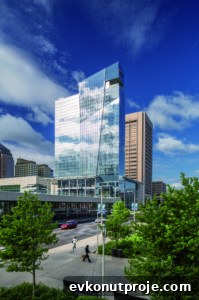
Hilton Cleveland Downtown, designed by Cooper Carry, demonstrates new design trends.
LAS VEGAS – (Realty News Report) – As travelers increasingly seek authentic experiences, hotels are expanding and diversifying their food & beverage (F&B) offerings to create more memorable stays and boost revenue.
That insight came from the “Hotel and Casino Trends: New Designs and Luxuries” panel at the 52nd annual conference of the National Association of Real Estate Editors (NAREE) in Las Vegas on Wednesday.
“Historically, hotels did not view F&B as a major revenue driver,” said Manny Dominguez, a principal in Cooper Carry’s hospitality studio. He explained how operators now design properties to attract a broader range of guests through unique, interactive and social dining experiences that increase both revenue and time spent on site.
“Where hotels once offered a single entrance to restaurants through the lobby, they now provide multiple street-level access points so diners can enter directly,” Dominguez said. “F&B is becoming increasingly important to hotels.”
Dominguez also noted a change in the design process: where a project once relied on one architect and one interior designer, developers are now engaging multiple specialists for F&B outlets, including bar designers, to deliver a diverse mix of concepts and atmospheres.
Daniel Lesser, president and CEO of New York-based LW Hospitality Advisors and another panelist, said the hospitality industry remains strong, benefiting from growing U.S. travel and rising travel from China’s expanding middle class.
“America is the greatest country in the world and people want to come here,” Lesser said.
He added that while some local hotel markets are oversupplied, others remain underserved. “Overall, the industry is fairly balanced and new supply appears to have peaked,” he said. He also pointed to a shortage of construction labor that is pushing up development costs.
Richard “Boz” Bosworth, general partner and CEO of JC Hospitality — the group that recently acquired the 1,500-room Hard Rock Hotel & Casino in Las Vegas — described the competitive landscape for hotel guests.
“In Las Vegas there are five distinct customer segments,” Bosworth said: casino patrons, conference attendees, leisure travelers, entertainment visitors who come for shows, and local residents. “All of these groups contribute to strong business.”
Bosworth said his ownership group, which includes British entrepreneur Richard Branson, plans to rebrand the Hard Rock as Virgin Hotels Las Vegas by the end of 2019.
He also observed that the rapid early growth of marketplace platforms like Airbnb has moderated. “When Airbnb first emerged, many in the industry were alarmed,” Bosworth said. “But that growth has slowed, and the initial fear of a major negative impact has largely subsided.”
Dominguez emphasized ongoing changes in hotel design and noted Cooper Carry’s award-winning work on the Hilton Cleveland Downtown as an example of current priorities.
“We’re focusing on bringing daylight into staff areas,” he said. “In the past, back-of-house spaces often had no windows. Today’s labor market is different: attracting and retaining employees requires thoughtful, healthy work environments. Designers are now creating hotels that serve both guests and staff well.”