HOUSTON – (By Dale King, Realty News Report) – The image of students wearing letter sweaters or consulting a heavy encyclopedia on campus feels nostalgic but increasingly outdated. The educational landscape is changing rapidly as market forces and shifting lifestyle expectations reshape how institutions design and use their real estate.
Phil Utigard, executive vice president and head of the Education Advisory Group at Transwestern, explains that three major trends are driving those changes across schools, universities and for-profit education providers: a more consumer-oriented approach to education, pressure to control costs, and advances in teaching and learning technologies. Together, these trends have substantial implications for the properties educational institutions own and occupy.
Students today expect more than traditional classroom offerings. Utigard notes that modern learners want diverse housing, dining, and entertainment options within walking distance of campus and convenient public transit. Responding to those demands, many institutions are locating programs in converted downtown office buildings or mixed-use properties that offer urban, live-work-play amenities that a conventional campus may lack.
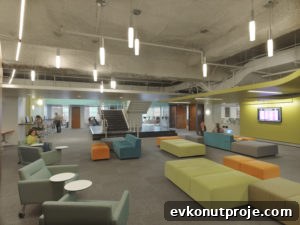
To attract and retain students, schools are adapting their physical spaces to provide an appealing learning environment and the amenities that support social interaction and collaboration. New facilities increasingly borrow design elements from contemporary workplaces: robust Wi-Fi, flexible seating, plentiful charging stations, glass partitions, writable walls, and technology-rich multiuse spaces.
Traditional lecture halls and fixed classrooms are giving way to adaptable team rooms and multipurpose studios equipped with advanced audiovisual tools. These flexible spaces accommodate different course formats and reduce idle time; Utigard points out that conventional classrooms are rarely used more than 40 percent of the school day, while multipurpose rooms allow successive, diverse courses to use the same footprint efficiently.
Students are taking a practical, consumer-minded approach to their education. Many seek programs that teach immediately applicable skills and clearly understand the costs, schedule, and delivery method they prefer. If institutions can meet these expectations without forcing students to compromise their lifestyles, they become far more attractive options.
On-campus food and beverage offerings play an important role in that appeal. Cafés, cafeterias, and coffee bars borrowed from workplace models keep students on site and reduce time lost to off-campus trips, supporting both learning continuity and campus vitality.
Designers and administrators also face the challenge of preserving a school’s identity within multipurpose, urban facilities that must compete for students’ attention. Maintaining visible branding and a strong institutional presence is vital not only for the current student experience but also for long-term philanthropic support—today’s student impressions often influence tomorrow’s alumni giving.
As educational institutions continue to adapt to consumer preferences, cost pressures, and pedagogical innovations, their real estate strategies will increasingly emphasize flexibility, urban connectivity, and amenities that align with modern student expectations. These changes reflect a broader shift toward experiences and environments that foster collaboration, convenience, and practical learning outcomes.