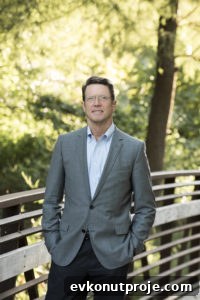
HOUSTON – (Realty News Report) – Once dismissed as concrete and traffic, central Houston is steadily becoming greener. From recent additions like Discovery Green and the revitalized Buffalo Bayou Park to the ambitious plans to expand Memorial Park and ongoing improvements at Hermann Park, Houstonians are enjoying a growing network of attractive and walkable public spaces. One of the key figures behind many of these efforts is Guy Hagstette, a registered architect and urban planner who leads the Kinder Foundation’s park and civic initiatives. Hagstette has served as a consultant on Buffalo Bayou Park for the Buffalo Bayou Partnership and as an advisor on Bayou Greenways for the Houston Parks Board. He was the founding president and park director of Discovery Green and previously worked as special assistant for urban design to Mayor Bill White and director of planning and development for Central Houston, Inc. Realty News Report spoke with Hagstette to learn why more green spaces are appearing across the city and where Houston’s park movement is headed.
Realty News Report: Why are parks now important for Houston?
Guy Hagstette: Recent studies underline how essential outdoor activity is for public health, and parks are often the most accessible places for people to exercise and enjoy nature. For many residents, parks and the expanding system of hike-and-bike trails are the primary venues for recreation. Beyond health, Houston competes with cities worldwide for talent. To attract and retain skilled workers—who can live anywhere—we must offer a high quality of life, and vibrant parks are a major part of that appeal.
Realty News Report: Discovery Green in downtown has been wildly popular and is now surrounded by new development: One Park Place, the Hess Tower, and a 1,000-room Marriott Marquis. What made this park so successful?
Guy Hagstette: Several factors contributed. From the start, the park’s unique downtown location called for a tailored governance model that protected public interests while acknowledging those distinct conditions. Adequate funding was crucial: major upfront philanthropic contributions and a long-term plan for maintenance and operations were secured so the park wouldn’t be a drain on the city’s parks department. We also engaged the public to learn what people wanted and then built a park that satisfies both everyday use and special events. Finally, consistent dedication from the Discovery Green Conservancy team—day in and day out—helped make the park a lasting success.
Realty News Report: Buffalo Bayou Park has also received international recognition. How did that park come to be?
Guy Hagstette: Buffalo Bayou Park realizes a vision for bayou-side parks that dates back a century. The land was originally acquired with park bond funds approved by voters in 1912, but limited resources, floods and changing civic priorities stalled the plan after World War II. The Buffalo Bayou Partnership revived that long-dormant vision through its Buffalo Bayou & Beyond plan in 2002, and a catalytic gift from the Kinder Foundation enabled the transformation from plan to reality. The key lessons are patience and persistence—these projects can take decades—and a willingness to commit meaningful funding to parks.
Realty News Report: Hurricane Harvey was far beyond a typical flood event. Has Buffalo Bayou Park recovered?
Guy Hagstette: Largely, yes. The Buffalo Bayou Partnership has restored roughly 95% of the park. Remaining work involves erosion control and silt removal at several channel-edge locations, tasks assigned to the Harris County Flood Control District under the park’s governing agreement. They’re seeking federal funds, and repairs will proceed once funding arrives. More broadly, Harvey affected Bayou Greenway trails across the city, leaving silt and debris that required extensive clean-up. While those trails have also recovered, the event highlighted how critical consistent funding for park maintenance truly is.
Realty News Report: TxDOT is rerouting the Gulf Freeway through downtown, allowing the removal of the Pierce Elevated, which has long separated downtown from Midtown. What would you like to see happen with that newly available urban land?
Guy Hagstette: The North Houston Highway Improvement Project is a rare, generational opportunity to reshape the central city—not just where the Pierce Elevated stands, but throughout downtown and adjacent neighborhoods. Central Houston has worked with TxDOT for nearly a decade on possibilities, while community groups are focused on minimizing impacts to nearby neighborhoods. Concepts like the “Green Loop” encircling downtown and a greenway along Little White Oak Bayou to Acres Homes—proposed by the Houston Parks Board—are promising examples of how the reclaimed land could reconnect neighborhoods and expand green space.
Realty News Report: The freeway plan calls for below-grade highways east of the convention center. Could a park be built over a depressed freeway, similar to Klyde Warren Park in Dallas?
Guy Hagstette: Absolutely. The potential exists to replicate and even expand on Dallas’ success—here at a much larger scale and as part of the broader Green Loop. Positioned near the George R. Brown Convention Center and three sports venues, such a park could serve as a neighborhood amenity for EaDo, a welcoming gateway for visitors linking to the bayou trail system, and a large-scale venue for city-wide events that are now outgrowing Discovery Green and Eleanor Tinsley Park.
Realty News Report: There’s a major redevelopment plan for Memorial Park, including a land bridge over Memorial Drive. What’s your view of that plan?
Guy Hagstette: Memorial Park is another example of a long-held vision coming back to life. It is one of the nation’s largest urban parks, and the current Master Plan aims to enhance its public use while preserving important ecological resources. The initial ten-year phase—supported by a significant gift from the Kinder Foundation, a commitment from the Uptown Development Authority and additional fundraising—will fund major improvements. In a decade, residents should find far better access and circulation around the park, a functioning land bridge, restored prairies, Eastern Glades and Memorial Groves, new athletic fields, and a dedicated timing track for runners.
Realty News Report: Over the last 10–15 years Houston has made notable progress expanding parks and green spaces. What has driven that change?
Guy Hagstette: Awareness of the role parks play in a competitive, livable city has grown. Houstonians want quality parks and will use them when they are available. The main obstacle has been funding—covering both capital projects and long-term maintenance—but philanthropy and creative public-private partnerships have filled that gap so far. As we extend quality parks more broadly, finding sustainable, citywide funding solutions will be essential. Initiatives like Bayou Greenways 2020 are spreading these benefits across neighborhoods by creating linear parks along major bayous and connecting roughly 150 miles of hike-and-bike trails. The SPARK park program is also adding about 25 new parks in underserved areas through collaborative funding from philanthropists, the city and the school district.
Realty News Report: Houston continues to grow and might one day surpass Chicago in population. What do you see for the city’s future?
Guy Hagstette: Growth is a given; the real question is how we grow. Population figures alone don’t capture quality of life. We want a growing Houston where residents are proud to live and encourage others to join them. Parks are democratic public spaces that everyone can enjoy, so investing in them is investing in the city’s future and in the well-being of all Houstonians.
Oct. 24, 2018 Realty News Report Copyright 2018