
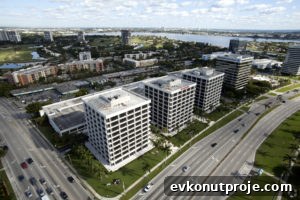
WEST PALM BEACH, Fla. — Houston Baseball Partners LLC, led by Houston Astros owner Jim Crane, has purchased a vacant office building in downtown West Palm Beach with plans to convert it into a 160-room hotel. The purchase price for the property was $6.5 million.
The acquisition comes as the Astros moved into a new spring training facility in West Palm Beach. According to CBRE Hotels, the local hotel market showed solid performance in 2016, with an average daily rate of $168 and an occupancy rate of 72.5 percent, indicating positive demand dynamics for additional hotel rooms in the downtown area.
CBRE Hotels agents Christian Charre, Paul Weimer and Natalie Castillo represented the seller, CP Forum LLC, during the transaction. Charre, a senior vice president with the firm, noted that the sale offered a rare opportunity: “The marketing process for this property was quite interesting, as it presented the rare opportunity to own a new hotel in a prime location in South Florida at a significant discount to replacement cost.”
The planned conversion will transform an underused office asset into a hospitality property that taps into both business and leisure travel to West Palm Beach, as well as fans and visitors attending events at the nearby spring training complex. A centrally located hotel can capture demand from convention attendees, tourists exploring downtown shops and restaurants, and baseball fans during spring training season.
Developing a new hotel from an existing office building can provide several advantages: reduced construction timelines compared with ground-up development, potential cost savings by adapting existing structure and utilities, and the ability to reposition an obsolete asset in a growing urban core. The buyer’s strategy reflects a broader trend of adaptive reuse in South Florida, where rising tourism and limited development sites make conversion projects attractive to investors.
Market observers expect that the hotel’s performance will be influenced by seasonal visitation, the schedule of baseball events at the new spring training stadium, and ongoing demand from business travelers. Downtown West Palm Beach’s leisure amenities and transportation links also bolster the location’s appeal for a midscale to upper-midscale hotel product targeting both short-stay visitors and longer-stay guests requiring downtown access.
Financially, the deal’s $6.5 million price point suggests the buyer secured the asset at a valuation below the cost of building a comparable new hotel, supporting Charre’s comment about a discount to replacement cost. That pricing dynamic can enable the new owners to allocate capital to conversion costs, interior finishes and operational setup without overextending acquisition budgets.
As adaptive reuse moves forward, stakeholders will need to address zoning and permitting considerations, design challenges associated with converting office floorplates to hotel rooms, and upgrades to mechanical, electrical and plumbing systems to meet hospitality standards. When successfully executed, the conversion should add new lodging inventory to West Palm Beach’s downtown core, complementing the recent investment in sports infrastructure and helping to capture incremental visitor spending.
The Astros were scheduled to open their new Florida spring training stadium on Tuesday with a game against the Washington Nationals, marking the start of regular use for the facility and a potential spur for local hospitality demand during the spring season.
Feb. 27, 2017 Realty News Report Copyright 2017