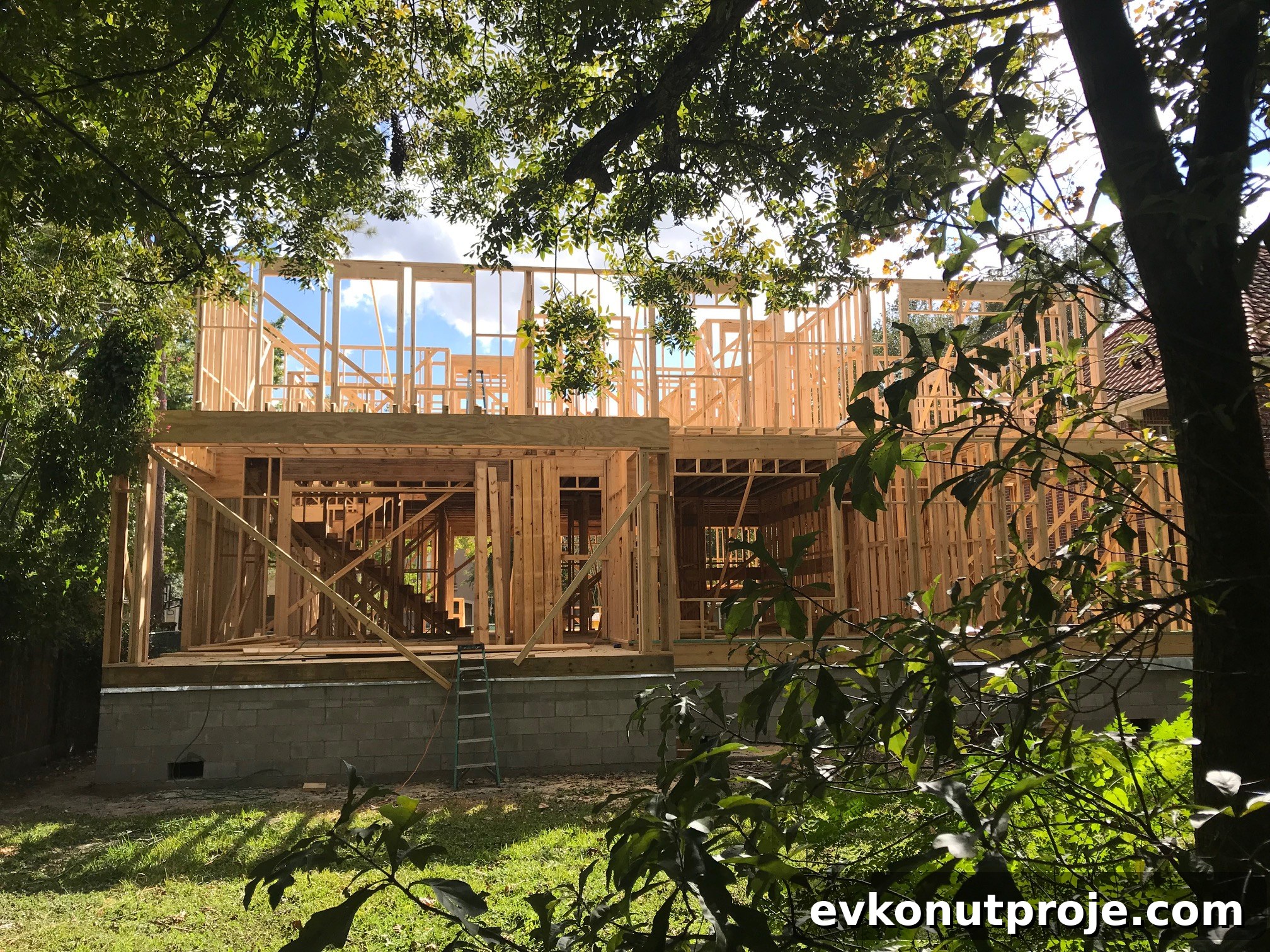
By Dale King, Realty News Report – Nearly every recent study of U.S. real estate markets reaches a similar conclusion: home prices are rising, in some places rapidly. These gains are driven by historically low mortgage rates, strong buyer demand and a limited supply of homes for sale.

That trend, however, is expected to change when the calendar turns to 2022. “Prices will slow down,” said Ken H. Johnson, Ph.D., an economist with FAU Executive Education in the College of Business at Florida Atlantic University in Boca Raton, Florida. “You will no longer see double-digit price appreciation.”
“Overall, we will have a real estate ‘event,’” Johnson told Realty News Report. “If you are in an area that has seen a significant influx of population, there will be a hiccup in prices. But in regions with low to moderate growth, the impact on prices will be negative.”
He added that, to his knowledge, there were few if any broad areas where home prices had actually declined over the prior year, aside from some small towns.
Johnson’s perspective comes from decades of work in the housing industry. He began as a sales associate in 1983 and now serves as assistant dean of graduate programs at FAU and leads the FAU Real Estate Initiative. He was asked to review the 2021 market and offer a forecast for 2022.
“If I could predict what the market will do in 2022, I’d own an island — called Australia,” he joked, reflecting the uncertainty that remains. Still, he expects the upcoming “event” to cause prices to settle rather than crash. Unlike the sharp decline during the 2008 recession, Johnson likens the likely impact to an economic tropical storm rather than a Category 5 hurricane.
The effect will be a moderation of the overheated price gains, bringing home values closer to intrinsic worth. In many markets, that means a cooling off of prices even in fast-growing states such as Texas, Florida and Tennessee. Conversely, areas already struggling with stagnation could continue to see weak markets and flat or declining prices.
“In many metros, there will not be a housing crash, but rather the housing market will go flat,” Johnson said.
He cited Topeka, Kansas, as an example: a metro with limited population growth and low housing inventory. In places where residents are leaving and mortgage rates begin to rise, housing prices are likely to come under pressure. Johnson also pointed to his hometown of Montgomery, Alabama, which is projected to have slightly negative population growth (around -0.5 percent) in the next decade. Declining population combined with rising mortgage costs will have a particularly negative effect on such markets.
Johnson anticipates a bifurcation in market outcomes nationwide: markets with population growth will fare much better than those with minimal or negative growth.
The COVID-19 pandemic introduced several unexpected developments in real estate. Early on, Johnson expected a market crash when the virus hit in 2020; instead, after a short slowdown the market rebounded strongly. One surprising element was the volume of long-distance, virtual transactions. “In all my career, I never sold a single property without physically showing it,” he said, but during the pandemic many buyers purchased homes sight unseen, driven in part by a desire for larger homes that could accommodate work and schooling from home.
Remote work and virtual schooling have altered location preferences for some buyers, reducing the importance of commuting distance. The final balance between office and home work remains undecided in many areas, but the shift has already affected where people choose to live.
Hot markets in 2021 were largely predictable: destinations where relocating buyers wanted to settle. The Southeast and Southwest saw high demand, as did regions such as Oregon and Utah and many former “second-tier” cities. The Northwest also attracted relocation activity. Texas metros and South Florida posted strong population gains, and Johnson noted that the West Palm Beach area is expected to grow roughly 14 percent over the coming decade.
By contrast, the Midwest and many parts of New England, New York and New Jersey experienced population outflows and weaker housing demand.
A persistent shortage of inventory has constrained the market. Johnson and others have warned for years that home construction has not kept pace with demand. Some builders remain cautious after the last crash, so construction activity has not surged to meet buyer demand.
“The shortage will not be eliminated by next year,” Johnson said. “It’s going to take two or three years, regardless of the pace of construction. There simply aren’t enough available units.”
Builders are unlikely to mount a rapid catch-up even if mortgage rates begin to rise; at best there may be only modest increases in new supply, leaving inventory low relative to demand.
Inflation is another important factor for 2022. Rising costs for gasoline, groceries and construction materials are impacting buyers and builders alike. Coming after widespread federal COVID relief payments, inflation may create a double effect: consumer spending could push prices higher and drive mortgage rates up, which in turn would reduce housing demand.
Johnson and Dr. Eli Beracha of Florida International University’s Hollo School of Real Estate are developing a statistical model to determine whether properties in a city are selling above, at, or below where they should be relative to their historical price trends. The model evaluates the 100 largest U.S. metro areas monthly to help buyers, sellers, brokers and policymakers make better-informed decisions. Using publicly available data from online real estate sources, they compare modeled expected prices to actual transaction prices to identify premiums or discounts in each market.
Oct. 25, 2021 Realty News Report Copyright 2021
For more about Texas real estate, check out Houston 2020: America’s Boom Town – An Extreme Close Up by Ralph Bivins. Available on Amazon
Houston 2020 Ebook version
File: Home Price Surge Will Slow Down
Feature photo credit: Ralph Bivins, Realty News Report Copyright 2021