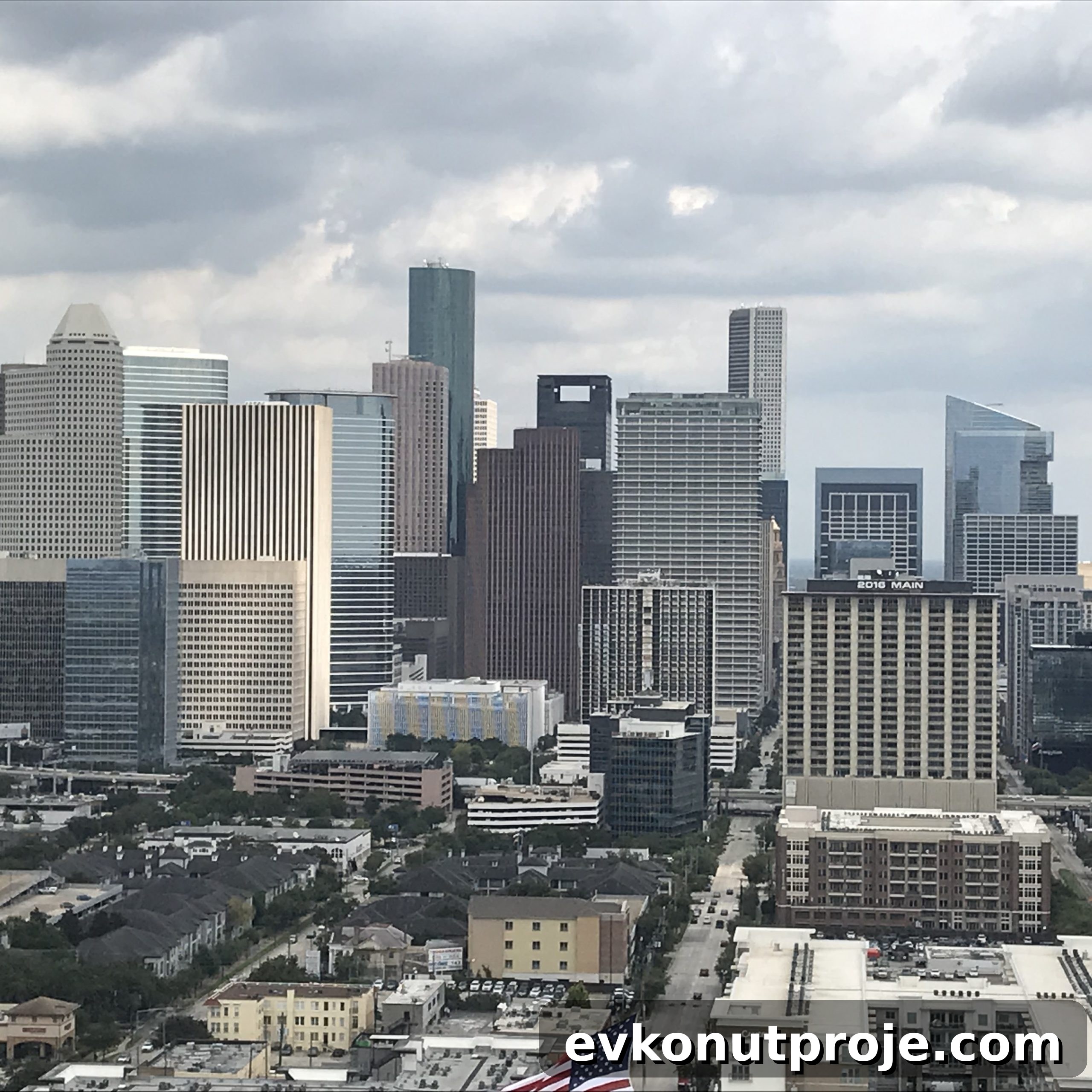
HOUSTON – (Realty News Report) – Houston’s office vacancy rate continued to climb as a downturn in the energy sector, coupled with the effects of the COVID-19 pandemic, prompted many companies to reduce or vacate office space.
According to a report from Houston-based commercial real estate firm NAI Partners, Houston’s office vacancy rate reached 23.4 percent in November, up from 21 percent a year earlier.
As the Energy Capital of the World, Houston has seen a number of oil and energy companies lay off staff and relinquish office space amid reduced drilling activity and oil prices that have frequently remained in the $40–$45 range—levels that are marginal or unprofitable for many producers.
Some firms have responded by listing surplus space for sublease. NAI Partners notes that sublease availability has begun to rise again after a period in which sublease inventory slowly declined from the high levels recorded in 2016.
When combining vacant space, space actively marketed by landlords, and sublease inventory from shrinking tenants, roughly 67.8 million square feet of Houston office space is currently available—an amount comparable to more than 75 large office towers.
“Many of the largest office occupiers in Houston that have listed sublease space as of the fourth quarter of 2020 are directly tied to the energy industry—including upstream, midstream, downstream, and oilfield services firms—as well as utilities, engineering, and construction companies,” NAI Partners said in its sublease report.
This tenant retreat resulted in negative net absorption of approximately 4.5 million square feet of office space this year, a figure NAI Partners defines as move-ins minus move-outs.
Houston also has about 4.7 million square feet of office space under construction. The largest project is Hines’ Texas Tower, a roughly 1 million square foot tower being built on the former site of the Houston Chronicle headquarters at 801 Texas Avenue.
Additional office space may come to market as energy sector mergers and acquisitions lead to consolidation and the sale of corporate properties.
Beyond available inventory, actual physical occupancy—how many employees are actually reporting to offices during the pandemic—remains significantly lower than pre-pandemic norms. As vaccination programs advance and more employees return, many questions persist about long-term office use.
Some workers are likely to continue dividing their time between home and the office, working remotely several days a week.
“What will future office space look like and how much space will businesses need? Some suggest that social distancing could revive the private office, reversing the trend toward open-plan layouts. The recent norm of roughly a 50/50 split between private offices and open workspaces could shift—some experts propose private offices might account for as much as 80 percent of workspace, which could increase leasing demand,” said Jason Whittington, a partner at NAI Partners, in a recent piece. “Others expect a hybrid model, with executives in the office more and other employees alternating days.”
At the 54th annual Real Estate Journalism Conference in early December, sponsored by the National Association of Real Estate Editors, a Houston real estate executive observed that offices—albeit in evolving forms and locations—will likely remain important long-term as places that foster creativity and collaboration.
“A consensus is beginning to form among tenants and institutional partners. Increasingly, companies believe that having no office presence and everyone working remotely is detrimental,” said Jonathan Brinsden, chair of ULI of the Americas and a leader at Midway, a real estate investment and development firm.
While formal mentorships and training can be conducted online, Brinsden noted that informal mentorships—the spontaneous sharing of knowledge and ideas that happens when people work in the same physical space—are difficult to replicate remotely.
“The office is a culture and collaboration hub,” Brinsden said. “The challenge is creating a workplace experience that is so compelling people want to come in.”
Dec. 21, 2020 Realty News Report Copyright 2020
File: Houston Office Vacancy Climbs
File: (2) NAI Partners, Jason Whittington. Houston Office Vacancy Climbs. Urban Land Institute. NAREE. Jonathan Brinsden. Midway