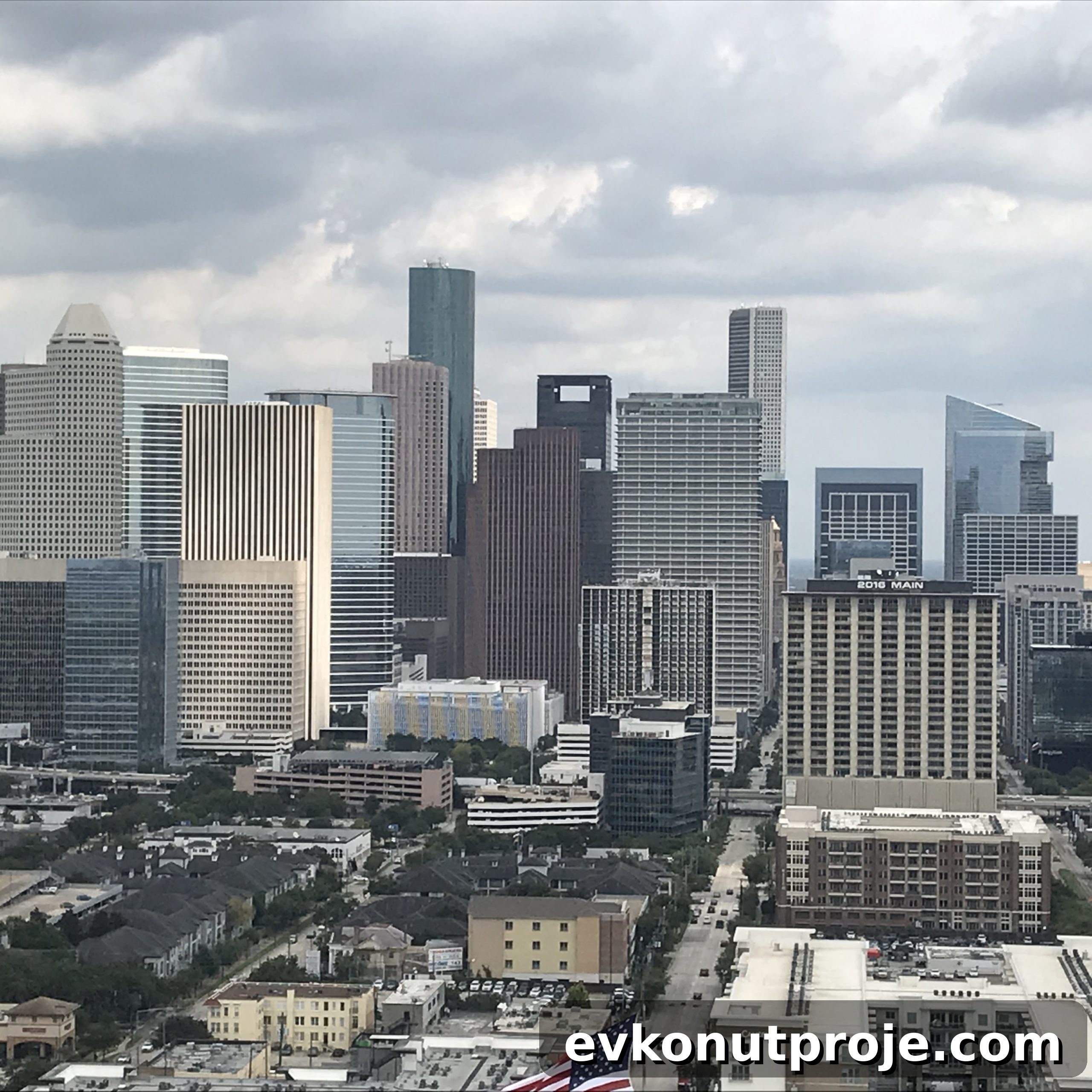
HOUSTON – (By Dale King, Realty News Report) – Many office buildings in Houston are facing high vacancy rates as companies continue to reduce their physical footprints.
In October, overall office vacancy rose to 23.2 percent, up from 21.6 percent in October 2019, according to NAI Partners, one of the largest privately held commercial real estate services firms in Texas.
“The vacancy rate has reached the mid-20 percent range,” said Griff Bandy, an NAI Partners office tenant representative specialist. About 3.7 million square feet of office space was vacated this year.
Some building owners may decide to sell properties they can’t fill or sustain on partial rent collections, Bandy told a NAI Partners press briefing. “We may see several buildings change hands within the next 60 to 90 days.”
All property sectors have felt the impact of COVID-19 this year.
At the NAI Partners conference, speakers examined why office leasing has plunged, why many big-box retailers are struggling even as convenience-focused businesses such as 7-Eleven and Jiffy Lube expand, and why remote work is becoming an entrenched strategy for many companies.
The development of one or more vaccines against the virus that upended global life for nearly a year is providing a psychological lift and a possible path toward post-COVID normalcy.
The Industrial Market
“A lot of positive things” are occurring in the industrial sector, said Clay Pritchett, who manages manufacturing transactions for Houston-based NAI Partners.
Demand is growing for large industrial properties (over 200,000 square feet). About 4.5 million square feet of industrial space is under construction, primarily in western and southwestern submarkets.
“Decision makers are moving,” Pritchett said as the third quarter of 2020 ended. “There is demand for e-commerce space.” That movement is evident in the market for distribution centers and warehouses.
Amazon continues to expand rapidly, taking large distribution facilities as e-commerce demand rises.
Pritchett noted that he and NAI partner Zane Carman represented the purchaser of 10631 Corporate Drive in Sugar Land. The Class A corporate office and food processing facility totals about 153,000 square feet of combined office, freezer-cooler warehouse and food processing space.
“Demand for specialized freezer-cooling facilities is a first for Houston,” Pritchett said.
The retail market experienced dramatic swings in 2020, said Jason Gaines, senior vice president of retail services. Some retail segments fared well, particularly food and beverage, which is recovering fastest.
Restaurants that have adapted to restrictions—by shifting to take-out and delivery, enforcing mask usage and increasing sanitation—are most likely to survive the pandemic environment.
Other resilient formats include convenience stores and combination gas-and-store operations. “7-Eleven, Jiffy Lube and the gas operators are doing well,” Gaines said.
By contrast, many big-box spaces are being repositioned into lower-rent uses. “Unfortunately, most of these backfill tenants are bargain operators and liquidation-type retailers. We’re seeing cut-rate concepts similar to Big Lots filling former department store boxes. Filling an old Stein Mart with tenants that can support traditional retail rents is challenging.”
A Biden Administration?
What might a Joe Biden presidency mean for the energy sector and for policies affecting fracking and fossil fuels?
“There’s a lot of anxiety,” Pritchett said, but he also noted the trend away from fracking as a dominant growth driver predates the recent election cycle. “Fracking has slowed; it’s not the driving force it once was. I don’t know if [Biden] will have a huge impact.”
Michael Sieger, vice president of office project leasing, suggested that constrained capital investment by some companies is a more immediate problem than policy debates over fracking or proposals like the Green New Deal.
“The energy sector,” Bandy added, “has performed under both Democratic and Republican administrations.”
NAI Partners also operates an investment fund platform called Partners Capital and a development arm called Partners Development, both wholly owned subsidiaries.
Adam Hawkins, vice president of Partners Capital, said that division “has been very busy” in 2020 as it pursues a $1 billion target across four funds. The group recently added several properties, including Trails at 620 in Austin and Blanco Crossing in San Antonio.
“It’s a good time to buy, for the right properties,” Hawkins said. “We’ve seen buyers remain active despite COVID. There’s enthusiasm for 2021. A lot of capital is available.”
Dec. 4, 2020 Realty News Report Copyright 2020
File: Houston Real Estate Update 12-4-20