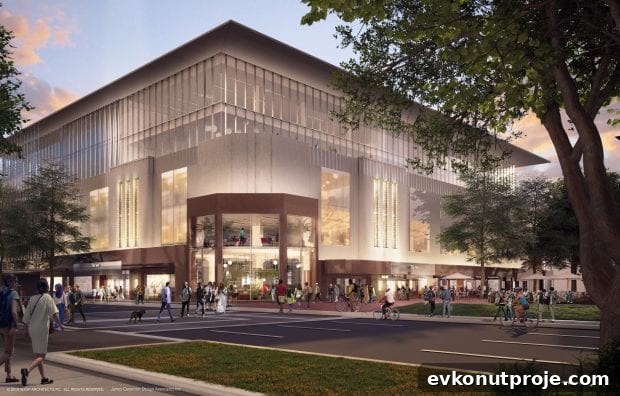
HOUSTON – (By Michelle Leigh Smith for Realty News Report) – The Ion, a new hub for innovation in Midtown Houston, is now open and welcoming entrepreneurs, academics, and collaborators to advance startups and foster cross-disciplinary partnerships.
The Ion is a redevelopment of an 82-year-old, multi-story former Sears building completed by Rice Management Company, which oversees the $6.2 billion Rice University endowment. The 266,000-square-foot campus is positioned as Houston’s nucleus of innovation and aims to drive resilient, inclusive economic growth across sectors including space, medicine, technology, and clean energy.
Academics Collide with Entrepreneurs
The Ion’s planners intentionally designed the space to create “collisions” between academics and entrepreneurs. Deanea LeFlore, Senior Director of Partnerships for The Ion, explains that the campus already hosts several accelerators and innovation programs to catalyze startups and connect founders with mentorship and capital. Current programs include:
- The Ion Smart and Resilient Cities Accelerator (Super Demo Day set for June 14–16)
- The Ion Aerospace Innovation Accelerator for Minority Business Enterprises
- DivInc Houston (first cohort underway)
- Rice Alliance Clean Energy Accelerator (beginning early summer)
LeFlore and Bryson Grover, Investment Manager for Real Estate Development at Rice Management Company, recently led tours for local journalists. The Ion will follow a five- to ten-year phased development plan. Ann Taylor, Communication and Marketing Strategy Lead for The Ion District and a Rice alumna, notes that university, city, corporate, and community partners are aligned in their commitment to Houston’s future in innovation and inclusion.
The Luminescent Blue Screen
A luminescent blue lobby screen warmly greets visitors approaching from Wheeler Avenue, while finishing touches continue on outdoor seating and landscaping. The second level features a dramatic, stair-stepped amphitheater with seating for 250, designed for talks, investor pitch sessions, and startup mentorship. Capital Factory will occupy that floor, adjacent to flexible academic space where students and entrepreneurs can gather for business guidance and networking.
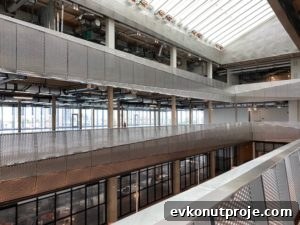
Many tenants are completing build-outs this summer, and The Ion’s office spaces are already operational. Grover highlights the extensive natural light that floods the atrium from the rooftop down—an uncommon feature in a building of this size achieved by opening the central core to daylight. Visitors can also step outside onto the fourth-floor terrace, once the Sears roof, to enjoy striking views of downtown Houston.
Preserving and Reimagining Historic Elements
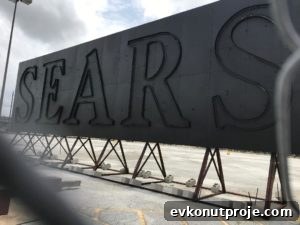
The redevelopment retains many historic features, including marble columns and terrazzo tile on the main floor. The central escalator—originally the first in Houston when the store opened in 1939—no longer connects floors, but the project preserved the 40-foot Sears sign. Rice Management Company hopes to repurpose the sign as an art installation or other creative element.
The building is pursuing Platinum WiredScore, WELL Building Standard, and LEED Gold certification. Wellness-focused amenities include large bicycle storage and showers to encourage bike commuting and public transit use, supporting the district’s walkability goals.
Design partners include Gensler and SHoP Architects of New York City, who collaborated to transform the historic structure into a contemporary, craft-driven workspace. SHoP’s recent projects include large, complex headquarters-style developments, and the team’s work on The Ion emphasizes adaptive reuse and future-focused design.
Redevelopment Led by Hines
The redevelopment is being managed by Hines, the prominent Houston-based development firm founded by the late Gerald D. Hines. The building’s exterior features sleek dark glass walls trimmed with bronze accents. Rather than a uniform glass skin, the façade includes varied glazing—some panels are clear to reveal interior metal staircases while others are laminated to reduce solar gain. Portions of the envelope are operable, incorporating natural ventilation with folding panels that open to admit fresh air.
Meyerland Roots: The Lymbar and Dining Options
Four new restaurants will occupy ground-level spaces, including The Lymbar, a collaboration between Latin chef Michael Cordua and his son David Cordua. The father-son team returns to Houston with a concept named for Lymbar Drive in Meyerland, where Michael Cordua grew up. Architect Gin Braverman of Gin Design Group designed The Lymbar’s 4,000-square-foot indoor and outdoor dining area, which seats 120 and features an open kitchen and a bar focused on barrel-aged spirits. Early tastings showcased globally inspired Latin, South American, and Mediterranean flavors.
Other dining additions include Common Bond On-the-Go, a compact version of the popular Montrose bakery; Late August, led by Chris Williams and Dawn Burrell of Lucille’s, offering international flavors from Cuba, Jamaica, and African cuisines; and Stuff’d Wings, a food-truck favorite transitioning to its first brick-and-mortar location at The Ion under owner Jarrod D. Rector.
A multilevel parking garage will be constructed behind nearby Greentown Labs to accommodate visitors and employees. Coworking operator Common Desk will occupy a full floor, providing flexible workspace options for startups and small teams.
A 16-Acre Vision for the District
Rice University had leased the land to Sears under a 99-year agreement that began in 1945. In 2017, Rice Management Company bought out the Sears lease as the retailer closed locations nationwide. Rice Management now controls 16 acres surrounding The Ion and intends to redevelop the district, currently dominated by surface parking and underused retail and commercial properties.
The site sits near METRO Rail’s Wheeler Station, where a diagonal rail alignment from Fannin to Main runs at street level—an unusual configuration that can be confusing for drivers. The broader redevelopment objective is to convert the 16-acre area into a walkable, transit-friendly mixed-use district that supports innovation, housing, retail, and public spaces.
May 12, 2021 Realty News Report. Copyright 2021.
For more about Texas real estate, consider the book Houston 2020: America’s Boom Town – An Extreme Close Up by Ralph Bivins.