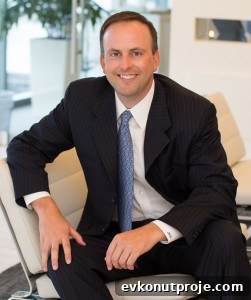
Leasing Downtown Office Towers Now: Q&A with Michael Anderson
Michael Anderson, Executive Vice President, Colvill Office Properties
HOUSTON – (Realty News Report) – Downtown Houston faces an oversupply of office space, with vacancy rates around 20 percent. Yet developers such as Hines are moving forward with new projects — including a planned 1 million-square-foot tower on the former Houston Chronicle site. To explain this apparent contradiction, Realty News Report spoke with Michael Anderson, Executive Vice President of Colvill Office Properties. Anderson manages the firm’s leasing team and markets a 7.8 million-square-foot portfolio of Class A office properties in Houston. Over his 15-year career representing institutional owners of top-tier office buildings, he has completed more than 8 million square feet of lease transactions. Recently, Anderson represented Hines in leasing the new project on the Chronicle site, which secured a 212,000-square-foot commitment from the law firm Vinson & Elkins.
Realty News Report: With downtown vacancies up and a large supply of sublease space available, how would you characterize the current state of downtown’s office market?
Michael Anderson: We’re at an interesting juncture. Much of downtown’s inventory was developed nearly 40 years ago and many buildings aren’t configured to meet today’s tenant expectations. Some properties have already been renovated, and others are undergoing updates, but cosmetic lobby work won’t solve every issue. Aging stock, combined with evolving space standards, is forcing tenants to reassess both their needs and the buildings they occupy. That reassessment has generated significant tenant movement downtown, especially among law firms and financial services. Demand from the energy sector has been sluggish in recent years, though I expect an uptick ahead.
Realty News Report: Colvill Office Properties was the exclusive leasing agent for 609 Main @ Texas, a 48-story, one-million-square-foot tower that opened in 2017. What percentage of that building is leased?
Michael Anderson: 67%.
Realty News Report: Leasing at 609 Main has proceeded relatively briskly despite a soft overall market. Why are tenants choosing new space over older, often less expensive Class A properties?
Rendering of new tower shows Hines’ 717 Texas Avenue building (left), new Hines building (center) and Hines’ Chase Tower on right.
Michael Anderson: Companies compete for talent, and new buildings help them create environments that appeal to employees. Modern towers like 609 Main are built to support higher space densities, allowing tenants to reduce their overall footprint. While the rent per square foot is higher than many older buildings, tenants increasingly evaluate cost on a per-employee basis rather than per-square-foot, which often makes new space more compelling.
Realty News Report: Are landlords offering concessions like free rent?
Michael Anderson: Concessions have been common in Houston since I arrived in 2001. They ebb and flow with market conditions. We saw an increase in concessions over the past several years, but they have stabilized over the last 12 months.
Realty News Report: What is your outlook for the downtown market?
Michael Anderson: I’m bullish on downtown Houston. I expect more corporations to relocate to the central business district to take advantage of its infrastructure, transit options and amenities. The push for downtown living has spurred residential growth, which in turn supports restaurants, bars and a more vibrant urban core. Infrastructure projects like highway realignment and expanded transit, along with initiatives such as the innovation corridor, should further strengthen downtown’s appeal.
Realty News Report: Do you expect vacancy rates to decline significantly by 2020, or will it take longer?
Michael Anderson: It may take beyond 2020. Some buildings face functional obsolescence, and their vacancies will remain higher than market averages. High-quality properties will continue to attract tenants and outperform older, lower-quality buildings.
Realty News Report: Major companies like Shell and ExxonMobil have moved operations out of the CBD. Why are they leaving, and does that mean downtown is less attractive?
Michael Anderson: In Shell’s case, they already had a campus in the Energy Corridor; ExxonMobil built a new campus near The Woodlands. Both moves were driven by a desire to consolidate employees into single campuses. That said, downtown remains highly attractive. Many firms — including Aramco, EDF Trading and RBC Capital Markets — have recently relocated downtown. Chevron still maintains a large, multi-building presence in the CBD, which shows the ongoing appeal of a vertical campus in the urban core.
Realty News Report: Hines is often cited as a major force in downtown Houston. What has Hines contributed to the CBD?
Michael Anderson: Hines has significantly shaped the Houston skyline through a consistent focus on quality and high-performance design. Their decision to move their global headquarters downtown underscores their commitment to the area and is a natural fit given their long-standing impact on the city’s built environment.
Realty News Report: What’s the status of One Shell Plaza, the first major tower developed by Gerald D. Hines Interests?
Michael Anderson: Shell’s departure created roughly 800,000 square feet of vacancy in the 50-story tower. NRG has subleased a large block of space and effectively become the building’s new anchor. One Shell is well-positioned in the market and remains an attractive option for tenants.
The 811 Louisiana building was recently redeveloped. Targa Resources leased 127,734 SF in the building.
Realty News Report: Two Shell Plaza was redeveloped and rebranded as 811 Louisiana. Has that transformation been successful?
Michael Anderson: Yes. The renovation was executed well and helped attract tenants — for example, Targa Resources relocated from a nearby building into 811 Louisiana.
Realty News Report: Any final thoughts on downtown Houston’s future?
Michael Anderson: Downtown has made substantial progress since I moved to Houston in 2001. A strong core is vital, and I commend city leaders for their investment in downtown. One of our ongoing challenges will be expanding and improving mass transit to move large numbers of people efficiently across the region. Addressing that will be critical to supporting continued growth and vitality in the central business district.