How Natural Disasters Affect Housing, Mortgages and Recovery
HOUSTON – The power of natural disasters can devastate neighborhoods, cities, and entire regions. Floods, wildfires, hurricanes, volcanic eruptions and earthquakes can cause widespread destruction, displacing families and businesses and leaving long-term economic consequences. Communities across the United States have experienced these impacts firsthand.
CoreLogic’s annual Natural Hazard Report highlights how disasters not only damage or destroy homes and commercial properties but also create prolonged financial effects on property and mortgage markets. The report emphasizes that severe events can trigger higher rates of mortgage delinquency, defaults and foreclosures, with consequences that can last well beyond the immediate disaster response.
One striking finding relevant to Southeast Texas is the pattern observed after the 2017 storms—Harvey, Irma and Maria. In the years following those hurricanes, serious mortgage delinquencies (loans 90+ days delinquent or in foreclosure) rose sharply: they tripled in the Houston and Cape Coral, Florida, metropolitan areas and quadrupled in San Juan, Puerto Rico.
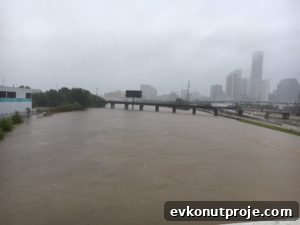
Hurricane Harvey, which struck the Houston region in late August 2017, dropped more than 50 inches of rain and caused catastrophic flooding. The storm forced thousands to evacuate and overwhelmed shelters, requiring officials to use any available vacant buildings to house displaced residents. Beyond physical destruction, the report notes that disasters frequently disrupt household income when residents cannot work, compounding financial stress.
While federal resources—such as forbearance programs from the Federal Housing Administration, Department of Veterans Affairs, private lenders and secondary market investors—can ease some financial pressure after a disaster, local delinquency rates typically still increase. CoreLogic’s analysis shows that it can take 12 months or longer for serious delinquency rates to return to pre-disaster levels.
Loss of housing stock also drives up the cost of shelter in affected neighborhoods, particularly where housing shortages already existed. That escalation amplifies inequities, hitting lower-income communities harder and slowing overall recovery.
Bill Baldwin, broker/owner of Boulevard Realty in Houston, reflects on Harvey’s lasting impact. He says natural disasters spotlight broader issues of affordability and inequality in housing markets. “Housing insecurity doesn’t affect everyone equally,” he explains. “Structural differences—such as local investments in drainage, job distribution and household incomes—mean neighborhoods respond differently. Areas like West University and Bellaire, despite being in floodplains, may experience less severe long-term economic impact than neighborhoods such as Kashmere Gardens or Westbury.”
Baldwin argues that rising mortgage delinquency and foreclosure rates after disasters are symptoms of a larger need: building more resilient communities and addressing systemic inequities. He also stresses that the real estate profession must do a better job educating buyers about flood risk. “Flood risk is financial risk,” he says. “There is a potential hidden cost to buying in a flood-prone area, and it is unethical to allow a purchase without a clear understanding of that risk.” Baldwin praises improvements such as the revised Seller’s Disclosure form but calls for further measures to prevent the industry from worsening socioeconomic disparities.
The CoreLogic report also outlines federal and state policy developments that have occurred in response to recent catastrophic events, especially regarding flood risk and insurance:
- The National Flood Insurance Program (NFIP) underwent reforms in 2012 and 2014.
- In 2018, the United States implemented some of the most significant federal policy changes for disaster mitigation and recovery since Hurricane Katrina.
- Approaching the 2020s, FEMA planned changes to flood mapping and risk assessment through the NFIP’s Risk Rating 2.0 program, designed to incorporate structure-specific flood risk into insurance pricing.
CoreLogic’s report also reviewed disaster activity in 2019. Although not the most catastrophic year on record, 2019 continued the trend of elevated losses from severe weather and climate events. Tom Larsen, principal of Industry Solutions at CoreLogic, noted that affected communities face a ripple effect from disasters, making continuous improvement in data and analytics essential for resilience. “Understanding the past is critical to contending with the risk of the future,” he said.
2019 marked the seventh year in the last decade with 10 or more weather and climate disasters each causing over $1 billion in damages. The report highlighted two notable events affecting Texas and the southeastern U.S.:
- An EF3 tornado near Dallas damaged nearly 10,000 structures, disrupted businesses and left more than 150,000 customers without power. The Insurance Council of Texas estimated insured losses at roughly $2 billion.
- Hurricane Dorian caused extensive damage to the Bahamas, with the Inter-American Development Bank estimating losses of $3.4 billion. Combined with $750 million from previous seasons, the Bahamas sustained approximately $4.25 billion in hurricane-related losses over five years—more than one-third of the islands’ $12 billion gross domestic product.
These events illustrate how repeated and severe natural disasters strain local economies, housing markets and insurance systems. For communities to recover and become more resilient, policymakers, industry professionals and residents must prioritize equitable mitigation, accurate risk communication and robust recovery programs.