HOUSTON – (By Dale King, Realty News Report) – New research from real estate professors at Florida Atlantic University and Florida International University finds that home prices in many U.S. metropolitan areas are significantly overvalued and present heightened risk for buyers. Which markets are most overvalued?
Austin and Boise, Idaho — two preferred destinations for many recent California relocations — top the list of metro areas with the largest gaps between selling prices and historical value, according to the FAU and FIU research team.
Boise ranks as the nation’s most overvalued market, with homes selling for roughly 80.64 percent above long-term trends. Austin follows in second place, where homes are about 50.72 percent overpriced among the 100 largest metro areas analyzed.
‘Worries of a Correction Continue’
“In these housing markets, worries of a correction continue,” said Ken H. Johnson, Ph.D., a co-author of the Beracha, Hardin & Johnson Buy vs. Rent Index and real estate economist and associate dean at FAU’s College of Business. “At this time, buying carries considerable risk. Consumers can build wealth faster if they sit out these sharp price increases, rent a similar property and reinvest their savings in a diversified portfolio of stocks and bonds.”
Johnson warned that buyers entering the most overvalued markets now are paying near peak prices and could be stuck for a long period before seeing solid returns on their real estate investments.
The Buy vs. Rent Index also indicates that renting and reinvesting is the financially superior choice in several major metro areas, including Atlanta, Los Angeles, Pittsburgh, Philadelphia, San Diego, Minneapolis and Portland, Oregon.
Houston and Dallas Near Peak
The index’s latest findings show prices are “at or near their peaks” in Dallas, Denver, Houston, Kansas City, Seattle and Miami. For residents of these markets, the professors say renting and reinvesting the funds earmarked for ownership may be the better financial decision.
The national ranking of 100 metros puts Austin at the top with a 50.72 percent overvaluation. Dallas–Fort Worth appears farther down the list but still substantial, ranked 19th with homes about 31.57 percent above their long-term values. San Antonio sits near the middle of the list at 48th with a 20.99 percent overvalue, while Houston ranks 57th with an overvalue of 17.99 percent and El Paso is 73rd at 13.11 percent.
Only the bottom five metros on the list are considered undervalued. Urban Honolulu leads the undervalued group, at minus 4.93 percent. Following are Virginia Beach, Virginia (minus 2.46 percent); Baltimore (minus 1.69 percent); New York City (minus 0.79 percent); and Baton Rouge, Louisiana (minus 0.37 percent).
To produce the rankings, FAU and FIU professors analyzed 100 of the nation’s largest metropolitan areas using long-run data that incorporate home prices, rents, mortgage rates, maintenance costs, homeowners association fees and other household expenses.
The professors note that strong buyer demand, near-record-low mortgage rates and a shortage of homes for sale have pushed prices higher in many areas, creating situations where postponing ownership can be financially advantageous.
Conversely, the researchers identify several metros where buying still makes more sense because ownership costs are favorable relative to rent. Those undervalued markets include Chicago, New York, Honolulu, San Francisco, Cincinnati, Boston, Cleveland, Detroit, Milwaukee and St. Louis.
“In these metros, the cost of renting is outpacing the cost of ownership, resulting in some surprising recommended buys,” said William Hardin of FIU, an index co-author.
The BH&J Buy vs. Rent Index, first published in 2013, challenges the conventional wisdom that owning always outperforms renting over the long term. The index shows that disciplined savers who rent and reinvest the difference can often equal or exceed the wealth accumulation of homeowners.
However, the researchers caution that simply renting and pocketing the savings without investing is a poor strategy. “If you’re not inclined to invest your savings, you might as well buy a house, even at the top of the market, because owning a home would at least force you to save,” said Eli Beracha, index co-author and director of FIU’s Hollo School of Real Estate.
Several markets that were deeply affected by the last housing collapse — Phoenix, Las Vegas and Stockton, California — now rank among the 10 most overvalued of the nation’s largest housing markets. Based on historical pricing, Phoenix homes are selling roughly 42.31 percent above trend, Las Vegas about 41.88 percent, and Stockton about 38.50 percent.
“In the Top 10 markets, potential buyers might want to consider renting and reinvesting money that they otherwise would have put into homeownership,” Johnson said. “Renting and reinvesting has been shown to often outperform ownership in terms of wealth creation.”
Work-from-home migration appears to be a key factor driving Boise’s rapid appreciation, as remote workers priced out of other expensive cities have relocated and pushed local values sharply higher, the authors noted.
At the other end of the spectrum, Baltimore and Virginia Beach are among the 10 markets offering the best bargains. In Virginia Beach, homes sell at an average 2.46 percent discount to long-run values; Baltimore shows a 1.69 percent discount; and Honolulu leads the undervalued group at about 4.93 percent below expected levels.
“Consumers who buy in these and other Bottom 10 markets should feel comfortable as home prices, on average, appear to have room to grow based on past pricing behavior,” Beracha said.
This report is the first in what the authors plan to publish monthly. Their analysis covers the nation’s 100 largest metro areas using publicly available MLS and portal data extending from January 1996 through the end of the most recent month, and includes single-family homes, townhomes, condominiums and co-ops.
Recent data show the median home price in Austin approaching $470,000, raising questions about whether current prices reflect true long-term value. More homeowners across the country are likely to be evaluating that question in 2022.
Sept. 17, 2021 Realty News Report Copyright 2021
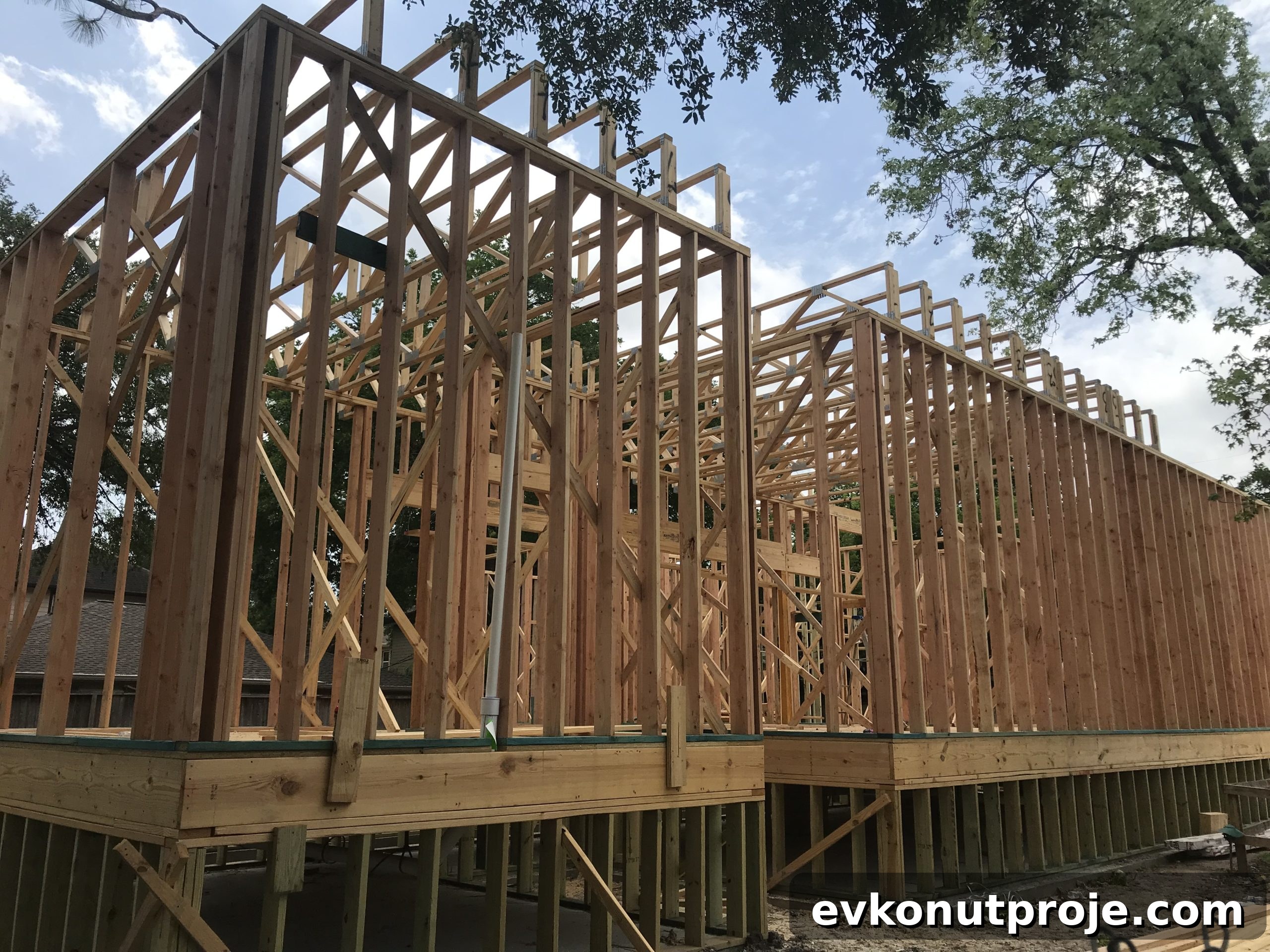
Photo credit: Ralph Bivins, Realty News Report 2021
For more about Texas real estate, check out the book Houston 2020: America’s Boom Town – An Extreme Close Up by Ralph Bivins. Available on Amazon
Houston 2020 Ebook version
File: Where to Find Overvalued Homes