HOUSTON — (By Dale King, Realty News Report) — Many U.S. housing markets are currently priced above what historical norms would suggest, yet national home prices continue to climb, according to research by real estate professors at Florida Atlantic University and Florida International University.
In a report released by FAU’s Ken H. Johnson and FIU’s Eli Beracha, January 2022 data show that price premiums rose from December 2021 across all 100 metropolitan areas the professors categorize as “overvalued.” Their analysis compares current prices to long-term historical trends to estimate how far markets deviate from expected values.
In Texas, only one large metro appears among the most overvalued markets: Austin. The professors estimate Austin’s prices in January were 62.3 percent above the market’s long-run average, placing it second on their top-100 list and trailing only Boise, Idaho, where prices are estimated to be 76.4 percent above the historical baseline.
Other major metros climbing toward the top of the list include Las Vegas and Atlanta, both exceeding 50 percent above their expected price levels. Each month Johnson and Beracha publish rankings of the 100 most overvalued housing markets among America’s largest metros, factoring in expected price changes and long-term pricing patterns to assess whether market inventories are over- or undervalued.
Although Austin has consistently been rated among the hottest markets, three additional Texas metros show only modest premiums above their historical averages. San Antonio ranks 48th on the list, at 25.53 percent above the long-term norm. Houston appears at 53rd, with prices about 24.94 percent higher than what historical pricing would predict. On the low end within Texas, McAllen registers roughly 17.69 percent above the baseline.
At the other extreme, Honolulu’s urban market appears closest to historical parity, with prices only 0.45 percent above the long-term trend. Two East Coast cities also show minimal deviation from the mean: Baltimore at 0.72 percent above normal and New York City at 1.66 percent above expected levels.
“With the dramatic fluctuations that we’re seeing now, wealth creation through purchasing a home is not guaranteed, making homeownership a sometimes risky investment,” said Johnson, an economist with FAU’s College of Business Executive Education. He noted that when housing cycles display only moderate variation, buyers can reasonably expect that ownership will generate noticeable wealth within a few years. The current environment, however, is far less predictable.
Two months earlier, Johnson and Beracha observed developing “pricing crowns” in several large Western metros such as Los Angeles and San Francisco—a sign they interpreted as an early indication of a possible cooling in those markets. Since then, prices have reaccelerated in most of those Western cities, leaving only a few showing any sustained slowdown.
The professors emphasize that, based on data through January 2022, none of the 100 markets they track are considered undervalued relative to historical pricing. Their dataset spans back to January 1996 and includes single-family homes, townhomes, condominiums and co-ops. Ideally, housing values oscillate moderately around a long-term upward trend, which over time has allowed homeownership to serve as a key vehicle for wealth accumulation for many middle-class Americans. The current elevated premiums, though, increase the risk that buyers will not realize those gains quickly, if at all.
Given these elevated valuations, Johnson and Beracha argue the coming months are critical for the housing market. “We encourage buyers to negotiate aggressively or to consider renting, even in light of the recent surge in rental rates,” Beracha of FIU’s Hollo School of Real Estate said. He warned that locking in a purchase at today’s inflated prices might take years to pay off. “Temporarily high monthly rent could be viewed as the cost of avoiding the vagaries of an irrationally exuberant housing market,” he added.
The professors’ analysis draws on data from Zillow and other industry providers. Some analysts have suggested that rising mortgage rates will eventually temper prices in overheated markets nationwide. As of early March 2022, that moderation had not materialized, according to Johnson and Beracha.
Observers have argued that global events—such as the conflict in Ukraine—could drive investment into bonds and other perceived safe havens, which might push mortgage rates lower later in 2022. Freddie Mac’s weekly survey for the week ending March 3, 2022, reported the 30-year fixed-rate mortgage averaged 3.76 percent, down from 3.89 percent the previous week but up from about 3.02 percent a year earlier.
Given the present mix of strong price gains, uneven regional dynamics, and uncertain mortgage-rate trajectories, buyers and renters should weigh their options carefully. Negotiating harder, considering short-term renting, and closely monitoring local market signals are practical steps until more sustained and predictable market conditions return.
March 5, 2022 Realty News Report Copyright 2022
File: Home Prices Haven’t Peaked
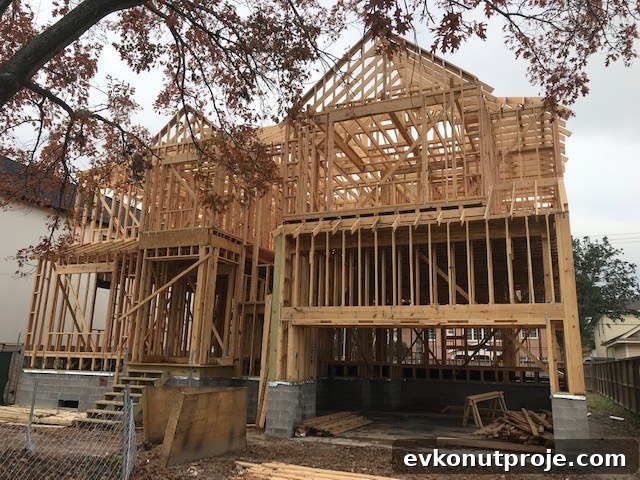
Photo: Ralph Bivins, Realty News Report Copyright 2022
File: FAU. FIU. Home Prices Haven’t Peaked Yet 3-5-22. Ken H. Johnson. Eli Beracha