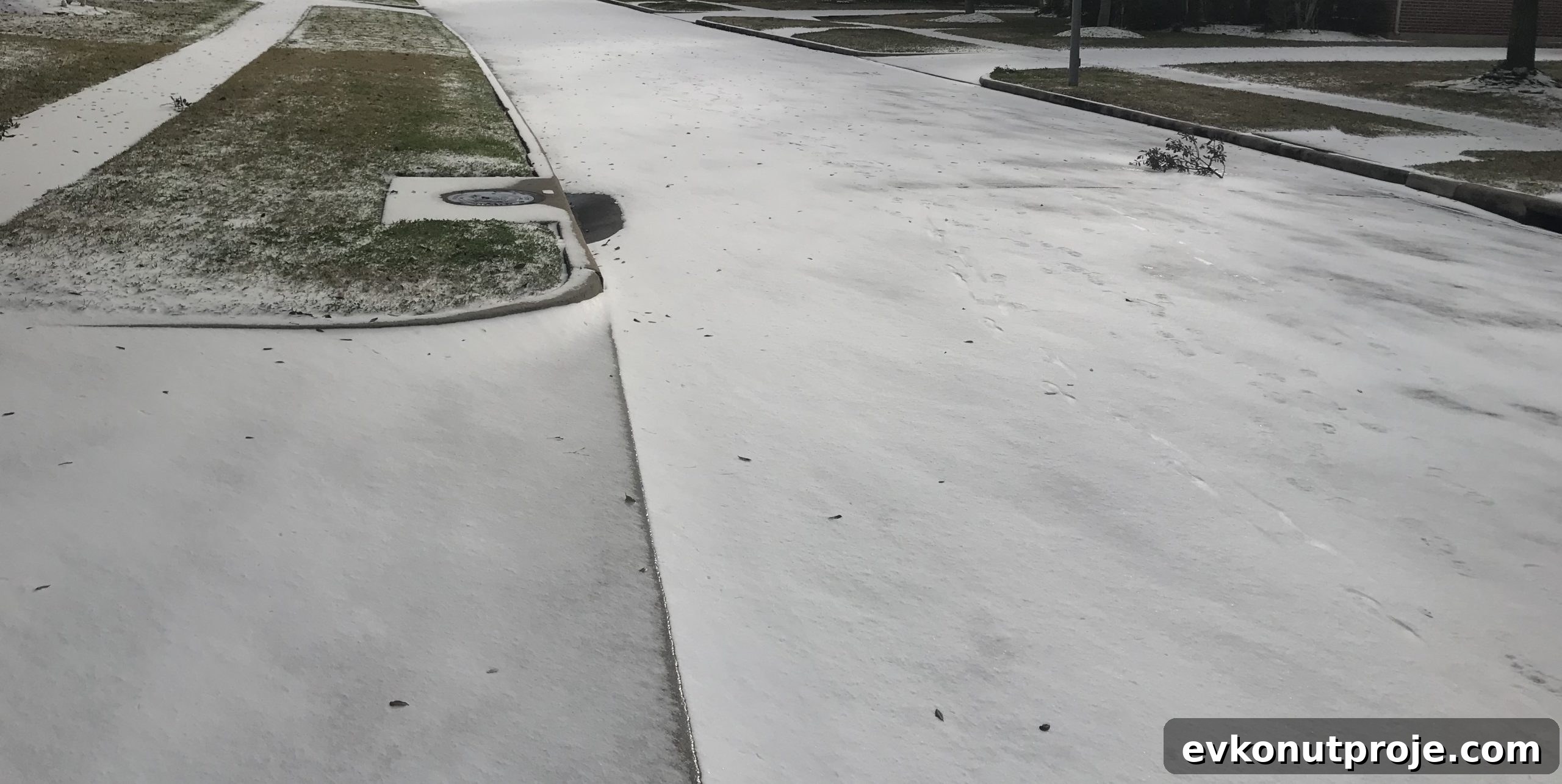
TEXAS – (By Mark H. W. Hiebert for Realty News Report) – Here we are in the deep Texas cold, and today San Antonio is finally warming up a bit. The weather has me remembering my days at Indian Hills Ace Hardware in Wichita, Kansas — in my mind the greatest hardware store in the known universe. I find myself thinking specifically about plumbing and preparedness.
No matter the current temperature, there’s always a chance forecasts will show the kind of sub-freezing numbers Texans dread. In the Kansas of my youth, people planned for that. Water lines were buried deep enough to avoid freezing in the yard, and once inside the house the pipes were run and insulated so that a -9 or -19 degree cold front wouldn’t freeze them. Structures were built expecting bad weather, which did arrive from time to time, and those preparations mattered.

At the hardware store we sold spigots made for exceptionally cold weather. They were beautiful — bright-plated brass or stainless steel, as I recall — and they worked. They weren’t the cheapest item on the shelf, but their cost was modest compared with the price of a whole-house repair after a freeze.
Unlike the small fixtures that protrude briefly from a home’s exterior, these special spigots were several inches long. Their stems positioned the shutoff point well away from the outside wall, keeping the water farther inside where it could be insulated from the cold. Wichita winters could be brutal, and while those extremes weren’t constant, these spigots reliably protected pipes from bursting on the coldest nights. Today you can probably order similar parts online and have them delivered almost anywhere.
Turn the state into a house we’re rebuilding. We can erect a cheap house with the lowest initial-cost materials designed to function under normal conditions but not to last, or we can build a quality house with materials and construction meant to endure abnormal events and outlast our own lifetimes. The quality house costs more initially, but it will deliver dependable performance over time. The cheap house will fall apart.
Applying this to the electricity grid, it makes sense to rebuild using resilient materials and fail-safes so systems continue operating during extreme events. That approach requires greater upfront investment, but it prevents the far larger losses of life, property, and livelihoods that occur when systems fail in rare but severe conditions like these February cold snaps.
Using the house analogy another way, any building — whether cheaply built or well-made — won’t last without maintenance. A small, inexpensive house that’s well cared for can outlive a grand, expensive mansion that’s neglected. Ongoing upkeep matters as much as initial quality.
Before politicians dive into partisan finger-pointing, we should step back, gather the facts, identify and fix the points of failure, and strengthen systems that worked. The goal should be to rebuild infrastructure that our grandchildren can inherit and improve. When we repair this house, we should choose the good spigots.
That’s my 23 cents (which won’t mail a postcard these days, but it’s my two cents all the same).
(Commentary by Mark H.W. Hiebert)
Feb. 17, 2021 Realty News Report Copyright 2021
File: Weather, Parts, & Power