
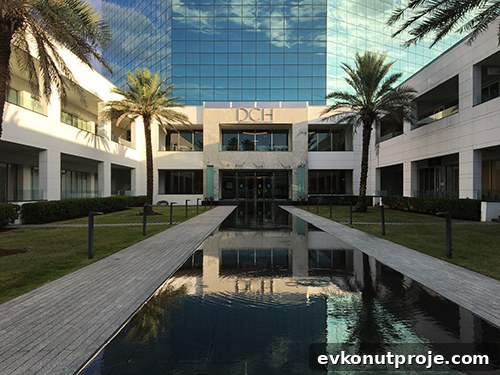
HOUSTON – (By Cynthia Lescalleet for Realty News Report) – Decorative Center Houston has long embodied the idea of creative office space. Luxury lifestyle showrooms and design resources surround a modern, glass-clad office tower noted for its telescoping rotunda and artful lobby amenities.
That deliberate mix of uses has created a complementary tenant base over the years, with design and architecture firms, creative agencies and cultural organizations drawing mutual benefit from showroom proximity, said Stephen Fredericks, national leasing director at Manhattan-based Cohen Brothers Realty Corp., which acquired the property in 2000.
Fredericks noted that a number of small philanthropic organizations and family-run ventures have also thrived within that symbiotic environment.
Sited on seven acres at the intersection of Woodway and Sage, Decorative Center Houston is one of four Cohen Design Centers owned by the real estate organization led by Charles S. Cohen, who is also an accomplished film producer. The company’s portfolio includes other major design hubs, and Decorative Center Houston has become a distinctive regional resource.
Recently, Colliers International was hired to handle leasing for the 10-story, 500,000-square-foot office tower, which overlooks Uptown Houston’s skyline and nearby upscale neighborhoods such as Memorial and Tanglewood.
Colliers Re-Introduces the Tower
Blake Virgilio, vice president of Colliers’ Agency Leasing Group, said the tower was ripe for “reintroduction” to its submarket after having “fallen off the radar.” He estimated current occupancy at roughly 80 percent.
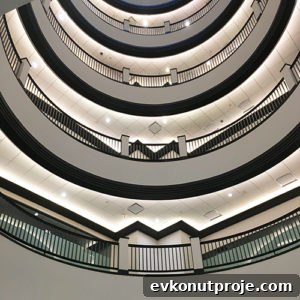
Virgilio praised the property’s distinctive architecture and public spaces, noting that it avoids the cookie-cutter appearance common across many Houston commercial buildings. Key features that set the site apart include its reflection pool entry, the interior rotunda and generous common areas that are well-suited to events and exhibitions.
The building’s around-the-clock HVAC supports both the showroom inventory and the extensive communal spaces. A notable tenant amenity is Roots Café, which occupies a prominent spot off the lobby and contributes to the building’s active ground-floor environment.
Originally developed by Trammell Crow Co. in the mid-1980s, Decorative Center Houston has grown and adapted as the surrounding area has densified. The center has expanded to roughly four times its original size and has been updated repeatedly to remain relevant to the design community and visiting clients.
“We never stop doing,” Fredericks said, describing Cohen’s ongoing maintenance and investment in the Houston asset.
Because the property serves the design industry, keeping its aesthetic current is especially important. Design trends evolve quickly and can make spaces look dated if not refreshed. While buildings cannot be updated weekly, regular targeted improvements — such as the center’s terrazzo lobby floors, marble-clad entry and extended reflection pool fountain — help keep the project appealing.
Fredericks said the surface parking area and its landscaping are the next priorities for renovation.
Former tenant CultureMap, an online lifestyle magazine, maintained offices at Decorative Center Houston for several years. Clifford Pugh, the publication’s former editor-in-chief, described the building as well maintained, even as certain elements retained an ’80s-era character. He recalled the lobby’s open atrium, which he likened to the hull of a ship, anchored by restaurant space. Pugh also noted ample parking but said traffic in the area could become congested at the end of the workday.
Showcasing Style
Colliers’ leasing assignment applies to the office tower and does not include the property’s approximately 80,000 square feet of showroom space. Fredericks, who has overseen national leasing for Cohen for more than two decades, remains directly involved with the Houston showrooms.
Showrooms themselves are changing: many have become smaller as design resources respond to evolving shopping habits, even at the highest end of the market. One result of downsizing is the ability to host a larger number of vendors within the center, increasing the variety of products and client traffic.
“The demise of the showroom model has not come to pass,” Fredericks said. Instead, showrooms are adapting their presentation and merchandising strategies, often moving toward lifestyle-focused vignettes rather than strictly displaying materials.
What has not changed, he added, is the clientele: a group defined by a passion for quality living. “There is always a market for quality,” he said, underscoring the enduring demand for well-crafted design products and services.
Dec. 22, 2020 Realty News Report Copyright 2020
Photos of Decorative Center Houston. Credit: CALpix
File: Cohen Brother’s Decorative Center Houston. Charles S. Cohen. Colliers International. 5120 Woodway.