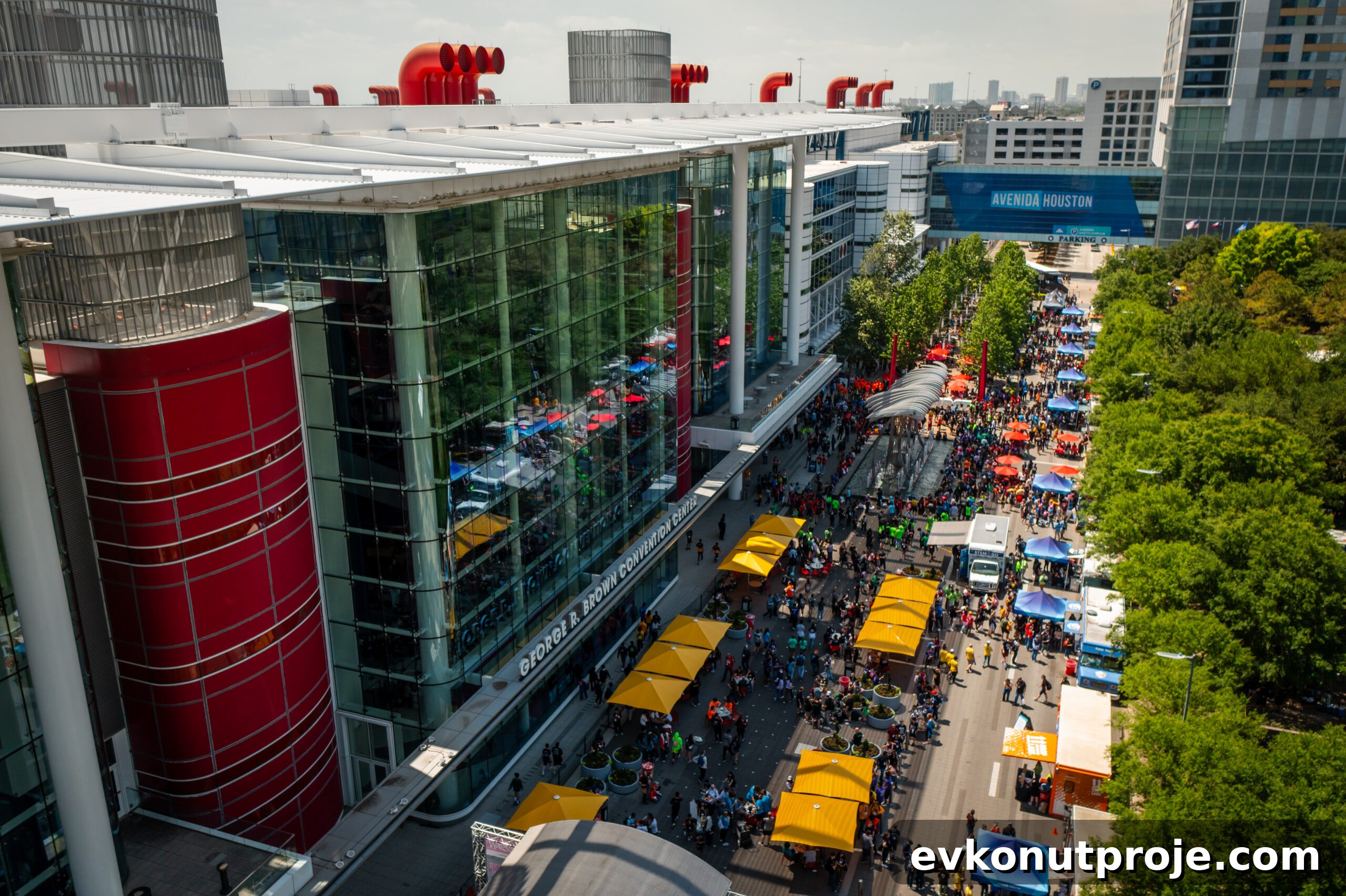
HOUSTON – (Realty News Report) – Hines, the global real estate developer headquartered in Houston, has been chosen to lead a major expansion of the George R. Brown Convention Center in downtown Houston.
The planned expansion will add approximately 500,000 square feet on the south side of the existing facility, positioning the city to host larger, higher-profile conventions and boost tourism-driven revenue.
Currently, Houston’s convention complex totals about 1.8 million square feet. If the project proceeds as expected, total convention space would grow to roughly 2.5 million square feet, strengthening Houston’s competitiveness in the national meetings and events market.
A new skybridge is planned to link the expanded convention building directly to the nearby Toyota Center arena, improving pedestrian connectivity and creating a more cohesive entertainment and convention district.
While final designs have not been released, Houston First— the city’s convention and cultural district authority—expects the project to activate surrounding sidewalks and storefronts, increase restaurant and retail options, and generate more foot traffic around the convention center. Walkable dining and retail opportunities are critical to the success of any major convention destination.

“We are honored to partner with Houston First on the convention district transformation project,” said John Mooz, senior managing director at Hines. “As a significant stakeholder in Houston’s Central Business District for more than 50 years, we recognize the importance of this ambitious effort. Our team is committed to helping Houston First create a convention campus and entertainment district that highlights the best of Houston and catalyzes economic growth for the entire city.”
Hines has a long history in downtown Houston. Founder Gerald D. Hines developed the 50-story One Shell Plaza, which opened in 1971 and was the first of many downtown high-rises built by the firm.
Houston First Corp. is preparing to acquire 2.7 acres of downtown land for the expansion. The parcels, known as Block 309 and Block 310, lie east of Jackson Street and north of Bell Street.
The expansion sets the stage for a transformative eastward growth of downtown Houston, with planners envisioning the eastern edge of the central business district becoming far more integrated and accessible.
Today, Interstate 69/US 59 forms the de facto eastern boundary of downtown. An ambitious plan to reroute and lower sections of the freeway network would place the highways below grade, clearing the way for a deck park built over the roadway. That “depressed freeway” approach was used in Dallas to create Klyde Warren Park, a public green space that spurred nearby residential and office development.
Houston’s proposed deck park—projected at about 30 acres and positioned behind the convention center—would likely take years to complete, with some estimates suggesting it could be a decade before the park is realized. When finished, the park could serve as a major civic amenity and a catalyst for growth on the east side of downtown, complementing the successful 12-acre Discovery Green park in front of the convention center.
This convention center expansion is a critical piece of the larger strategy to connect downtown to the EaDo (East Downtown) neighborhood and to foster pedestrian movement rather than impede it. Thoughtful design will be essential to ensure the new facilities create a gateway to the east, not a barrier.
“This is a generational opportunity for Houston to transform the eastern edge of its downtown and ensure that we remain a Tier 1 convention city for years to come,” said Michael Heckman, president and CEO of Houston First Corp.
Houston First has stated that the development will be coordinated with the Texas Department of Transportation’s I-45 rerouting and the I-69/US 59 lowering projects to ensure seamless integration and connectivity with the surrounding transportation network.
Funding for the convention center expansion will come from the state’s portion of the Hotel Occupancy Tax. The enabling legislation was authored by former state senator and current Houston mayor John Whitmire.
Construction on phase one of the convention center expansion is scheduled to begin in 2025.
Even at 2.5 million square feet, Houston’s expanded convention center would still be smaller than the Las Vegas Convention Center, which offers about 4.6 million square feet and is widely regarded as the nation’s largest convention venue.
Some observers point to Houston’s climate as a challenge for becoming the country’s top convention destination. However, compared to extreme temperatures that can occur in places like Las Vegas, Houston’s conditions can be more temperate during many parts of the year.
Aug. 16, 2024 Realty News Report Copyright 2024
Image: Courtesy Houston First Corp.
File: Hines to Lead Convention Center Development